





As we bid farewell to the Old Year and enter the New Year, many countries put special traditional dishes on the festive table. These dishes are not only delicious, but often also bring good luck, health and abundance for the New Year. Let's discover together how different cultures celebrate in the world of gastronomy!
Spain: twelve grapes for good luck
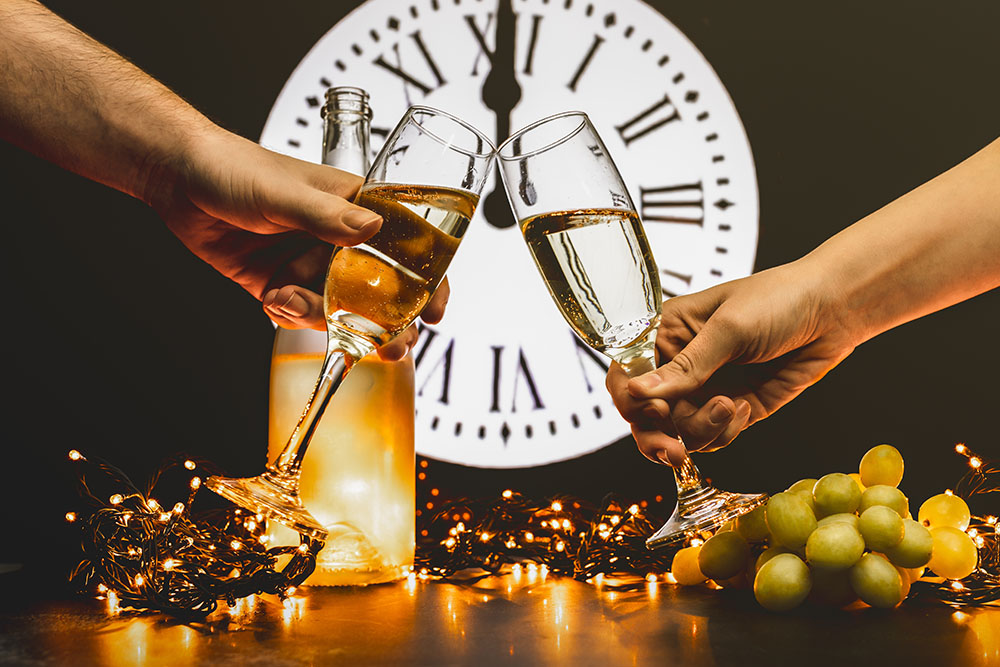
New Year's Eve celebrations in Spain are a unique mix of fun, tradition and gastronomic delights. Here, the midnight chimes not only mark the start of a new year, but also a special custom deeply rooted in Spanish culture. Tradition has it that at midnight, a grape is consumed for each chime. This custom promises good luck for the next twelve months. The grapes are washed down with champagne to welcome the New Year. But tapas of various kinds are also common seafood, and the local Cheeses. Popular desserts include “turrón” (honey and hazelnut nougat) and “mazapán” (marzipan), which are also part of the festive table.
Japan: long life fame
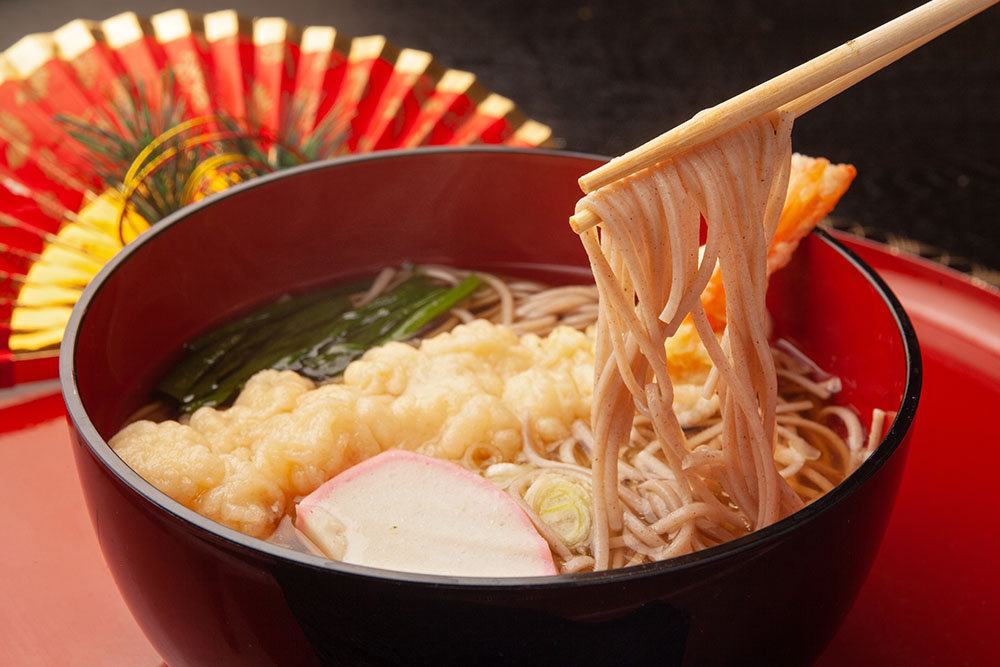
In Japan, New Year's Eve, or “Ōmisoka”, is a time of quiet reflection and family togetherness. Japanese New Year's Eve traditions are less loud and extravagant than in other cultures, with a strong emphasis on purity, tradition and food. Osechi-ryōri is a collection of Japanese New Year's dishes served in special multi-layered boxes called jūbako. Each dish has a special meaning, such as happiness, fertility, long life or wealth. The osechi dishes include “kazunoko” (herring kira), “kuro-mame” (black soybean), “tazukuri” (sardines), and “datemaki” (egg roll). “Toshikoshi soba” symbolizes long life and prosperity. These long, thin noodles symbolize the transition from the old year to the new and offer hope for a long and healthy life.
Italy: Cotechino con Lenticchie
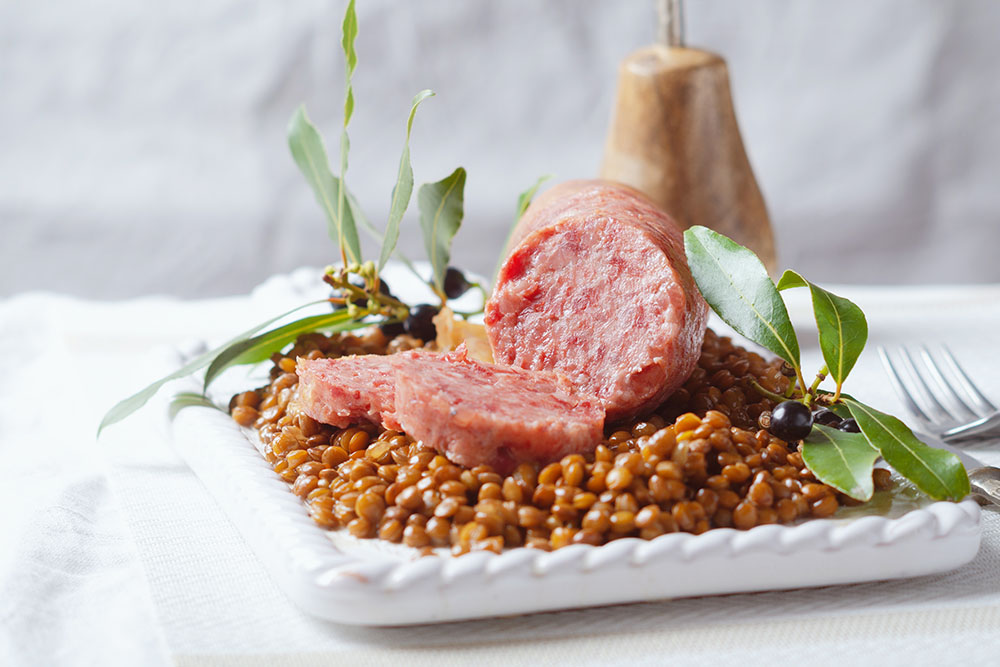
In Italy, New Year's Eve, or “Capodanno”, is a celebration of gastronomic delights, family togetherness and traditions. The Italian New Year's Eve table is rich and varied, full of local specialities and lucky charms. The “cotechino con lenticchie”, or spicy boiled pork sausage with lentils, is one of the most popular New Year's Eve dishes, just like in our country. The tiny shape of the lentils, reminiscent of a gold coin, symbolises wealth and abundance for the New Year. The cotechino, a rich, spicy Sausages, symbolising prosperity and strength. Zampone, another traditional sausage, has a similar meaning to cotechino. To make zampone, a pig's foot is stuffed with finely minced meat and spices.
Denmark: human-shaped cake and broken pots
In Denmark, New Year's Eve celebrations are a special blend of historical traditions, community togetherness and delicious food. Danish New Year's Eve is more than just a night out; it's a time for gathering, friendship and good luck. The celebration often centres around “kurren og kagemand”, a typical Danish sweet that is a symbol of good luck and cheer, and is a frequent “guest” on birthdays. It is a man-shaped cake decorated with colourful icing and sweets. The cake is often eaten together, reinforcing a sense of community. A unique Danish New Year's Eve custom is for people to leave broken china on the doorsteps of friends and neighbours on the last day of the year. This custom is seen as an act of good luck, and the more broken pots you have on your doorstep, the more luck you will have in the New Year.
Germany: Glückschwein
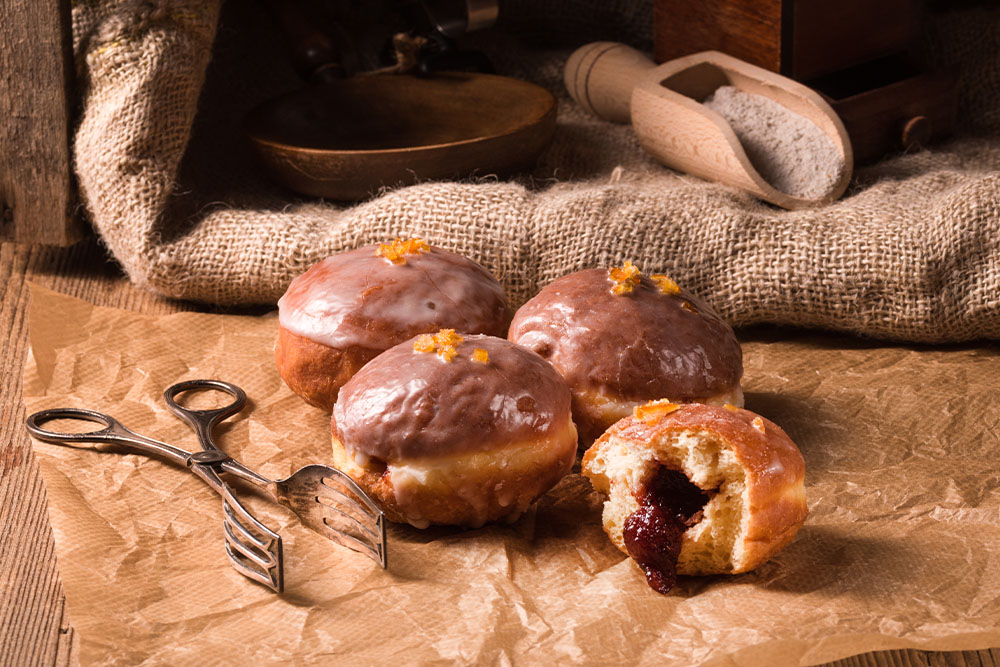
The “Glückschwein” or “lucky pig” plays an important role in German New Year's Eve traditions. This symbol is often used for sweets, chocolates, or in the form of cookies and serves as a good luck gift. The pig is a traditional symbol of wealth, abundance and good luck. Bleigiessen is a traditional divination method often performed on New Year's Eve. Pieces of lead are melted and then poured into cold water to create different shapes. These shapes are then used to “predict” the events of the coming year. The “pfannkuchen” or berlini, a popular New Year's Eve dessert, is a sweet, filled doughnut. In addition, sweets made from marzipan, such as Glückschwein-shaped cookies, are also popular.