






It's been said that whether you have a collection of Japanese hand-forged chef's knives or just one or two half-decent ones, keeping them sharp is key. But that is far from enough. The world of really high-quality, serious chef's knives is much more diverse than that. To understand what makes a good chef's knife, we caught up with Lajos Balogh, owner and distributor of the Damsteelpro brand.
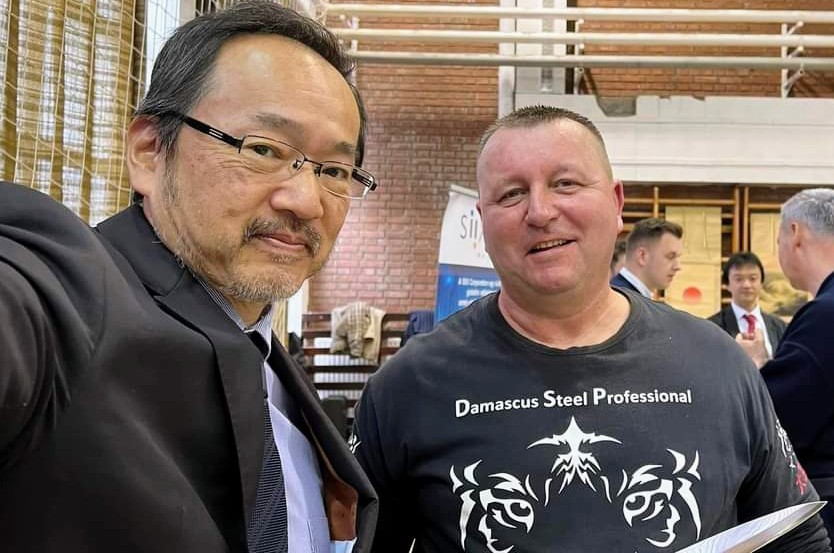
Tamás Budafoki: If you want a chef's knife of impeccable quality, how do you start looking for it?
Lajos Balog: The best answer to the question is to start from the material of the knife blade. Globally, the knife industry is characterised by the fact that everybody makes everything. The production is material centric, so don't be surprised if the knife material of a given country is imported. The main manufacturers are Japan, China, Germany, Sweden and the USA. The material grades are marked according to the standard of the country of manufacture, if another country produces the same material, the marking changes. It really takes someone who knows their way around this. It is important that it is an ore-based material and not a secondary use material manufactured for other purposes. The material of a knife blade contains 20 to 30 chemical components, so it is the variation in the percentage of these that gives the variation in quality. The choice of ingredients should be specific to the knife material required. Secondary materials used and materials manufactured for other purposes are not knife raw materials, you cannot take it as an automatism that hard metal is a good knife material.
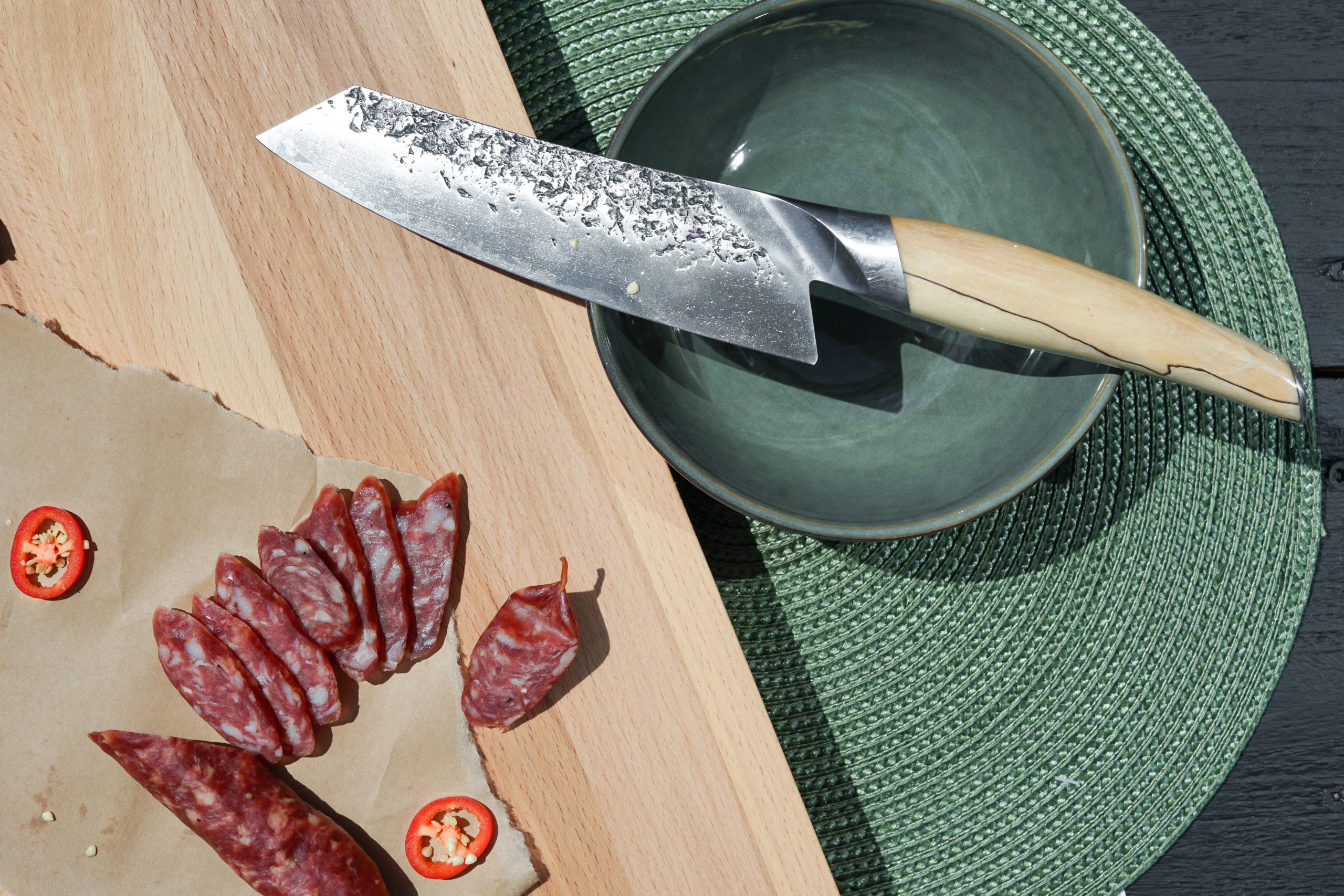
B.T.: If I were a professional chef, how would I decide which cutting tool to choose? Where would I start in my thinking, in my search?
B. L.: Based on more than 30 years of experience, I recommend that we focus on provenance. It is worth investigating how much of what is promised is based on reality. Where the knife comes from, whether it is offered for sale by the manufacturer or by a reseller. It is also important that the buying process traceable-e. Whether the counterfeiting chain can be integrated into the commercial process. Dropshipping schemes are the most suitable, the participants are only interested in receiving a commission of 30-40 cents on sales. The biggest competition for me and all manufacturers is the „fake knives”, the imitations. On the internet you can find more and more beautiful knife photos. Unfortunately, it is not uncommon that it is a copy of a brochure photo and what we get is a fake.
Moreover, household users do not have a basis for comparison, as they buy only a few knives in their lifetime and only after a certain period of knife use are they confronted with the fact that the products are not suitable. In this case, it is impossible to enforce a complaint. It's OK to be a knife expert, but at least know how to count. The cost of ordering knives abroad is broadly made up of the following components: the bank converts your forint into euro to pay the purchase price, so you already have the exchange rate and the cost of the transfer. The knife has a factory price, then a wholesale price and one or more retail prices. Then there is the cost of boxing, shipping and packaging. There is also the cost of export tax in the country and the cost of air transport. Nobody should think that a multinational airline will bring the product from a distance of about 20,000 km for free for us. In any case, the delivery charge is included in the selling price, which is a significant cost. The commission of the persons acting as dealers is also a factor. For goods arriving in Hungary, 15% customs duty + customs clearance fee and 27% VAT are payable. If you start to subtract this from the price of the knife you end up with a few dollars left over, which is the actual price of the knife. This does not guarantee quality.
B.T.: Is that when people come to you for advice?
B. L.: The attractively cheap price of knives has become conspicuous, so some counterfeits are now available in the high price range, so price should not be the deciding factor. They send me knives to sharpen because no tool can fix the problem. Unfortunately, in many cases I am the bearer of bad news and it turns out that the edge material - which is half a millimetre at most - has worn off and a lumpy piece of junk remains, resulting in the knife being discarded.
B.T.: When you take an ordinary, mass-produced knife in your hand, it's relatively light. When you take a chef's knife, it's a noticeably heavier piece. Can we deduce anything from that?
B.L.: This is not necessarily the starting point. Both light and heavy knives can be of good quality, or the opposite. The size and thickness of the knife and the percentage of chemical elements mentioned above may be the primary factors. From a cutting point of view, it is possible to produce a good quality knife blade without any variation in its use. The choice is subjective and will be determined by the finished use. Some people prefer heavier knives because they have a “better draw”. The heavier knives are the so-called Full Tang designs, where the knife blade is forged into the handle design and only panels are placed on the handle. The handle of the lighter knives is a full tang and fits onto the knife handle. The lighter knives are preferred by those who have been working for a longer period of time and whose wrist is not the same. The razor-sharp cut results in a quality texture, better physical well-being and increased performance. The lighter blades include special steel alloys and, for the best ones, the Full Balance design, where the balance between handle and blade is perfect.
B.T.: So a good knife starts with good steel?
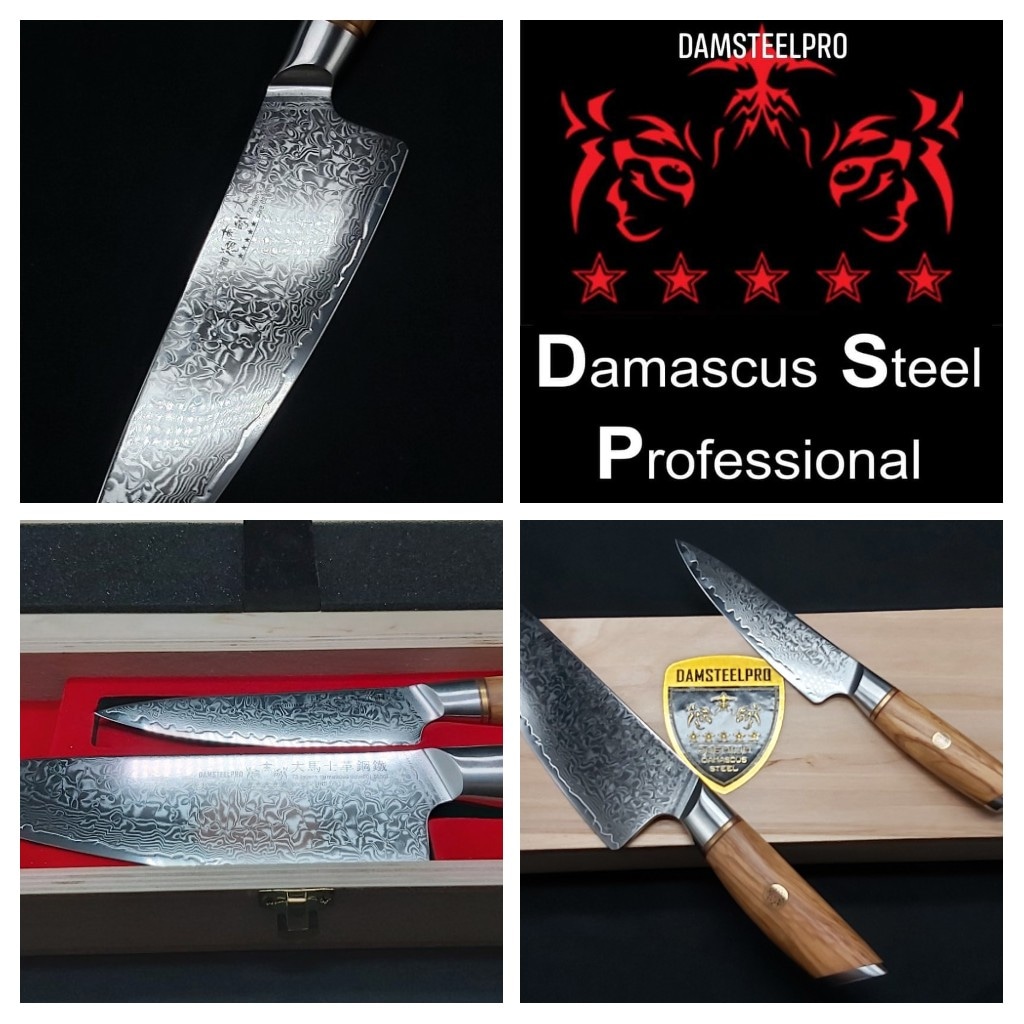
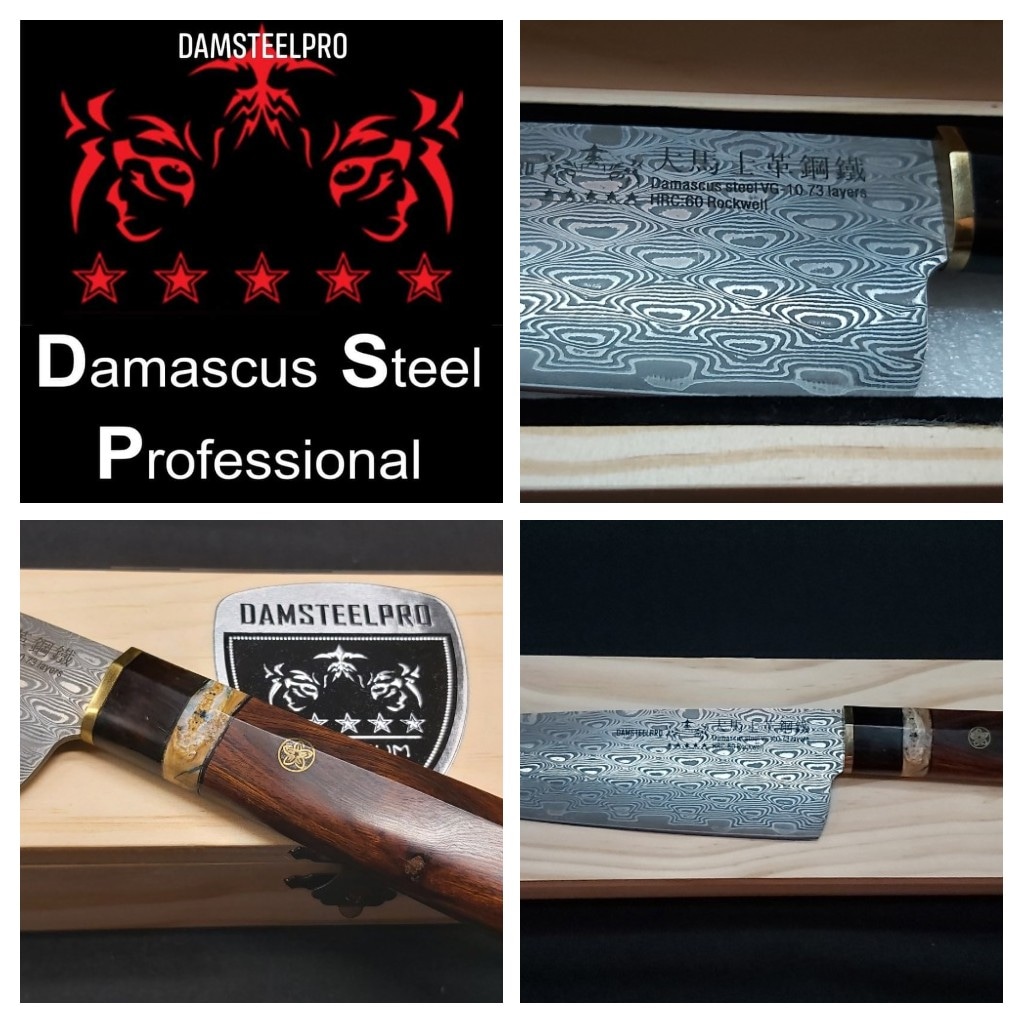
B.L.: For me, the material of the blade is the most important, and that was the starting point for the Damsteelpro brand. Finding the best material at the best price and making it professionally, using traditional technology. Today, every component of the knife is specific. In addition to the blade, handles also play an important role. Mostly wood and resin handles are used on their own or with design inlays. Wooden handles undergo a process called stabilisation, during which the material in the fibres is lost and replaced by a special material. This prevents the wood from warping or cracking. The wide range of wood species used is adapted to the quality of the knife material and this also affects the price. The varnishes used today are no longer slippery, but rather provide grip for the hand. Resin handles are also very durable, some of them are reinforced with fibreglass and some are laminated. At the same time, they provide a range of colours, random colours, which make them unique. This is useful when several people in a workplace use the same knife to distinguish them, but it is also possible to engrave the blades.
A really good knife lasts a lifetime, and can be the most beautiful gift, whether for professional or amateur cooks. „CUT TO YOUR HEALTH!”