





The basic expectation in public catering is tasty food served at an affordable price and of good quality. But achieving this is often unrealistic and professionals find it difficult to find acceptable solutions. We asked József Némedi, a member of the board of the National Association of Caterers and Food Service Managers, about the problems that catering in the world of public catering has to deal with on a daily basis.
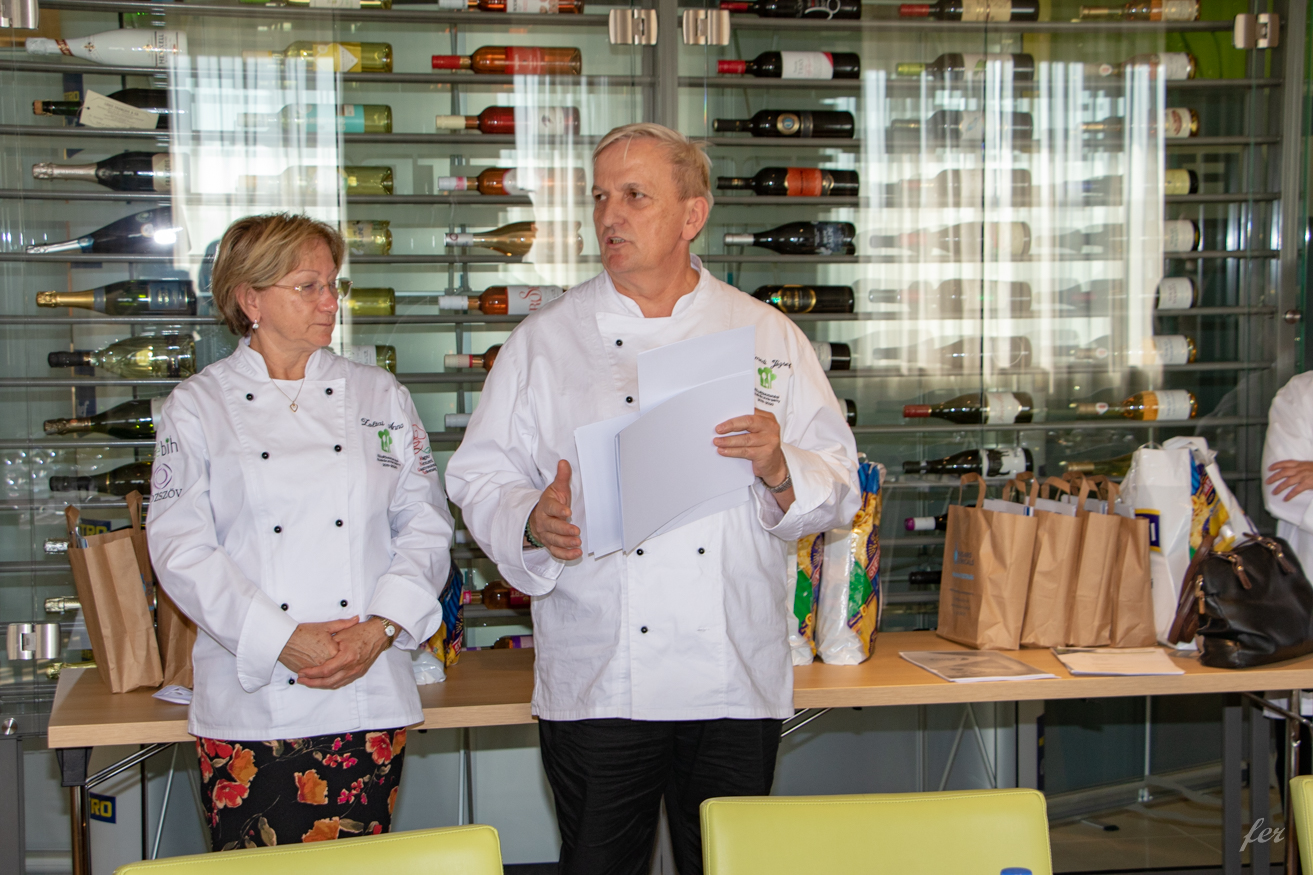
Photo by Ferenc Csárdás
Respect to all the people who do their job in catering, but how do you make something from almost nothing?
Public catering is a specific area within the catering sector. If someone About the restaurant usually refers to a catering establishment where you can create a pleasant dinner and a memorable moment for you and your loved one. But everyday life is not on anyone's mind, when in fact it is what defines our lives. We're talking about something backward, because lunch at work is the way we feed our bodies - it's not cool these days. And yet that's exactly the most crucial thing. A catering is one of the most important segments of the public catering sector! How to deliver despite the difficulties? That is exactly what we work for, day in, day out.
How can cheap, accessible food for the masses be achieved at current commodity prices?
Basically, we need to separate public catering into the classic canteen, the segment of nursery schools, schools, hospitals, retirement homes, etc. - which operate on much poorer budgets - and office buildings, workplace catering, which operates at the level of restaurant catering. The difference is not in expectations, but in selling prices, and hence the amount that can be spent on raw materials.
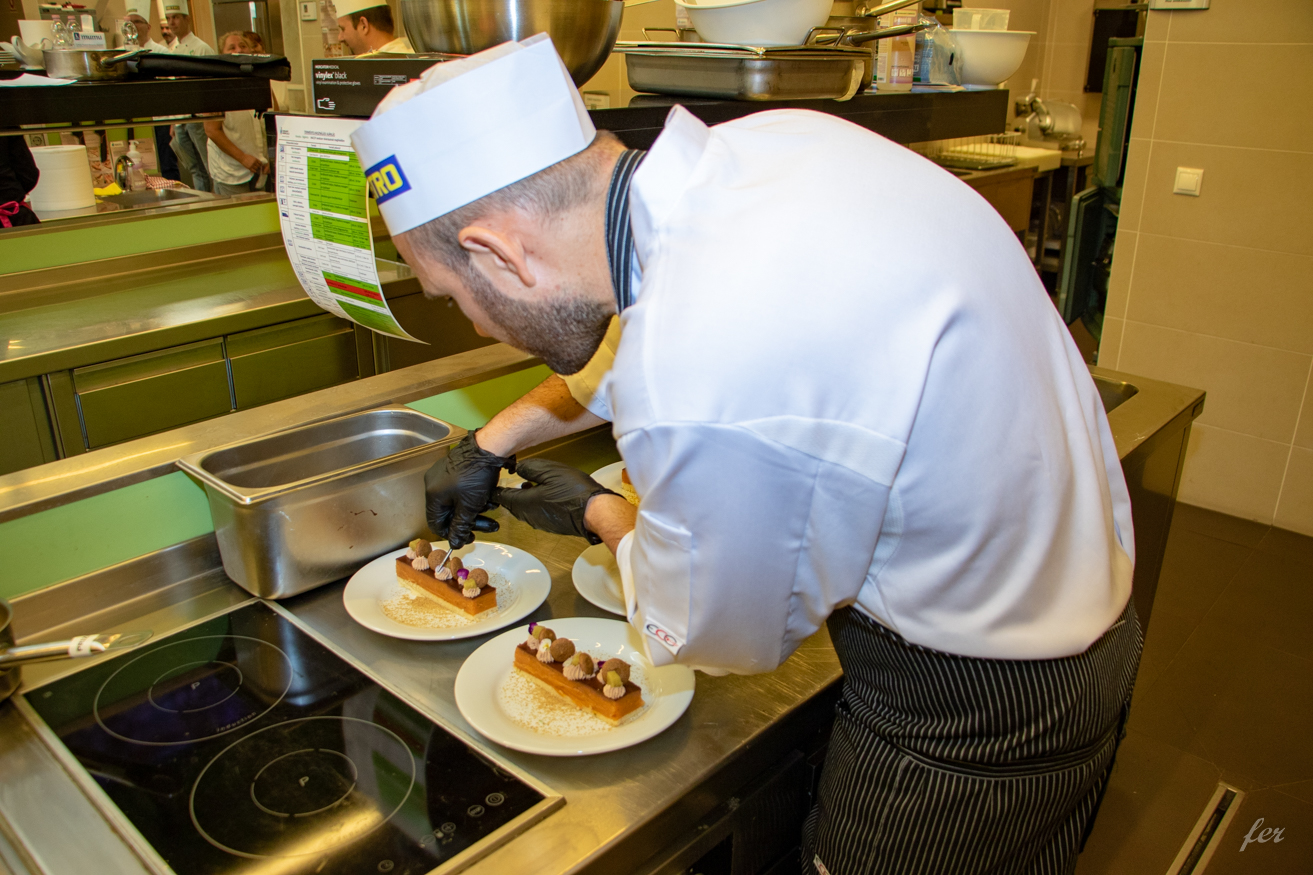
Photo by Ferenc Csárdás
What can be done to make the procurement of materials in public catering more profitable?
There are many solutions. I can tell you the method we use. We have eliminated the commercial links. We don't buy vegetables from the greengrocer, we buy them directly from the producer. But it's also true where we've had to cut back on our own labour. We used to have our own butchers processing the meat, but now we are forced to buy processed meat. The worst is the way the prices of raw materials are going up, ( 30-40% in dairy, meat ) and the amount agreed for a child's plate is 300 forints. Nobody notices that there is a price increase. I am often told that chops were 1000 forints and now they are 1000 forints. But it is a price increase!
This is an economic calculation. Why is it more expensive, which is the same?
The food was 1000 forints when the VAT was 25%, and it is now when the VAT is 5%. A reduction in VAT on a basic commodity in our public catering sector means an automatic price increase. In addition, there is a decree that prescribes decares. So it does not say that you must give your child good quality milk, but that you must give 2-3 decilitres a day. It does not prescribe quality, but quantity. Moreover, the segment is in a disastrous labour situation. The open caterer is luring the few workers who are left with higher wages. This sector is on a razor's edge.
Coming back to the raw material problem, which sourcing solutions would be appropriate?
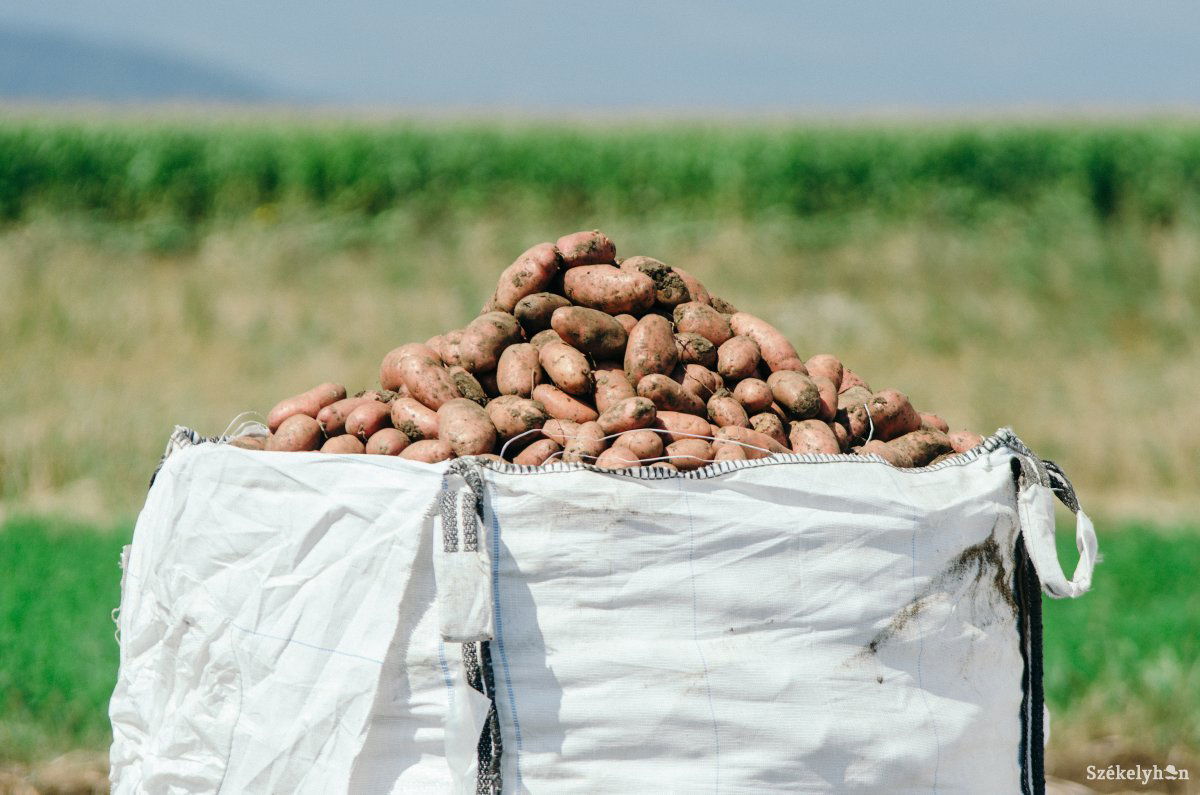
The real way out I would see is what we did with potatoes. We met a distributor there. He gives seed potatoes to farmers and helps them sell the potatoes. We pick two varieties and they grow them for us and we buy from him in return. It has worked beautifully in that the two potatoes we need have been available in good quality and in the right quantity all the time. The farmer was able to plan ahead and so were we. So we have good producers, we have good products and we have good suppliers. However, if someone wants to buy, say, two tonnes of the same potatoes cleaned every day, there is no such thing. There is nobody who would buy these potatoes, clean them and take them there. That part of the process has sort of disappeared.
In the catering competition, the challenge was 650 HUF/person/three courses. How can this be achieved in the current market environment? It seems totally surreal.
The reason why we put out a tender for 650 forints of raw material value - compared to the in reality 250-300 forints - because in Hungary today, this is the amount of money that can be used to put quality food on the table in large quantities, using quality ingredients. It is important to note that the competition is for adults. When people ask why a parent pays ten thousand forints in kindergarten, because it is 500 forints per day. However, this segment is subject to a VAT of 27%, so we will deduct that from it. The question is whether the parent pays the price of the raw material or the price of the full service. It used to be that the parent paid the value of the raw material and the municipality paid the operating cost of the company, that's how the price was made up, but not so in most cases today. So by the time you take all the costs out of it, you are left with about 200-250 forints per child. This is enough for a lunch in a good case, or breakfast, lunch and snack in a bad case. Our segment is in an extremely difficult situation.
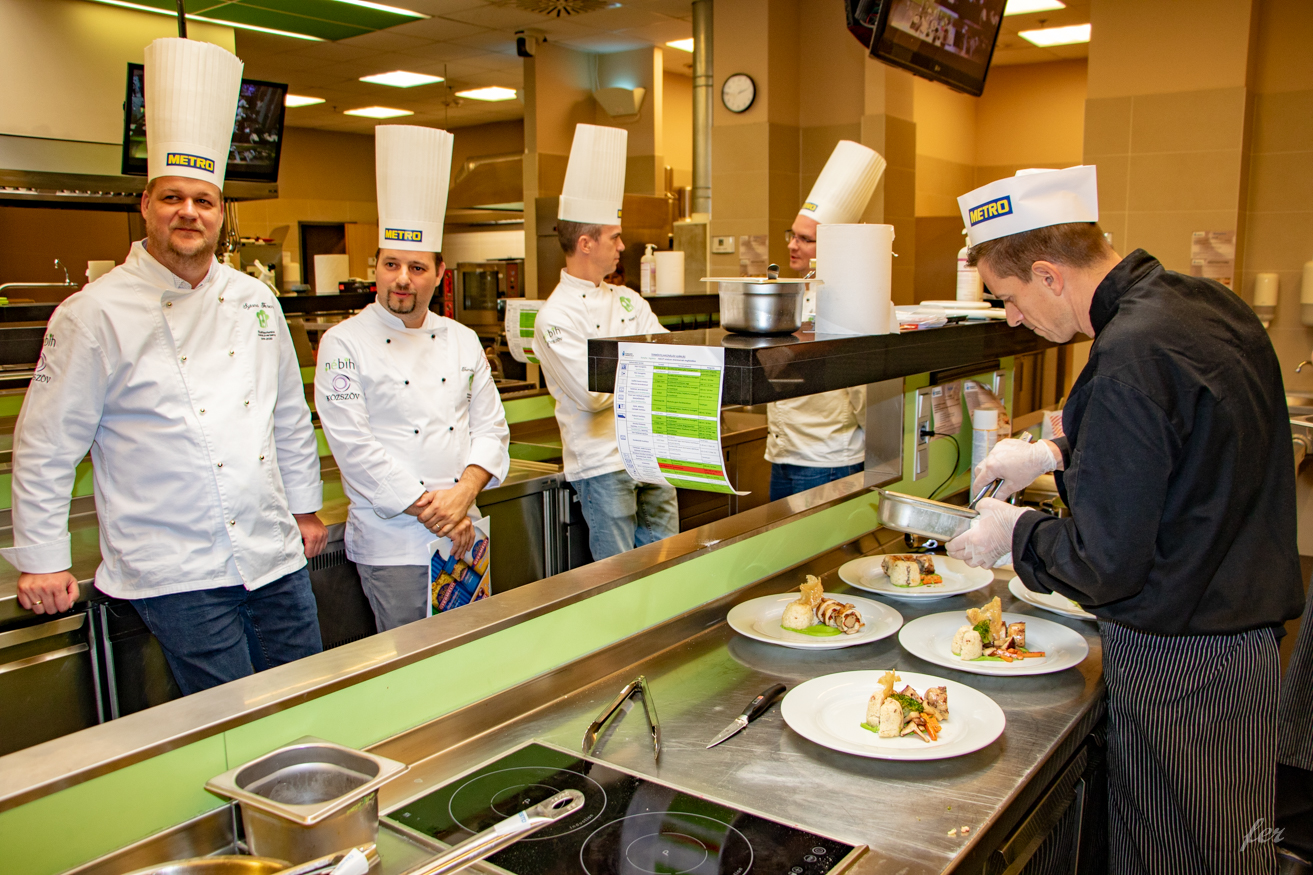
Photo by Ferenc Csárdás
What you just said sounds almost impossible.
In fact, in many cases it is almost impossible. They are constantly increasing raw materialprices, and costs. As a result, hardly any of it ends up on the child's plate. Yet we have to give them something seasonal, fresh and nutritious. Is it a sad situation? No question about it. Let me give you an example: what is beyond our borders?! In 1998 I was at the European Catering Championships. They set a standard for raw materials, from which you had to prepare a three-course meal and cook it for 100 people in a live working session. In 1998, the standard was €5 net! At today's exchange rate, that's 1806 forints! Compared to 250-300, 1806 forints. I think there is nothing to say.
Is there any way to change this?
There is another interesting problem. That public catering belongs to everyone but no one. There is not a single organisation that is doing anything serious about it. We in the PES - as an NGO - are trying to do everything we can to improve the situation, but it is an uphill struggle. We are constantly communicating with decision-makers and trying to steer the process in the right direction. We are not political, we just know our business and we try to be partners in making good decisions. There could be solutions. For example, we have started to sell office buildings on a weight basis. Everything is on display, people pick it for themselves and weigh it at the end, so they pay by the kilo. At the beginning, of course, some people took too much, but in the end it worked out quite well. The result was a 1/10 reduction in the amount of food thrown away, the slop. It's a good solution, but it's not in the public catering sector. I am sure that if there is time for meals and the child has a choice, it will bring a real breakthrough.
Sweden has an example in the field of public catering. For example, I have been to a German canteen where the tray has six seats. The child takes what he likes and eats it. What we have at the moment, unfortunately, is that the children get the food, they hardly have time to eat it, if they eat it, if they don't, they don't, and that's it.... We need to give back the white table culture and time! Everyone eats at the nursery as they are given out and watched over. Many in lower school, fewer in upper school, and in middle school kids hardly eat at all. That's because the lunch break is 20 minutes and 200-600 children have to eat lunch during that time.#
Author: by Tamás Budafoki
Photo by Ferenc Csárdás
Read more:
„I made a lot of game dishes: hunting and gathering in the woods for the side dishes”
„I see the potential for development in racing”
The chef who achieved everything in his career - interview with Lajos Bíró