






Interview With Dr. János Kiss, Master Specialist
Part 2
The evolution of sous vide today
In fact, sous vide technology goes back centuries. The concept itself is not new, we just understand the essence. Building on this, sous vide has been in development for a long time. In our previous article, Dr. János Kiss explained how he has developed the technology, but the journey is far from over!
- In our previous article, we left off at the point where the team you lead has worked long and hard to improve the The sous vide technology developed by Bruno Goussault. How did this revolutionary cooking solution come to our country?
- I came home for the first time after a long time in 2000 and introduced the technology to the Hungarian public for the first time in the Opera restaurant. At that time, not the finished equipment, but the product itself. Of course „since then, other mothers have had smart children.” Sous vide has spread around the world and I can safely say that I have been part of creating a solid foundation.
- The initial difficulties in the 1990s, the innovative approach, where has this technology developed to today?
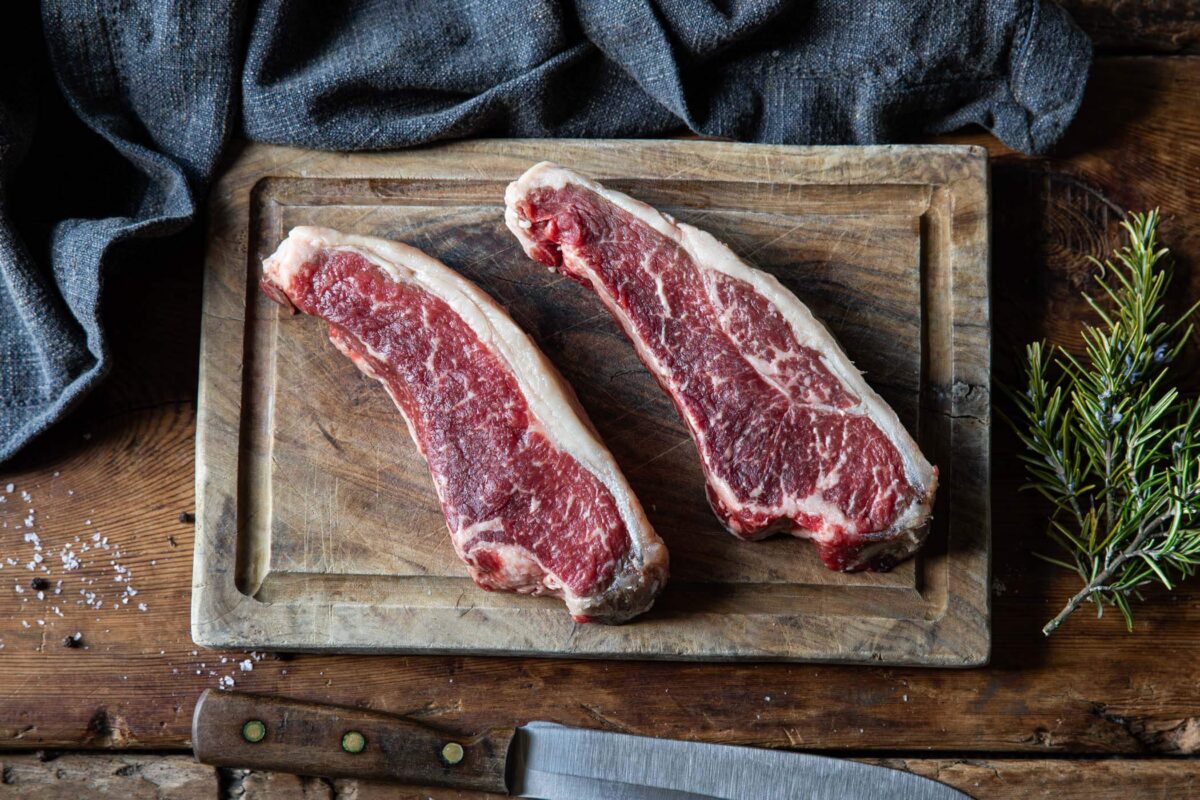
- You could say that - apart from steak - we can get everything sous vide-push. Even a watermelon! For a long time, sous vide was not even a good word because even the professionals thought it was a frozen dish. But, if you look at simple freezing, water freezes at zero degrees and it's like a sharp needle or a sharp knife. It'll cut the cells. It changes the inherent properties of the ingredients. That's why it's important to freeze with nitrogen, which can create this physical change at the same time - and that's the key word. We can preserve the intrinsic properties of the raw materials - without any deterioration in quality. One thing they don't know yet is how to bring it back perfectly from refrigeration.
- Does this mean that sous-vide is still being developed, researching the potential of the technology? What can't they bring back?
- Innovation never stops! There is still a lot of research to be done. Once frozen by nitrogen, raw materials cannot yet be brought back from freezing to their completely fresh form. I did it!... I managed to bring back live lobster - after three months and one year. But only because of the thickness of their shells. Basically I have not been involved in research for 3-4 years, but I am always kept informed of developments.
- The one thing I don't understand, and I don't see it in kitchens - only shocking - is the use of nitrogen.
- Nitrogen is used in sous vide only if you want to freeze and store it. The point is, if I have, say, an event for 2,000 people and I know the date, the time available and the human resources, we can help a lot. So we can prepare large quantities of food in advance without compromising on quality. We can take the pre-made frozen products out of the fridge and turn them into perfect meals. Another important factor is profitability. If the event has 2500 people, no problem! You don't have to worry about the kitchen- you have the ingredients- and you can do it just as well for 2000 people. But if the event is only for 1500 people, then there is no wasted raw material, no loss, because there are only so many portions. raw material are used.
So sous vide is also a serious economic solution for hotels, restaurants and even households. So sous vide is not for a specific use, but is used when you want to store quality food for a long time. What is actually used more in kitchens nowadays is what I would call cook-chill technology.
- So the essence of sous vide technology is cooling and freezing?
- It's a complex thing, but it's all about fresh ingredients. If it is good, if we know its behaviour, we can manage it. Hence, if we have the quality in our hands and we use the technology - I come back to bacteria - it will not deteriorate and can provide a long-term solution, even in large quantities. To answer your question- this is one of the crucial parts of sous vide itself.
- So research and development has not yet stopped?
- I don't think so at all. It's a permanent process - so you can't say that something has stopped evolving. It is a continuous innovation, a continuous innovation - as it is in any other field of life. I should add that I needed the basics, which I was involved in, and I needed the knowledge. The knowledge that tells us, when we make improvements, where to go and how to do it better. I'm working on a new machine right now, the ideas for which are already on paper and I hope to continue to contribute to universal gastronomy.
Source: Airchef, Dr. János Kiss
Photo: Matusz-Vad, pixabay
Sous vide technology behind the scenes, with chef Péter Pataky
Sous vide technology from space travel to Hungarian developers