





It's not only in food that the sharing concept is booming. More and more restaurants are encouraging people not only to share their culinary experiences with good friends in restaurants, but also to share them consciously with strangers, which can have a number of benefits. Find out all about the sharing table!
Enjoyment means taking the time to consciously perceive and take in certain things, whether it's a trip, a meal or just a lazy Sunday. But it becomes even more enjoyable when we share that moment with others rather than experiencing it alone. As the saying goes, happiness is the one thing that becomes more when shared. Probably the most forward-thinking chef of our time, Ferran Adria builds on this when he says: „The biggest social network in the world is not Facebook, it's food and drink.”
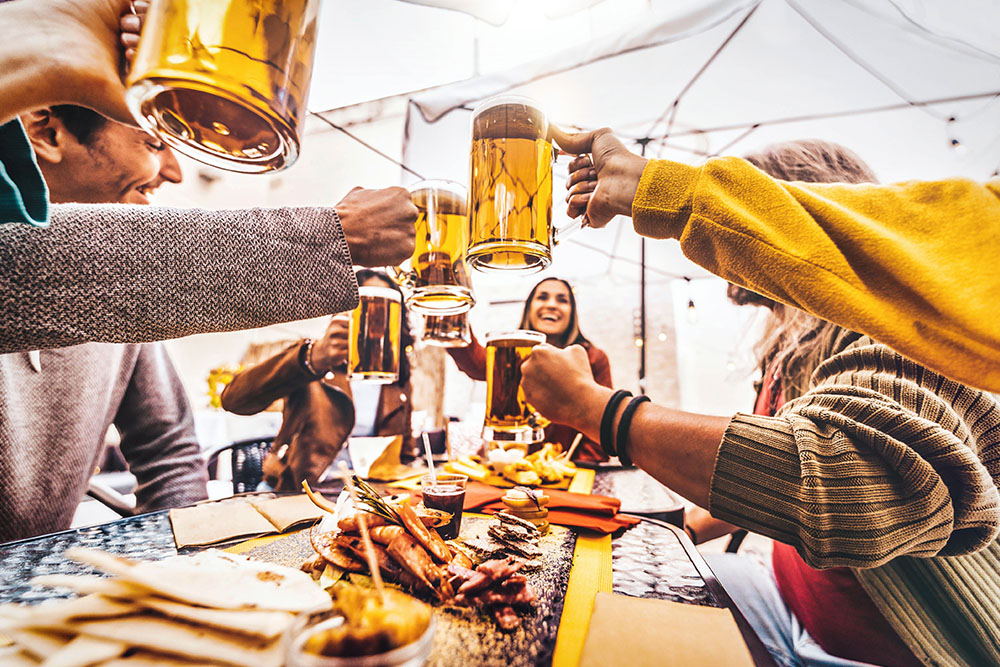
FINE DINING AS A COMMUNITY EXPERIENCE
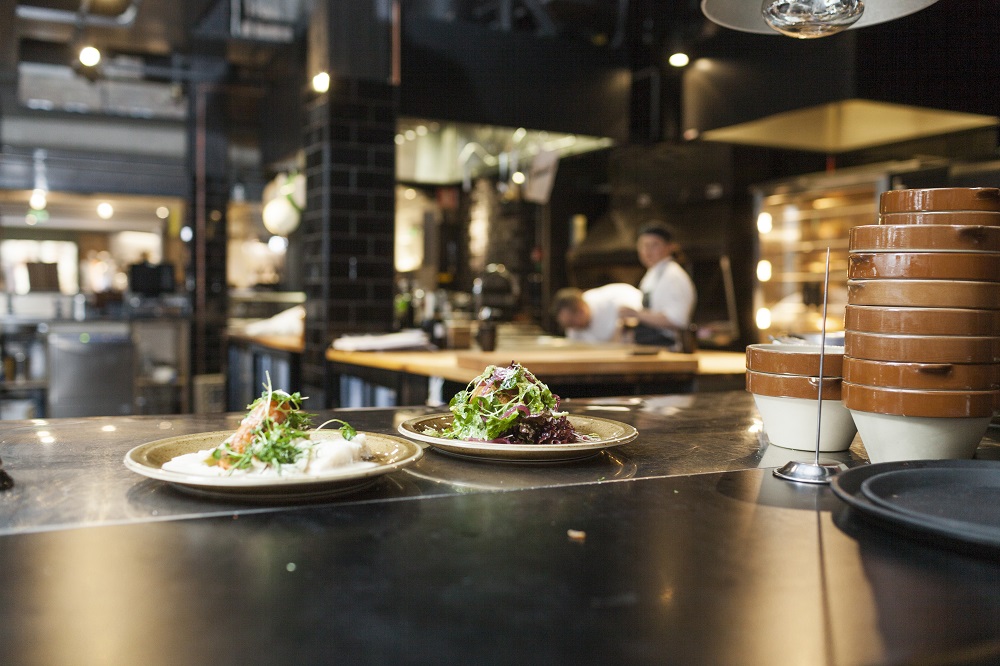
This trend is reinforced by the Mallorca Brut Restaurant is. Argentinian chef Edu Martínez chose an unusual set-up for the split table concept. In this fine dining in the restaurant, you can only be seated at the bar. Brut has 16 seats - and you don't always get to choose who sits next to you. Intimate conversations may not be as easy here as elsewhere, and the gastronomic experience is no longer a private one, but a communal one. So much so that, thanks to the open kitchen, guests are involved not only in the meal but also in the preparation, making a visit to the restaurant a full-fledged communal event.
Chef's Table At Brooklyn Fare, a fine dining restaurant in New York, has also opted for a bar-style split table. Unlike Brut, the restaurant has a few separate tables; however, the real action is at the huge bar. The original split-bar concept, preserved by Austrian Max Natmessnig and Dutchman Marco Prins, also offers a view of the open kitchen, allowing almost twenty guests to share both bar seating and culinary delights.
Will the Swiss wave reach us?
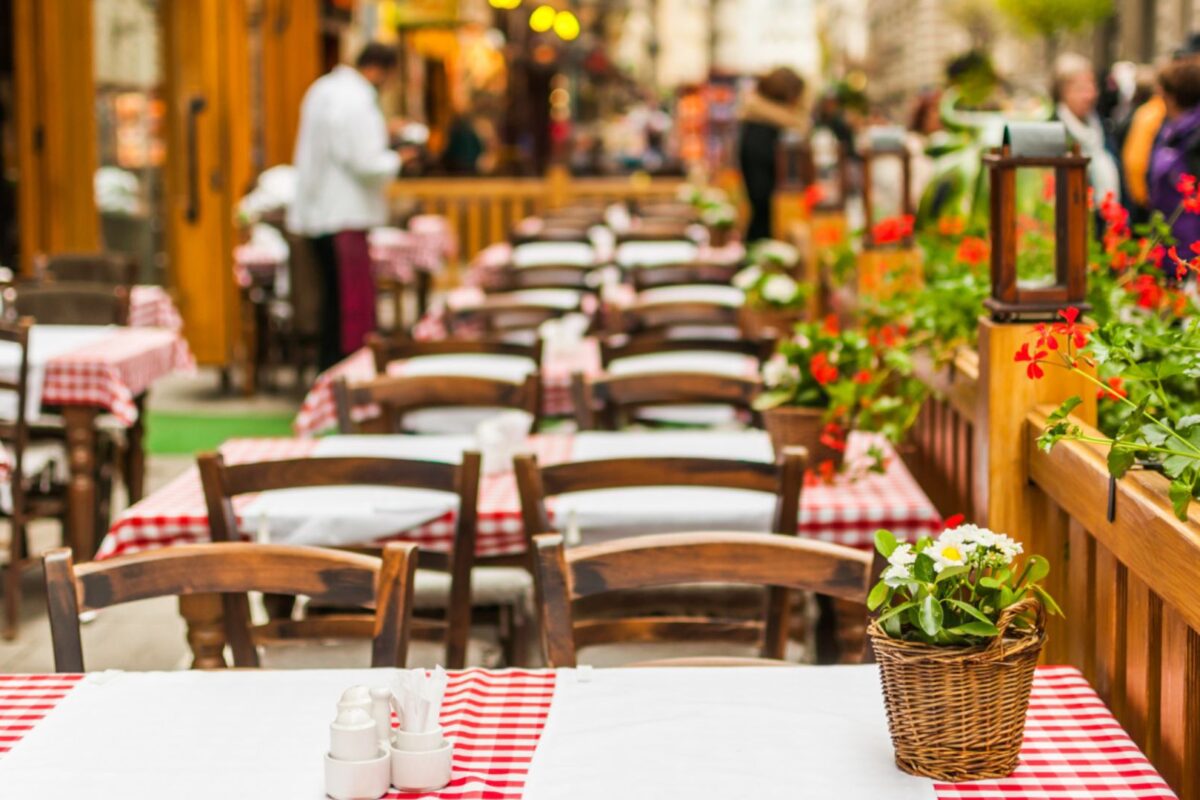
On the West Coast of the United States, Walter and Margarita Manzke have implemented the concept of the community table. The République is housed in a historic brick building, built in 1928 by none other than Charlie Chaplin. It is a café with long, split wooden tables, with an atmosphere more reminiscent of a medieval knights“ hall than a typical café. While dinner is served at the private tables of the adjoining restaurant, during the day the café is self-service; guests then take a seat at one of the shared tables, where no one is afraid of ”stranger' contact. The café concept is a very popular one, with guests often waiting in long queues, especially for the breakfast offer.
However, the concept, dubbed the ‘m-eating table’, also proves that the popularity of shared tables is not just a fad for the eccentric or extravagant upper class, as there is a social element to it. A in a project launched in Switzerland participating restaurants will set up a large table, which will be designated as an m-eating table, indicating that it is a shared table. Diners are then asked if they would like to sit at the communal table, but there is of course the option to sit independently. And if one chooses the former, there are many reasons. Some people simply don't want to sit alone, others enjoy the opportunity to socialise and some make new friends in a strange city. And the success speaks for itself: ten cities in Switzerland already have more than twenty restaurants on the m-eating table list.
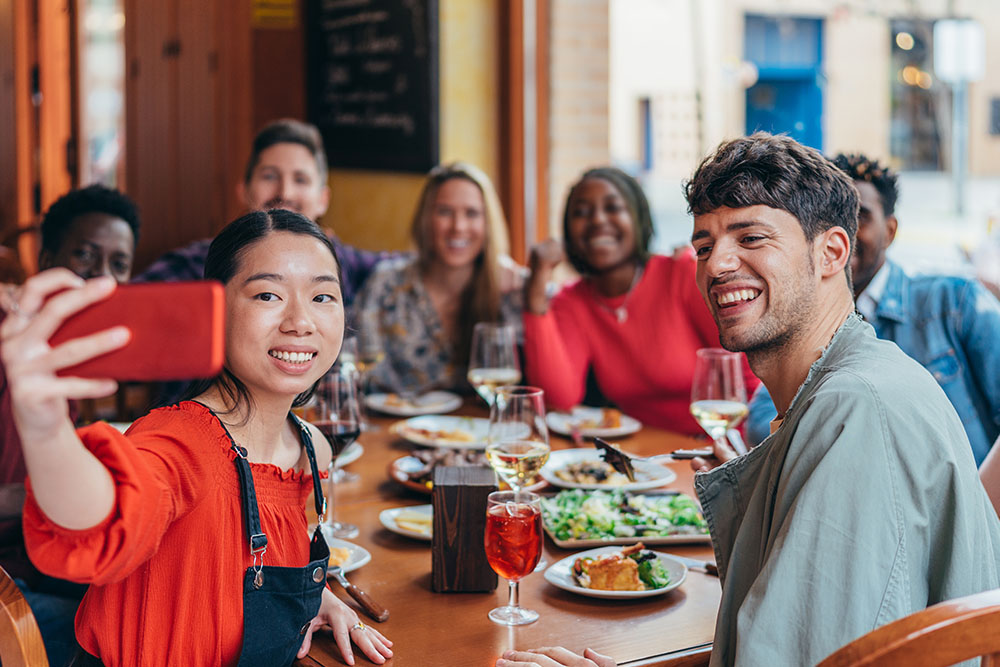
SHARING IS IN FASHION
If we put fine dining aside, we quickly realise that this type of dining is not new. In fast food restaurants, tents, food courts or beer gardens, shared tables have long been accepted. In fact, people are increasingly sharing things with others in other areas too, for example in the form of car-sharing or renting a flat.
What is new, however, is that people are consciously looking to share. As German trend researcher Pierre Nierhaus explains in Gastro Trend Report in 2022/23, the need for community, relationships and connections is “...ancient. People have always come together with their families, with friends and guests to share the experience of eating out. This remains true today.” Nierhaus says food and drink are the “glue” of society.
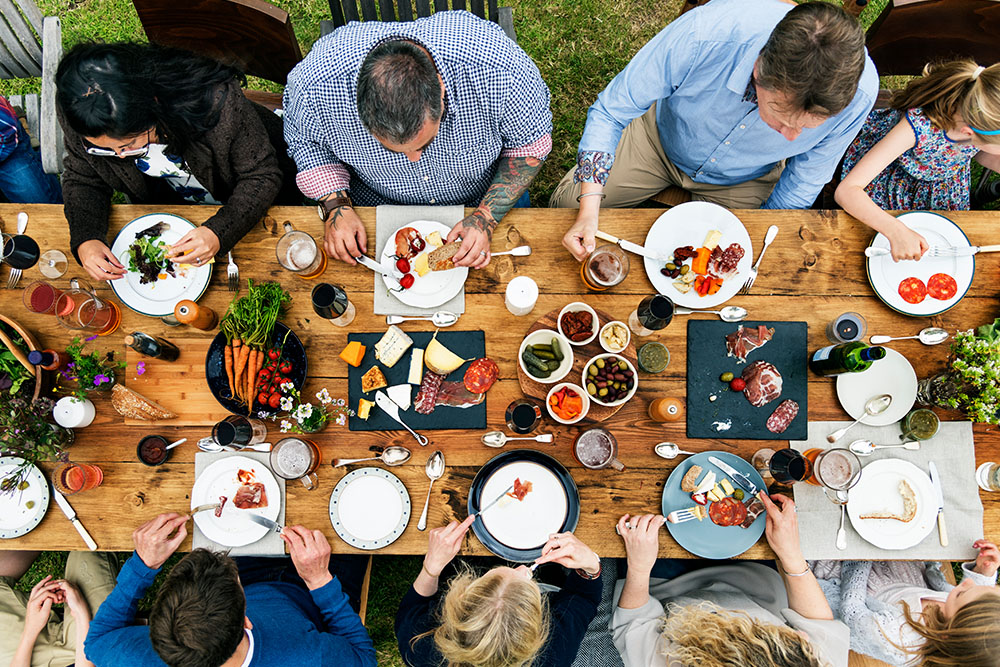
ADVANTAGES of the split ASTAL concept
In particular, after the many closures, restrictions and social isolation caused by the coronavirus, people were literally starved for connections, to come together and interact with others. Restaurant owners also benefit from the use of shared tables - especially in such volatile times. For one thing, they increase seating capacity; there is no need to leave space between long tables or bars used for a single meal that would otherwise have to be staffed. On the other hand, larger groups can be seated more easily without having to make any changes. And the fact that restaurants with shared tables tend to have shorter waiting times than those that do not have this concept is likely to please diners.
Although this trend is less widespread in Hungary, we can already see a few examples of it. On the fine dining side, there is Jenő Rácz's Roumor, Asian restaurant Quí on Arany János Street, or Marci Keve's third recently opened restaurant 101 NEO, while the Vapiano chain of Italian restaurants has been using large communal tables for more than 10 years.