





Halal certification can be applied not only to meat, but to all kinds of foods, from cereals to drinks. But the main question is: what does halal mean? Let us tell you up front that it means much more than the slaughter of animals.
When we first encountered the so-called halal food in Hungarian, we must have reread it several times to make sure we understood the word correctly. It's just a coincidence that the Arabic word halal (Arabic spelling: حلال) and the Hungarian word for „death” coincide, but since the term is basically related to the method of slaughtering an animal, it's no wonder that we are struck by it at first.
But halal is much more than just a technology for slaughtering animals. It regulates the conditions under which animals are kept, fed and slaughtered; in the case of dairy products, the keeping and milking of the animal producing the milk; and in the case of vegetables and fruit, the growing and processing aspects. It is interesting that, irrespective of religion or origin, it sets out the requirements that are increasingly important for modern man in his daily diet.
How can this certification be achieved?
In Hungary, the halal label is mainly found in Turkish butchers and Arab grocery stores. Nowadays, it is not only found in the Arab diaspora, but also more and more often in the general trade.
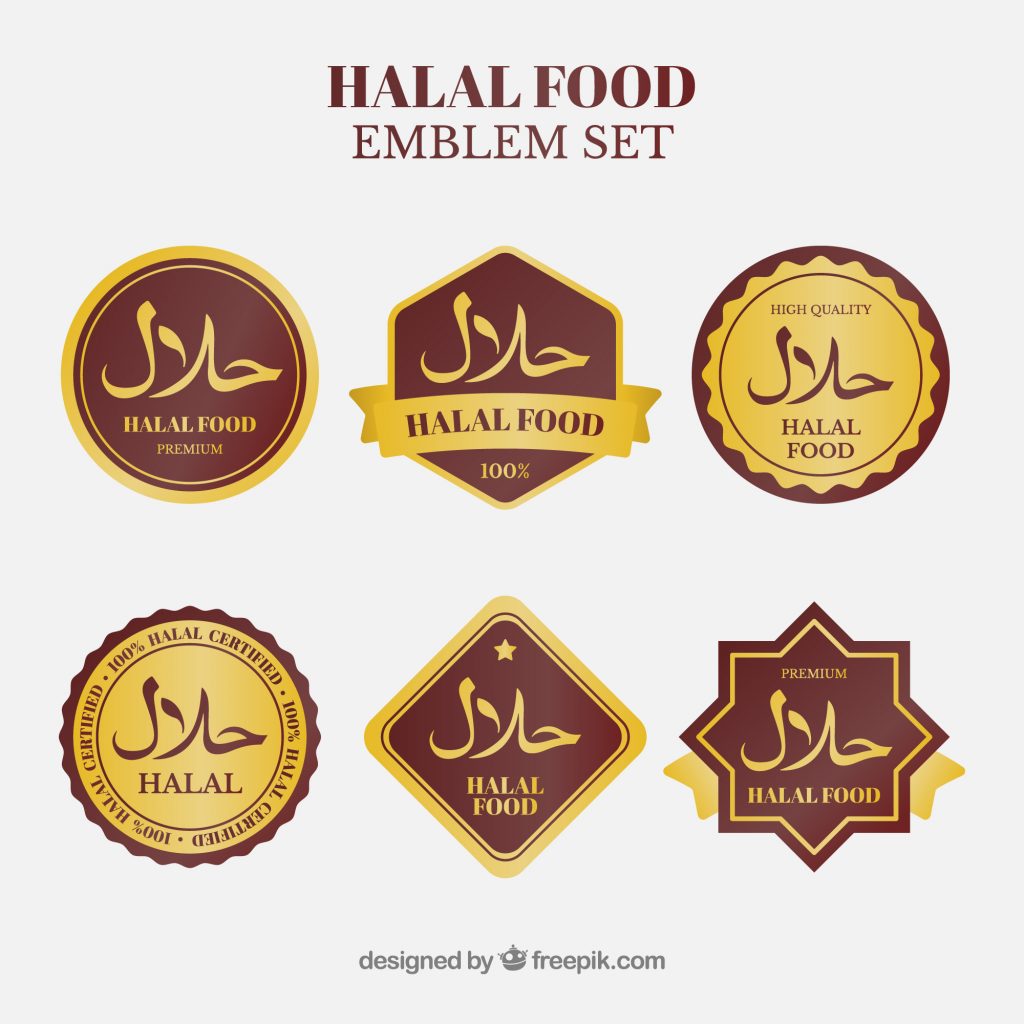
Halal means "allowed" in Arabic. Halal food by pork we mean pork whose production is in accordance with Islamic law, as described in the Qur'an. Clearly, we will never see pork slaughtered for death, as in Muslim culture pigs are unclean animals and are not consumed in any form. The same applies to meat from predatory animals and carrion. This is a key issue in halal slaughter.
The meat may only be given the halal qualification if the animal is slaughtered according to Islamic rules of the animal. An important term that cuts here is dhabiha. This is the Islamic prescribed form of slaughtering an animal by cutting the jugular vein, the jugular vein and the trachea. The animal must die immediately, without further suffering, and be completely exsanguinated. Butchers must take the utmost care to ensure that no blood and haram (i.e. forbidden) meat or other foodstuffs are encountered during further processing.
The rule is that the animals must be alive and healthy at the time of slaughter. Islam is not the least bit lenient in this respect. During the process of bleeding the animal, Muslims must recite the holy sermon known as tasmiya or shahada and must pronounce the name of Allah, thus honouring and „purifying” the slaughtered animal.
The five choices: from death to haram
In the Koran, halal is the opposite of haram (forbidden). In Islamic jurisprudence, this dual principle has evolved into a more complex system called „the five rulings” (...) Islamic jurists differ as to whether halal covers the first three or the first four of these," writes Wikipedia relevant article. The five categories in Muslim culture are fard (absolute duty), the mandub (recommended), the halal (allowed), a makruh (undesirable) and the ultimate, the haram (prohibited).
As the above quote shows, there is far from uniformity in the interpretation of the Qur'an. The modern world poses many ethical questions for Muslim communities. There are debates about certain aspects of halal slaughter, including whether stunning is permissible. In the UK, the Halal Food Authority (HFA), which is responsible for quality control, has taken a position on the issue, although some loopholes may be found. According to this non-profit organisation, which monitors compliance with these principles, the animal cannot be stunned, but stunning may be used if the animal survives and is then killed in accordance with halal standards.
The British animal welfare organisation RSCPA (Royal Society for the Prevention of Cruelty to Animals) is calling for animals to be stunned before slaughter, in line with modern standards. They strongly agree with Muslim communities that there is a need for much more comprehensive and transparent labelling in the trade. Consumers should know whether an animal has been stunned before slaughter. They should also be informed of the method of slaughter so that they can make their own judgement on whether or not to choose the product.
Halal meats and other products are becoming more widely available in this country, including the lamb, and chicken, turkey, calf, beef and dairy products.