






It is undeniable that in the last decade it has become one of the most successful food in Europe for sushi. And it's really adorable! Of course, there are also quite a few people who can't stand the smell of it. But what is certain is that it tastes special, healthy and trendy.
It has also become a separate genre in the dinner programme. You can say that you're going out for dinner in the evening..., but how much more is it to say that sushizni we go. Of course the secret here is also where and what quality. In fact, nowadays, a serious routine is no longer a prerequisite for making it in the kitchen at home. We'll give you some ideas, no and of course we'll also tell you why it's such an extra, astonishing and delicate dish for sushi.



Thanks to the wolf we have the 5th base bridge
When you say sushi, you usually think of Japan and raw fish in rice. But the Japanese already had the process ready-made. Sushi originated in Southeast Asia. The creation of the dish was not so much a matter of taste as of practicality. The fish had to be preserved in the humid tropical climate, where the dried or smoked method of preservation was not very successful. But the ancient wisdom of experience meant that fermentation could also be used. And since rice was the staple food in Southeast Asia, it is no wonder that they put the fish in boiled rice and left the fermentation to the rice for preservation. While the rice did its job, it also became inedible. But thanks to the fermentation process, the resulting rice vinegar broke down the fish into amino acids. The result was not only the ancestor of a great dish, but also a new base flavour, unami. Since then it has been referred to as the 5th base flavour, along with salty, sour, sweet and bitter.
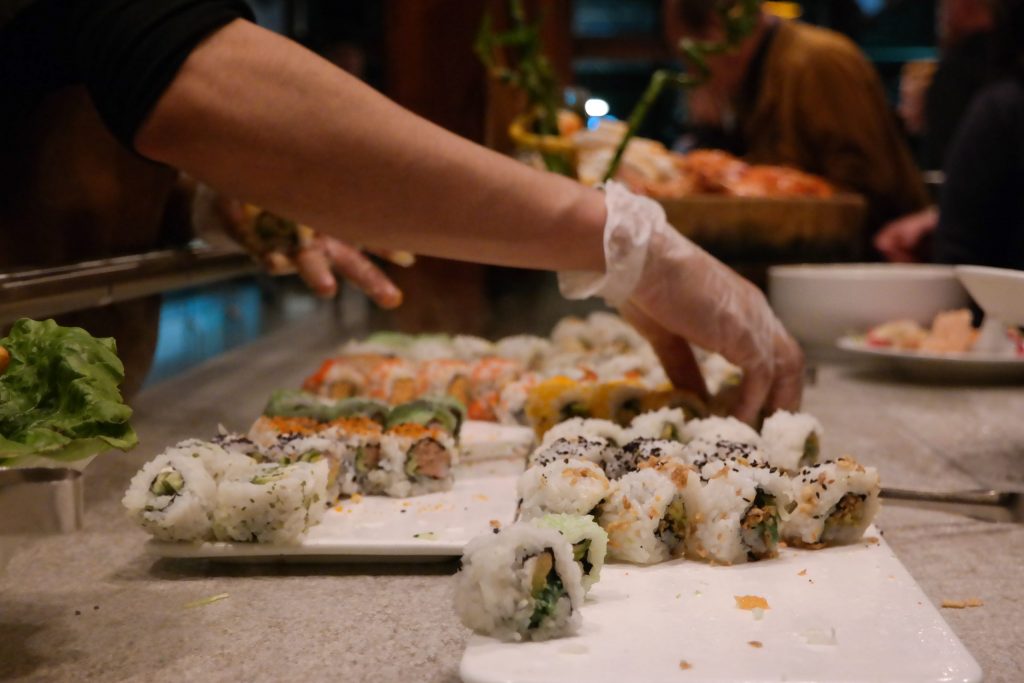
Sushi, today's favourite food
The food we now call sushi is now a Japanese tradition. They developed the ancient method of preservation. The beauty of the original fish fermented in rice was that the rice became inedibly acidic in the process. But a Japanese development has updated the process. The fish was ripened in the rice for shorter and shorter periods. The result was that the rice was still edible, although the fish no longer tasted as they once did when embedded in fermenting rice. The bites are also the result of a recent development. The sushi wrapped between the substrate is now spectacular and easy to eat with chopsticks. But it is also undeniable that this is no longer the dish that was the starting point. The good news for connoisseurs, however, is that subsequent developments have introduced more and more extra-quality fish into sushi, expanding the flavour palette. It's all down to the recipe and the on sushi ingredients but here's help with that too! #