






Since the so-called gastronomic revolution in Hungary, hekk has received a lot of bad press. In fact, there are many arguments in favour of eating more local fish, but it is no coincidence that hake has become a widespread favourite.
Sea pike, pike perch, hake. Under all three names, the hedgehog (Merluccius merluccius), a fish species with special status in Hungary. This marine fish, which belongs to the order of cod, has become so ingrained in Hungarian culinary culture that many people think of it as a local fish, or even as a fish from Lake Balaton.
In this in a memorable video many beachgoers believe that hake is a freshwater fish and can be caught from Lake Balaton. Fishing in Lake Balaton is banned, and the hake does not survive in fresh water.
He started his domestic career in the 1960s, as a cheap and high-quality sea fish in the socialist scarcity economy. Hake is still very popular today throughout Europe and parts of North America, but is also consumed in other parts of the world.
Its natural habitat is the Atlantic Ocean, from Scandinavia all the way south to the coast of North Africa, and it is even fished on the Atlantic side of South America. Depending on how close you live to the coast, it can be bought fresh or frozen. In some places it can be smoked and salted, but not in Hungary. Even among the suppliers of the more mass-produced hekk, we can now find producers who have sustainable fishing practices and are certified.
Awesome exterior, ideal interior
The slightly scary-looking hedgehog is a predator, just by looking at it. Its torpedo-like, elongated body shape tells you that it can accelerate through the water in a short time. Its monstrous appearance is also due to its mouth full of needle-sharp, long teeth. It lives at surprisingly deep depths of 200-300 metres, staying down during the day. A nocturnal hunter, it swims up close to the surface, targeting mainly schooling fish such as herring.
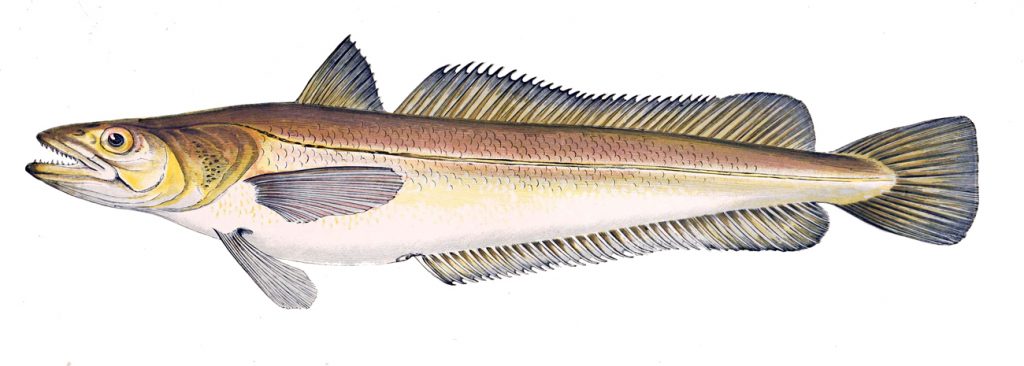
This marine fish grows up to a metre and a half, but in our country you will often only see a whole fish of 25-30 centimetres in length when cooked whole. Its popularity is due to two characteristics. On the one hand, it is almost completely free of splinters and, on the other, it is available at a reasonable price compared to other larger, fleshier fish.
A hekk the flesh of his flesh must be hard and white in colour. There must be no discolouration, bruising or defects of any kind. After heat treatment, the flesh of the hake will easily peel off the backbone, whether you opt for steaming, boiling or frying. The flesh has a nice texture, releases little water, is “biteable” and does not fall apart after cooking or frying.

This makes it just as ideal for grilling as it is for making fish-based casseroles, and it has become a star at home in breaded breadcrumbs or rolled in paprika flour. After the necessary washing, it loses its characteristic fishy smell, which is why it is popular with people who find freshwater fish in their home waters “puddle-tasting”.
The taste of hake is delicate, not intrusive, very slightly sweet. Being a white flesh fish, it is a great combination. It goes as well with other seafood as it does with heavier meats, for example cooked with bacon in a casserole.
The value of hedgehog
It is the most popular buffet dish in Hungary, but is also on the menu in restaurants. Its negative press in recent decades has been due to the fact that it has become synonymous with ingredients that are not locally produced and seasonal, and are brought from far away. Contemporary gastronomy, which strives for quality and authenticity, tends to use local and seasonal ingredients, but that does not mean that eating the pure white meat of hake is not desirable. Salmon, tuna and countless other species of fish and seafood come from the seas and oceans, yet they are not as under attack as hake. Yet, overall, we still eat very little fish all year round. It's a good choice to eat fish, and not a bad choice at a waterside buffet or a restaurant with a plaid tablecloth.