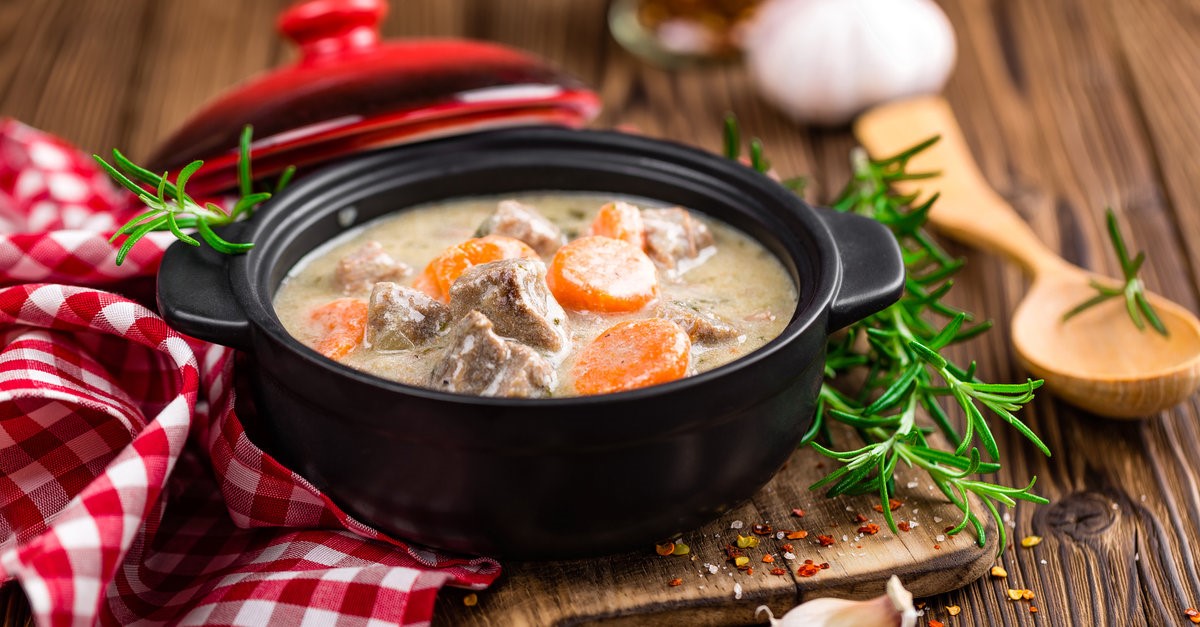







It is said that onions are the basis of all good food, and this is not just a cliché. This ordinary yet versatile vegetable is a true wonder in the culinary world, without which even the simplest recipes would be unthinkable. But what makes onions indispensable in the kitchen?
From the basics
Onions are a wonderful ingredient that add texture, depth and complexity to our dishes. In most kitchens, onions are part of the sofritto or mirepoix, which is the basis of soups, stews and sauces. But it can do so much more!
The diverse onion repertoire
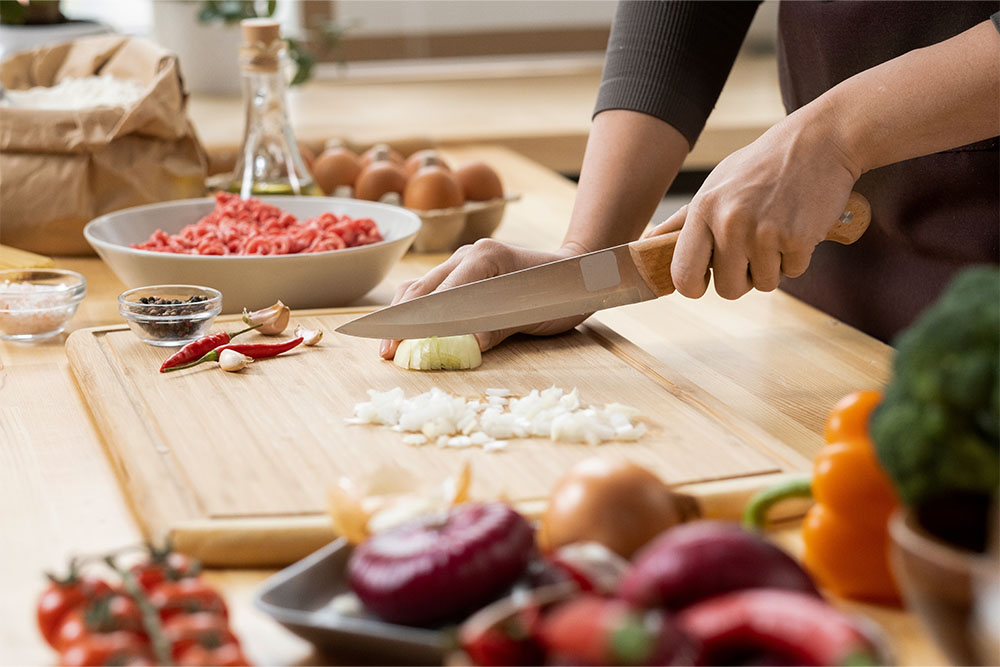
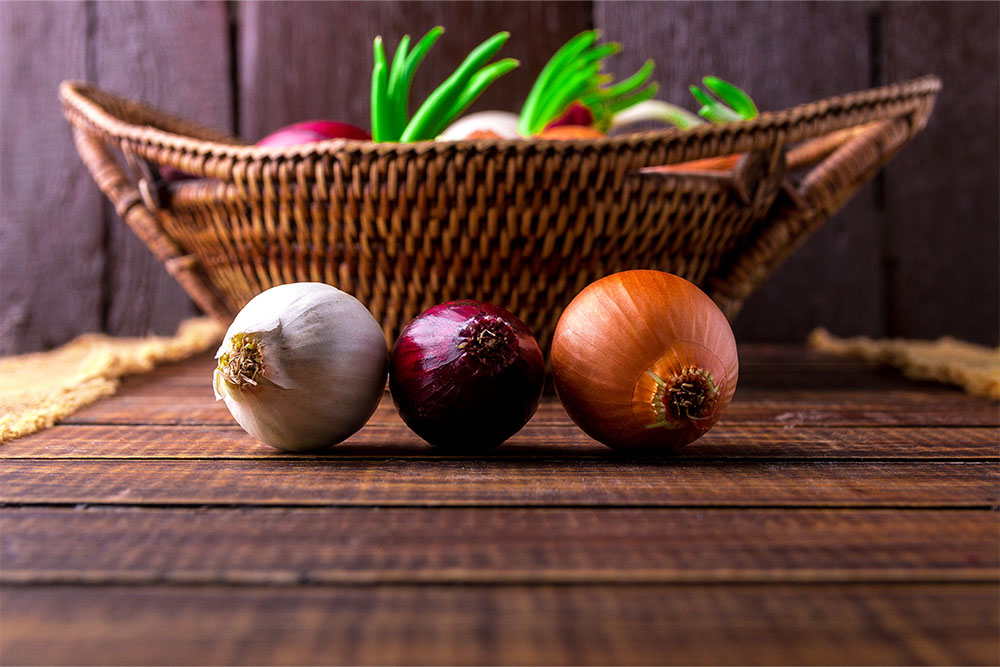
Some people prefer purple onions for their sweet taste and spectacular colour, while others prefer white onions delicious they swear. Yellow onions are the perfect choice for caramelising, while shallots have that special garlic flavour that can be added to your sauces. And don't forget the cherry size pearl onions which can be a real speciality in our food, but leeks and garlic we would be lost without it. A real cook does not just chop and fry onions. He knows that different cutting techniques produce different textures and flavours. From delicate brunoise pieces to more rustic, larger pieces, each cutting method gives the dish a different character. Caramelising onions? A slow, bubbling dance of flavours in the pan, turning golden brown. Or how about a quick roast that gives a sharp, strong flavour? Even raw use holds its own in certain salads or in ceviches, where freshness and mild spiciness are desired.
Points of interest
- The Latin name for the onion is allium cepa, which means a herbaceous plant that needs to be cultivated. The wild onion, Allium canadense, is native to North America.
- The edible part of the plant is the tuber, of which there are three main varieties: the strong pungent yellow (or brown), the moderate white and the sweet red.
- When our eyes start to water while chopping onions, it's because our eyes are trying to remove the sulphuric acid produced during the chemical reaction, which can damage the layers of the onion and the protective functions of the eye. How can it be prevented? It's a volatile, water-soluble molecule that fortunately can be easily washed out in water. Another common tip is to use of a very sharp knife, or put the onions in the freezer for 10-15 minutes before slicing.
- The onion harmful to dogs and other domestic animals. They can cause serious harm to them and should not be given to them. Onions destroy red blood cells; even small amounts, if used repeatedly, can cause dangerous anaemia.
- Onions were grown in ancient Egypt, and were one of the main nutrients given to slaves during the construction of the pyramids. The Egyptians revered it for its shape and its rings, which symbolised eternal life. Its strong scent was believed to bring people back from the dead.
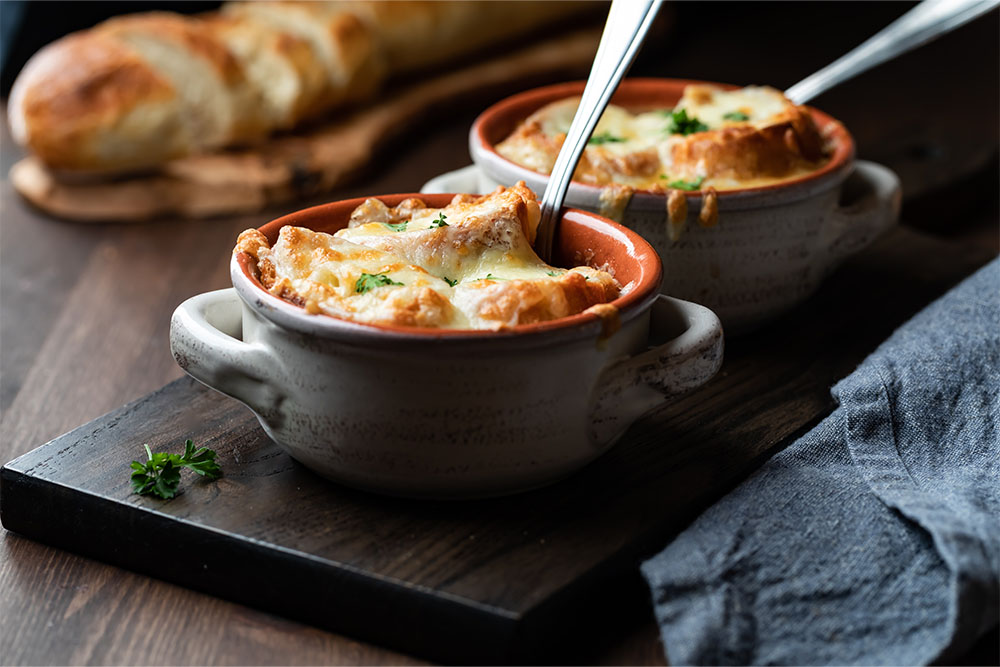
- The famous French onion soup made with caramelized onions, veal soup, bread cubes and cheese, baked in a ceramic dish in the oven. The modern(ebb) version originated in 17th century France and became popular again in the 1960s thanks to a renewed American interest in French cooking.
- In ancient Rome, gladiators used onions as a salve on their skin to strengthen their muscles. And in ancient Greece, athletes were the favorites.
- It was Christopher Columbus who brought it to the Americas via Haiti in 1493.
- We should also not forget the health benefits of onions. Abundant in quercetin and other antioxidants, eating onions contributes to a healthy lifestyle and the nutritional value of our food.
Onions in the International Kitchen
Onion varieties from all over the world give us the opportunity to bring international flavours to our dishes. Just think of the richness of the French onion soup mentioned earlier or a good Indian onion soup. curry sweet-sour complexity.
Whatever your level of cooking, onions are the trusted partner that is always on hand to add flavour to your dishes. Whether it's a simple about Italian pasta or the highlights of a five-star menu, onions are an indispensable part of our everyday lives.