





Just as a book can make writers world-famous, so too can chefs gain fame and recognition for their signature dishes. These five unique dishes not only bear the chefs' individual signatures, but have also made their mark on culinary history. Simply put, they can be called classics or house specialities, but the so-called signature dishes are much more than that. They are more than just an impressive dish that will be remembered for a long time. Signature dishes express the origins, skills and philosophy of the master chefs. They reflect their identity and bear the unmistakable signature of their creator. Carefully selected ingredients are combined with innovative techniques and, in most cases, tell a story that goes far beyond the taste experience.
The signature dishes provide an experience, that appeals to all our senses. But what makes a meal so extraordinary that people around the world remember it years later?
ECKART WITZIGMANN signature catch: KALBSBRIES RUMOHR
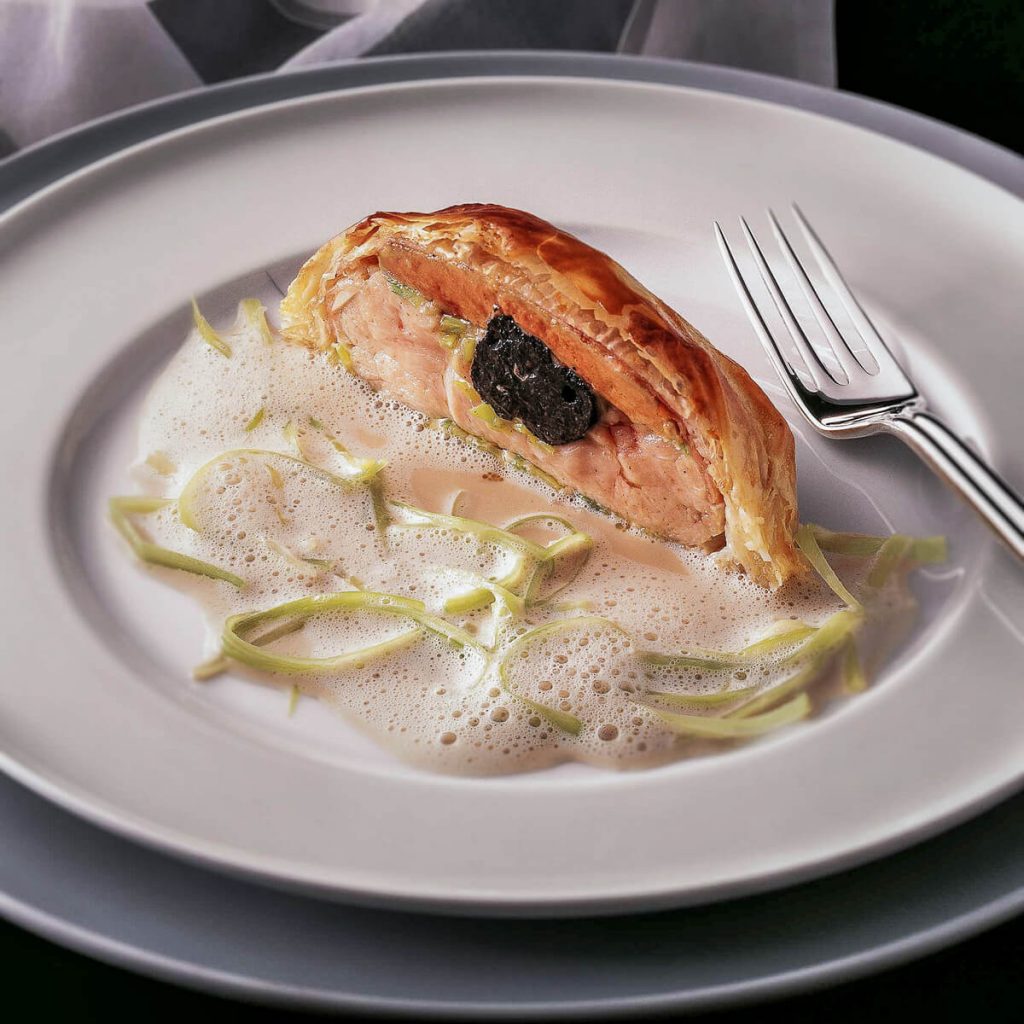
When a dish can still be found on the menus of the country's best restaurants almost five decades after it was created, it says everything about its versatility and timelessness. Eckart Witzigmann, the world-renowned chef and father of the German gourmet miracle, has achieved this brilliant feat on more than one occasion. However, none of his creations are as famous as the „Kalbsbries Rumohr” (Rumohr veal gland), in which Witzigmann combines excellent haute cuisine ingredients in a surprising way.
There are many variations of the dish, but calf's gland is always the star. You need black truffles and foie gras, Madeira wine, champagne and much more. It pays homage to its Austrian homeland by wrapping the creation in puff pastry or pastry - a kind of luxurious strudel. The name is a tribute to Carl Friedrich von Rumohr, an early pioneer of fine cuisine.
HEINZ REITBAUER's signature dish: PISTRANG WITH PIGEON
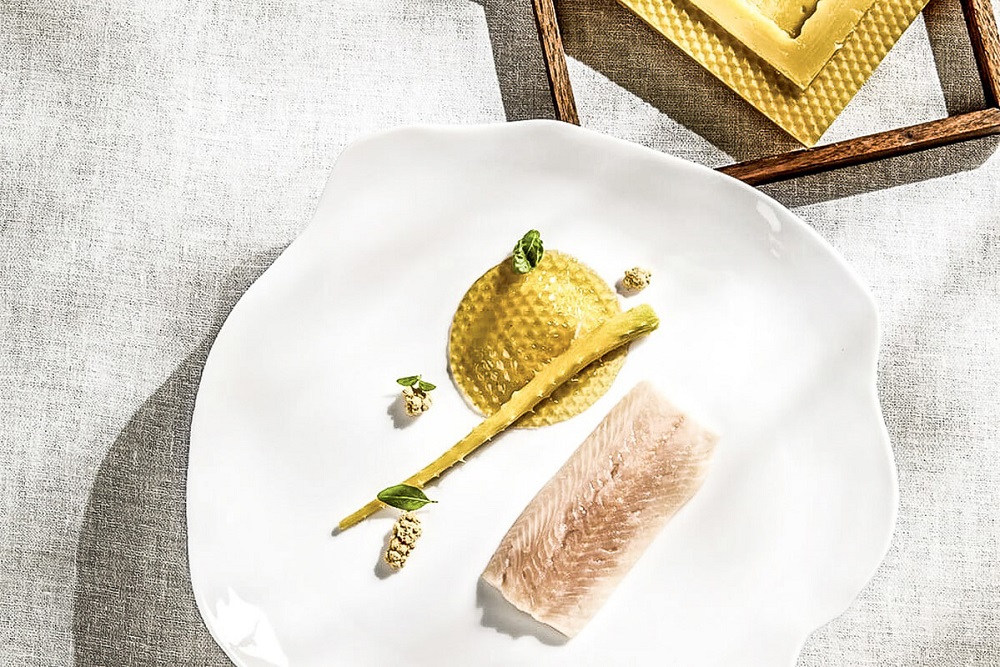
Sometimes it is not the ‘what’ that makes a visionary chef's food special, but the ‘how’. A prime example of this comes from one of Europe's best chefs, Heinz Reitbauer of Steirereck in Vienna. His recipe includes trout fillets, saffron, carrot juice, quince vinegar - and beeswax. Here's where it gets interesting. Reitbauer, who switched from seafood to freshwater fish in his restaurant nearly 20 years ago, has always been concerned about the sourcing of ingredients. Nature is close to his heart, as are the connections behind the food we eat. In 2011, when Reitbauer and his team developed the dish, he wanted to raise public awareness of the death of bees, a relatively unknown phenomenon at the time.
He originally designed a dessert using beeswax to add a delicious wax and honey flavour. But in developing the recipe, he quickly realised that the wax could be used to cook other ingredients. The soft-baked trout turned out to be the perfect dish. And cooking it at the table only adds to the experience: the impressive process involves the staff pouring liquid wax from a teapot into a wooden frame, where it first coats the trout, then cools and solidifies over a few minutes: the elegant aroma that unfolds is hard to describe. Because this innovative cooking method requires organic beeswax, Reitbauer has achieved even more than his original goal: To raise awareness of the importance of sustainable agriculture.
GARGOUILLOU, MICHEL BRAS signature catch of Gargouillou
In an interview, French cooking legend Michel Bras revealed that the idea came to him while he was out running, when he saw a meadow with countless grasses, plants and colourful flowers blowing in the wind on his family farm near Le Suquet, near Aubrac. Inspired by the freedom and liveliness it radiated, he decided he wanted to translate this into a dish. Thus was born a dish that changed his life. In the early 1980s, Bras was a young man who, a few years earlier, had already become renowned for his vegetable menu. What he has now developed is unprecedented in the culinary world and a radical rethinking of nouvelle cuisine. Bras flowers, he arranged vegetables and herbs into a work of art on a plate, which he christened Gargouillou.
A about 60-80 herbs and vegetables per plate. Some grow in the garden behind the restaurant, while others come from the fields nearby. What makes this dish so special? The seasons, and even the daily weather, influence it, so the composition is constantly changing. “You never create the same thing twice,” says Sebastién Bras.. “We work on this food every day, so there's no room for boredom.” Revolutionary in both its concept and its visuals, Gargouillou has had a lasting impact on the world of cooking and is still found in restaurants around the world.
MARTIN BERASATEGUI's signature dish: MILLEFEUILLE WITH ANGOLA, LIBAMA
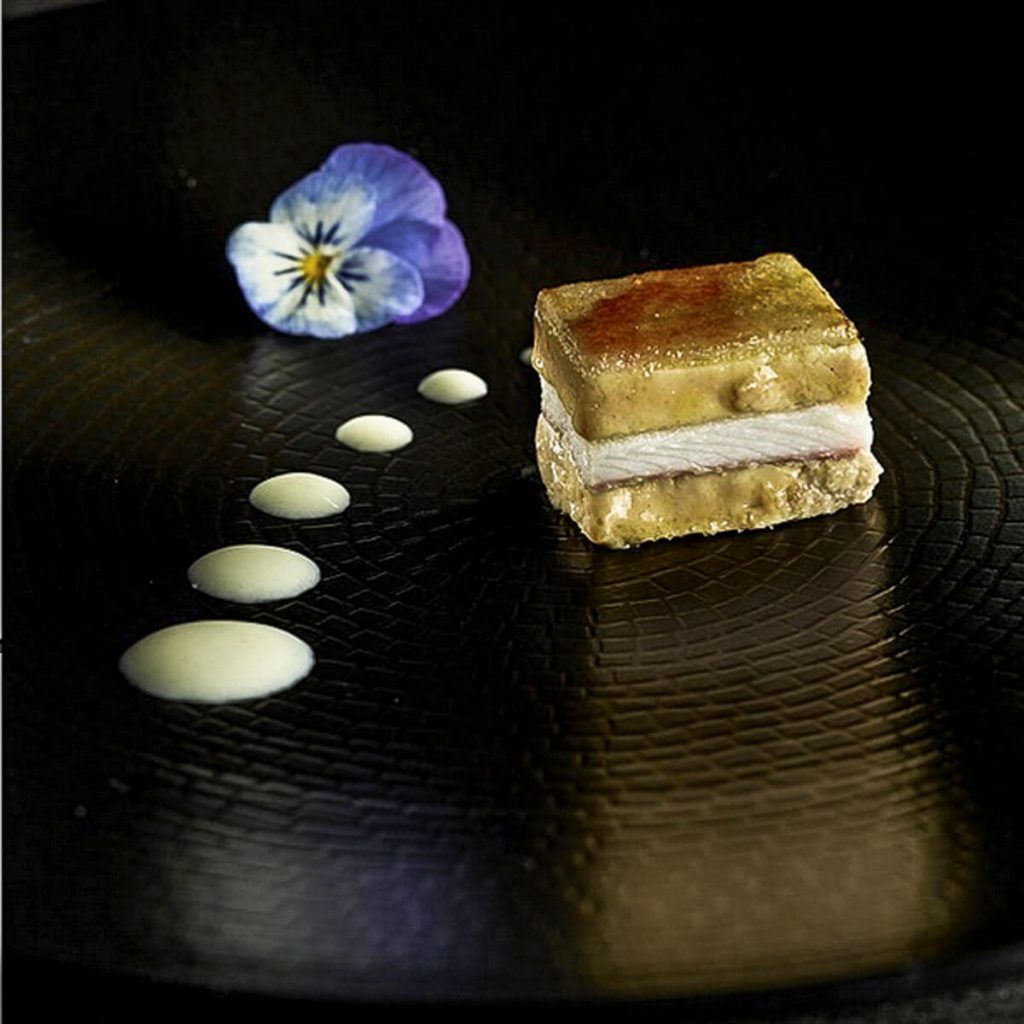
Martin Berasategui comes from the Basque Country in Spain, which represents the avant-garde of gourmet cuisine. During his long career - he received his first star in 1986 - he has designed many dishes that have become true classics. He also created one of the most copied dishes in gastronomy: smoked eel, with foie gras, Millefeuille with chives cream and caramelized green apple. The original dish is not only great for the flavours, which effortlessly fuse together to form a new whole. Just as brilliantly supporting the taste experience is the texture: the crunchy caramelized sugar coating the Millefeuille. It perfectly offsets the fatty, soft eel; the thinly layered apples, still crisp, the foie gras that holds everything together like an amalgam. As he describes it himself, ‘My whole flavour is in one bite.’
MASSIMO BOTTURA: signature dish: lemon tart
History is full of evidence that famous achievements and discoveries are often made by accident. Penicillin, LSD, X-rays - all of them were helped by chance and luck. Even in high-end cuisine, unintended processes sometimes play a role, stimulating the ingenuity of chefs. A prime example is the lemon tart of three-star chef Massimo Bottura. Perhaps his best-known dish says it all: „Oops! I dropped the lemon tart”.
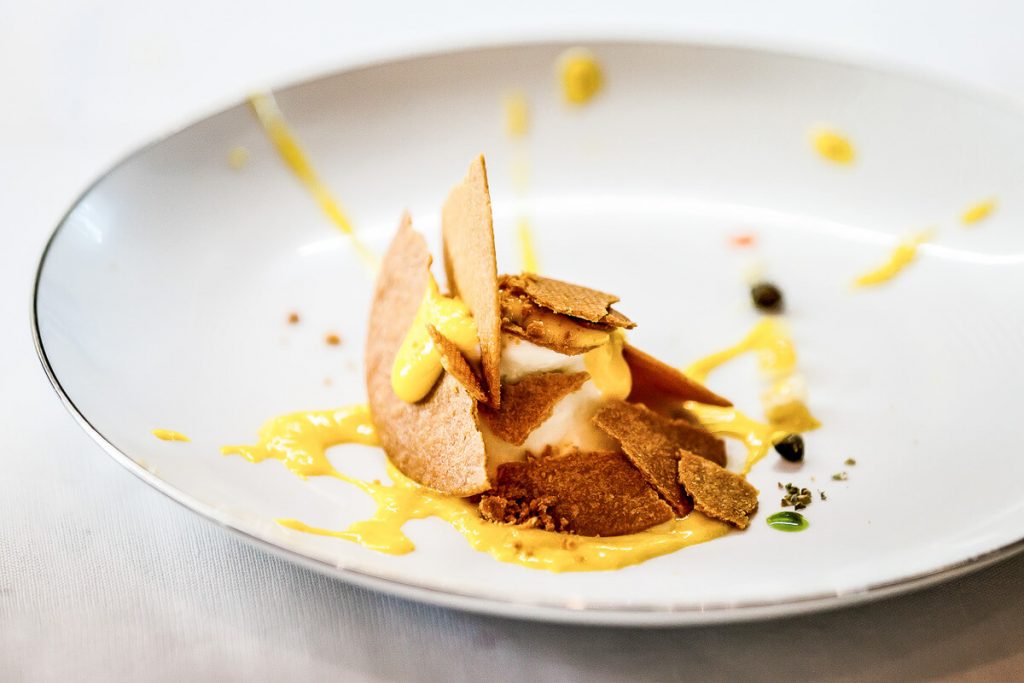
The pastry chef at Bottura's Osteria Francescana, Takahiko Kondo, accidentally dropped a couple of lemon tarts just as he was finishing serving. „He was beside himself,” Bottura Kondo described his horror at the mishap at a book launch. But instead of scolding him, the Italian reacted in a totally unexpected way. „Taka, this is the most beautiful cake you can serve. He seized on the torte as an opportunity to develop a dessert that was then uncommon in high-end gastronomy. It was a way to dessert, which pays homage to the poetry induced by the change of perspective. Bottura's signature dish is based on lemongrass and lemon ice cream, and includes Italian wine foam with limoncello and a host of spices, including bergamot, mint, ginger and capers. But what makes this top-end cake truly special is the way it is served: it recreates the fallen, broken, imperfect cake that has become a symbol of that seemingly unfortunate moment, and thus an iconic dish in contemporary haute cuisine.