


Vocational education and training in our country, including hospitality, has undergone significant reform. This has led to drastic changes in the life of adult education institutions, businesses and private schools.
However, the new system is still being developed and is only now being learned by the students and teachers. And there is no experience yet of the level of preparation and skills that the system will produce.
In the next part of our series, we take a look at how non-formal adult learning places have been affected by the transformation and how much their training provision has changed.
Private school with English and Hungarian courses
A Culinary Institute of Europe started as a private school five years ago - explained Endre Béky, Head of CIE. However, their history is not without precedent, as Maki Food Cooking School was one of the first places in the country fifteen years ago where those interested in gastronomy could learn cooking skills in unique cooking courses open to all. However, in recent years, interest in gastronomy has grown so much that five years ago they started offering accredited vocational training courses. But this too has had to change because of changes in the vocational training system.
„After the abolition of the OKJ vocational training, the professions listed in the register of professions, such as cookery and pastry, can only be implemented within the state system, in school-based training. So now we can offer training in accredited sub-professions of assistant chef and assistant pastry chef,” explained the head of the institution.
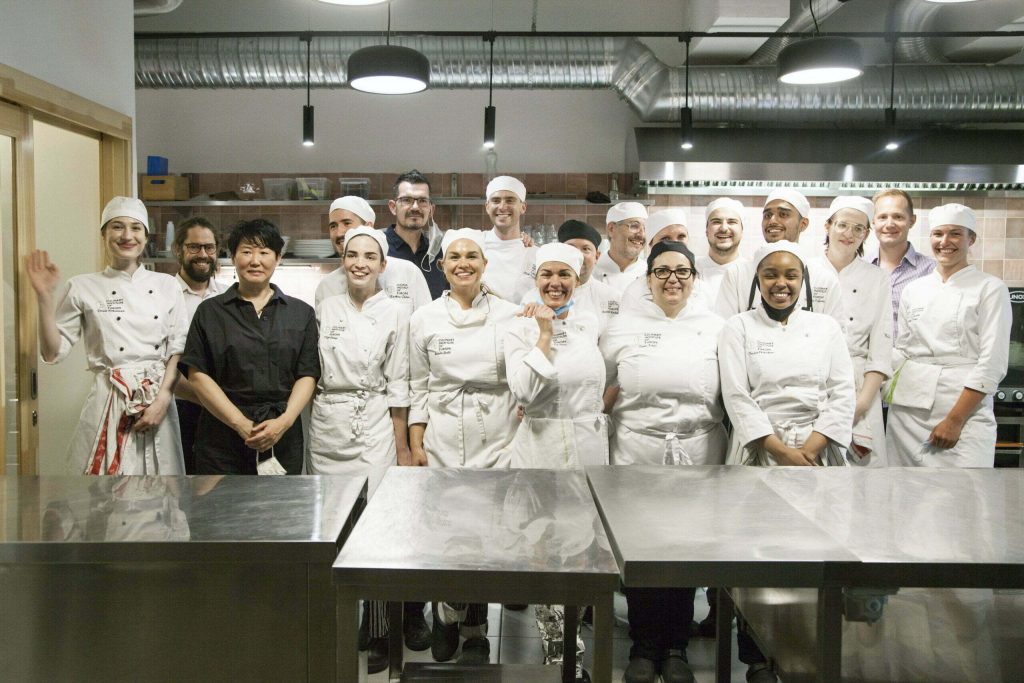
Endre Béky also said that their instructors are renowned international and national chefs and pastry chefs, from whom students can acquire the highest level of gastronomic knowledge at the Culinary Institute of Europe.
The two semester-long 600-hour Culinary Arts and one semester-long 600-hour Confectionery Arts adult education courses include both theoretical and practical classes to enable advanced food preparation. These range from basic cooking and baking techniques to current international trends.
Who are pastry chef and cookery courses for?
Candidates are welcome who are already working in the field of gastronomy and would like to further their training without travelling abroad. Many people enrol because they are planning to start or develop a gastronomy business. However, they also invite “keen amateurs” who want to systematise and improve their skills. With the rise of home baking and healthy eating in recent years, more and more people are taking up the challenge of cooking for their families. In addition, there is a large pool of people from other areas who want to learn a new trade that can be put to good use in the labour market.
The teaching staff
The international teaching staff of the Culinary Institute of Europe is professionally led by Chef Maki Stevenson, who has twelve years of teaching experience. Some of these professionals have extensive experience abroad, are currently star chefs at renowned national restaurants or run successful pastry shops.
Curriculum and trends
The private school teaches from its own curriculum, with a focus on fine dining and a constant monitoring of trends. And what makes their courses even more special is that the Culinary Institute of Europe is the only private school in the catering sector in Hungary that offers courses in English. And what could be a better indicator of quality than the fact that, although there are many free vocational training courses in catering in this country, the Culinary Institute of Europe's courses are sold out and are extremely popular with foreigners, despite tuition fees of hundreds of thousands or even millions of euros.#