






The 3 main trends that will drive the world of gastronomy next year have been revealed. Surprising research findings and promising signs in this article.
The world is speeding up and gastronomy is also moving forward, but the question is in which direction. Caterers, retailers, wholesalers and manufacturers need to keep up with the pace, trends and tastes, otherwise they will be left behind and out of the race. Chefs watch, learn and even travel the world to gather new ideas and inspiration for their own restaurants. It helps that there is research that can predict the direction that gastronomy and its audience is going or turning. This year's research has come in, showing which foods and food trends to not only watch, but to get involved in and prepare for to keep your business successful.
Surprisingly, this research result
According to food trends researchers Wolfgang Reiter and Hanni Rützler, three main directions of impact are expected in 2023. All three trends are based on sustainable food consumption and the increasingly popular a plant-based diet.
The 3 main directions of impact
The first the “new glocal”, i.e. global and local at the same time. It shows the current shift in global food trade towards agricultural structures and encourages a more transparent and shorter supply chain in trade. However, it is important to always focus on domestic markets in one - one region.
The second “veganizing recipes”. They also make familiar meat dishes meat-free and create good quality meat substitutes to make it easier. Nutritious, protein-rich and tasty meat substitutes are now available in many places alongside the basic vegetable dishes, but still not enough. These can be used to make vegan sausages, vegan stuffed cabbage and more, quickly and easily. Many people are rebelling against this, but more and more people prefer cleaner eating follow a plant-based diet. Last but not least, they protect the environment.
The third towards “regenerative food”, a lesser known concept based on regeneration and sustainable living. We need food that is produced from sustainable agriculture. In addition, it focuses on biodiversity and soil regeneration.
The big food order is ready - map
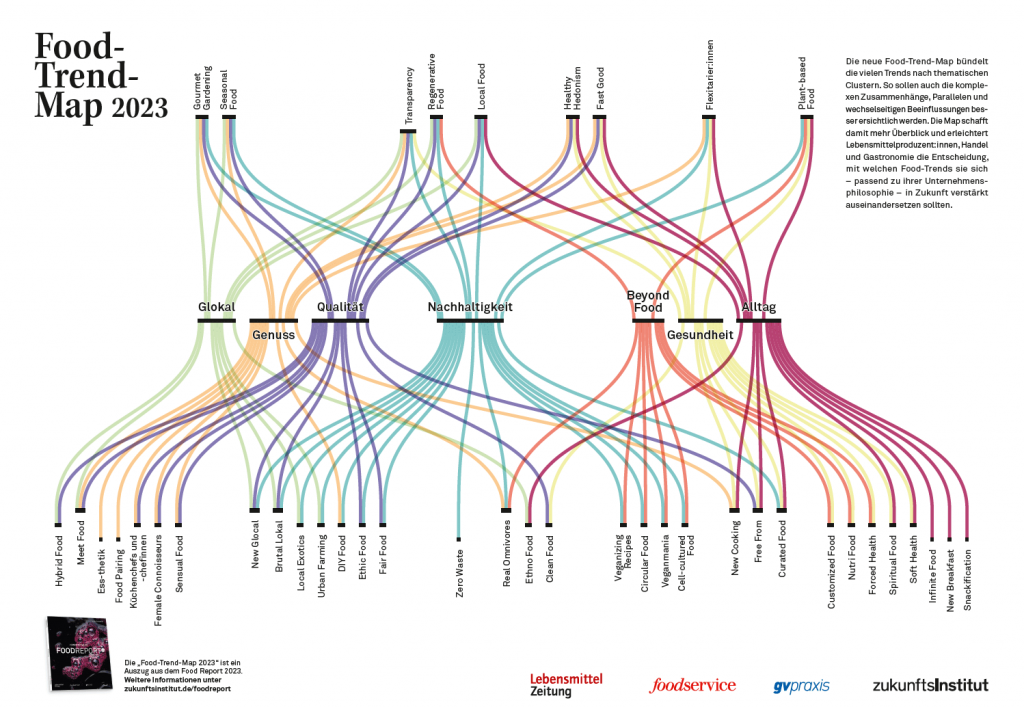
However, there are many more strands to gastronomy than the 3 listed above. A closer look at the graph shows that almost everything is connected to everything else at the global level. Lifestyles, fashions in eating, local ingredients and the mixing of it all without borders. Yet this year, for the first time, they have been grouped into separate sets so that the connections are more visible, making it easier for chefs to draw inspiration and prepare.
Does the meat really disappear?
Hanni Rützler encourages society to “eat meat smart”. Eat meat if you like, but from a reliable place. Not every day of the week, and in smaller quantities than usual, because this helps not only the environment but also the body. He says it is easier to digest and better absorbed if you choose the source and timing of your meat. In contrast, meat substitution is also gaining ground. Rützler has put a lot of emphasis on the issue in his study and encourages companies to consider meat-free production of steaks.
The idea and the direction are a little foreign to many of us, but researchers and statistics tell us it's the future. Environment, sustainability and health - the three watchwords for our future.#
Home: Vegan burger; www.pixabay.com