






The hospitality and tourism sector is going through a difficult period. The COVID virus, closures and lack of tourism have caused serious problems. The situation has not been made any easier by the fact that the drought and global economic factors have also pushed up the prices of raw materials. Despite all this, our country has recently won several international gastronomic successes. The results have also attracted the interest of young people looking for a career.
How popular is it to choose this career? What are the experiences of professionals? From Tibor Zmák, a teacher, gastronomic expert and journalist.
Hospitality has a long history in Hungary. We boast many distinguished, world-renowned professionals. In retrospect, it has often been a fashionable profession and a less popular one. Where are we now?
The old world also had big names - Wampetics, Gundel, Gerbeaud. They are worth remembering and learning from to this day. If, on the other hand, they are to be remembered, we must mention the professionals of today, the catering companies that set an example. Let us think of Zoli Kőrössy, Gábor Nagy (Eventrend), Zsiday Roy (Zsiday Group), Attila Molnár (Golden Caviar Restaurant, UMO), Árpád László (Restaurant Robinson), László Kovács (Catering Industry Association, La Fiesta). They provide jobs for tens of thousands of people and at the same time raise the domestic catering the level of. They have had a good chance of starting the world in the past with our chefs, our catering professionals. This is particularly the case today. It would be hard to list the number of Hungarian chefs, pastry chefs, waiters, restaurant managers, bartenders and sommeliers who have made their mark around the world and then returned home to work wonders.
How are young people affected by today's economic difficulties in terms of career choices?
Let's start with the above.
I am very happy that we have these good examples. But I'm even happier that they are seen by career changers and are a beacon to help them make their choice.
One thing must be made clear. Just as in the past, so nowadays, the upper echelons of society are not the source of the for chefs, children learning to be pastry chefs.
Rather, the long-standing trend is that those who have fewer opportunities are moving upwards and want to get somewhere. With relatively little effort (because their opportunities predispose them to it), a career in hospitality can be the perfect choice for these young people. With the well-established professional knowledge, commitment and well-understood humility that they can acquire in our schools, these children can build a career in Hungary or even abroad. From this they can achieve a very respectable civic, even European, standard of living.
On the basis of what has been said, can we say that we are talking about in-demand professions?
As I see it, the answer is definitely yes.
The BGSZC Giorgio Perlasca Catering Technical and Vocational School trains not only its own students, but also, through its equipped kitchens, students from seven other schools in three basic catering professions: food preparation, restaurant craft and pastry.
I see a lot of young people choosing this career. In our sector they can find their vision, the tools to achieve their goals.
We give marginalised social groups the chance to get out. Hospitality is both an opportunity for them to rise, but also a cornerstone of social integration.
Many people - and this is not only true in hospitality - do not work in the profession they have studied after leaving school. How committed and enthusiastic are young people and how many choose this as a career?
Today catering is in fashion, gastronomy is in fashion. In the media, there are cooking shows one after the other.
On the one hand, this is fantastic, as they are given attractive and exemplary personalities. On the other hand, they are also a slant on reality, because the real work, the order and discipline expected in the workplace, is not necessarily visible.
The government's decision two or three years ago to radically and fundamentally overhaul vocational training has helped vocational training as a whole, but perhaps especially in the hospitality sector. To give just one example: whereas previously a student could get a grant of 8-10 thousand forints, today it is at least 96 thousand forints. It is a huge boost and helps to prevent the high drop-out rates of the past. It allows children to assess themselves, to be valued and to ask for a realistic price for their work.
Recently, there have been many career drop-outs and increased labour shortages in the profession. To what extent can schools make up for this?
As a teacher, I have seen first-hand the education of young people, and there is a chance that this replacement can be achieved. Kids want to work, they want to get their lives in order. For the record, I worked hard during the summer to get my students jobs. At Lake Balaton, I wouldn't let them take a job for less than 25,000 forints a day - with full board and lodging! For the children working in the city, I also tried to get at least 2,000 forints an hour. With satisfied children and satisfied employers, I can say that there is a supply of new recruits and a generation growing up who can be the future of our profession. No doubt they still have to learn, but there is room for improvement in the profession.
This is a long-standing process, which is also a social issue. Can current trends be changed?
In the longer term, labour shortages can be reversed. You have to split it in two. There will be a segment of our profession where high quality and otherwise in-depth professional knowledge is not particularly expected. For the part of the job that you do, you have to be competent, and that will take many people many years. Somewhere at the other end of the quality scale, there will be a high quality occupation requiring knowledge of raw materials, detailed knowledge of technologies, handling of modern equipment and techniques, including psychological and pedagogical knowledge of the catering professional. Our training meets this challenge.
Hospitality is a highly practical profession. Can training places, whether it is a school or a restaurant, prepare students for the real work, the actual integration into a restaurant?
We get a lot of people coming to study with us, and our adult education programme is a great success. What's very important is that from 2020, however many trades you have had, two more will be funded by the state. This is a huge opportunity for people, and it is also a great help for our profession. There are plenty of students who want to do this and who take it seriously. It gives them the basis to be able to do their full potential in their day-to-day work. Taking advantage of the opportunities offered by the renewed vocational training, our schools have successfully sought to work with quality apprenticeships. Restaurants, hotels, cafés, bars and bakeries welcome our children for training, where they receive marketable, valid knowledge from trained professionals.
There have been a lot of new kitchen techniques and trends that have come to us in recent years. Can this be followed in the curricula, in the preparation of students?
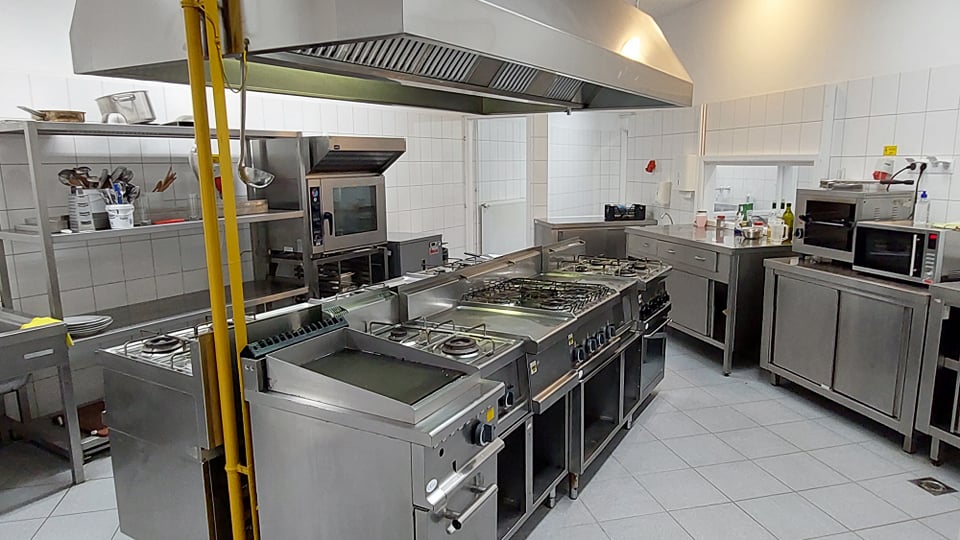
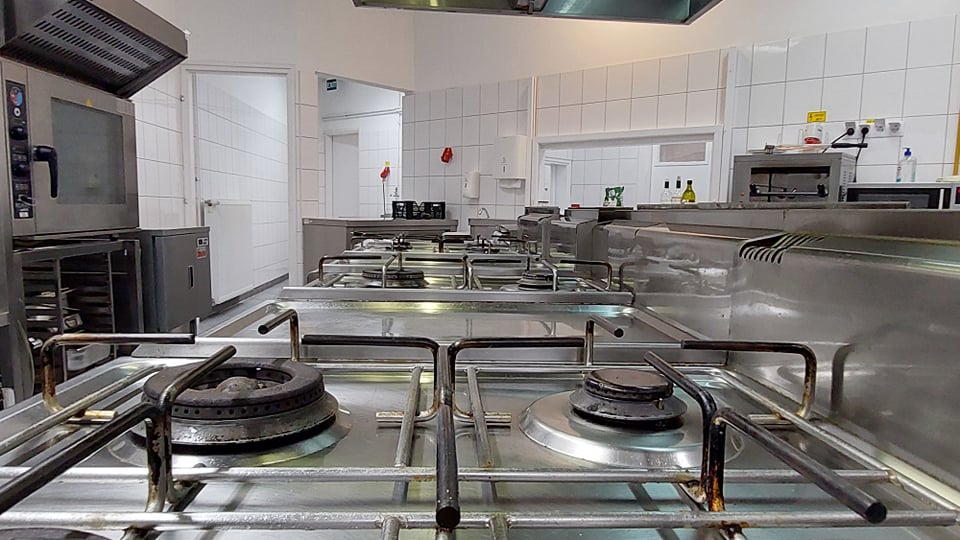
Any kind of kitchen technology, modern tools and innovative techniques used all over the world can be found in our school workshops. There are sous vide tubs and vacuum units in daily use in large numbers, not to mention a wide range of traditional cooking equipment.
We have a maximum of 6-8 students per practical lesson. No 20 people crowding around the teacher! But these 6-8 students can do their work independently, with a KitchenAid robot working in front of each of them. We have deliberately designed it that way. This way, they are actually using the equipment, not just observing the workflow.
The pursuit of high quality is a feature of for raw materials is. If the exam specifications are white meat Hungarian fish are required, then it is really a rack! In preparation for the exams, everyone prepares three separate meals, pastries and cocktails - every class! These are huge costs, but it's a real way for students to learn the trade. Vocational education has never received a level of funding comparable to the one we have now. In the current form of the renewed vocational education, all students will learn the full vocational basics. The chef gets a taste of pastry and catering, as do the pastry chef and waiter in the other two basic professions, and they all learn tourism skills. This is, in my opinion, quite unprecedented. It is a great help that if they like another field, they can choose it and switch to it without any problem.
Can the hospitality sector be stabilised through education?
We must not forget that we are at the end of a COVID crisis (?) and on the verge of an economic collapse. The front line and most affected victims of this are the vendaglators and event professionals. Everyone needs to tighten their belts. We must fight. However, I also see that a good professional, an owner who recognises his interests - even if it is difficult - will resolve the situation. One thing is for sure, the good professionals have remained in the hospitality industry and those who have been forced to change for some reason are slowly trickling back. The renewal of education, innovation and the development of real professionals are also on the right track. I am sure that thanks to dedicated professionals - be they owners, managers, chefs, cooks, waiters or teachers - the hospitality and tourism sectors are in a phase of development.

That said - let's face it, difficulties or not - our profession is driven by an inherent love of it.