





Nowadays you can eat bugs, we have the technology to make meat from air, so it's not impossible. As mankind prepares to conquer the solar system, it's no surprise that we can create food from scratch using a „simple” printer.
Printing touches all areas
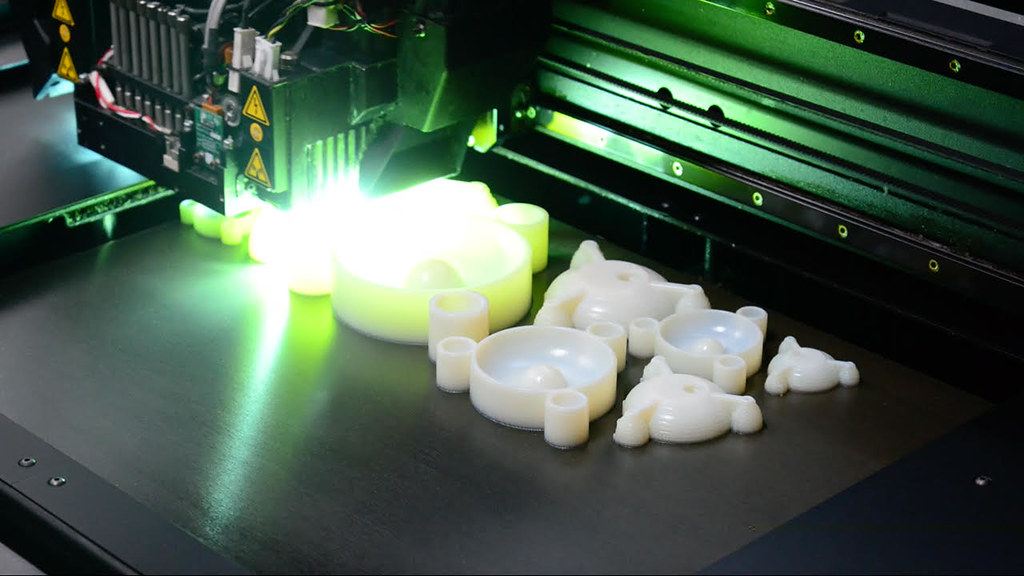
The use of 3D printers is now commonplace. We can shape anything: small, large and in colour. It's a fantastic, amazing thing in itself, but now you can also make houses, machines and even human organs with a printer. It's not surprising then that printers can put food on the table. Will this be the future? Could it be that in a few years' time it will just be a kitchen appliance that can be used to make anything at any time? Futuristic, but absolutely possible. Of course, it also raises a number of moral questions. Can we throw away the recipes of our grandparents? We can forget it, from what raw material, what can be prepared at the touch of a button and lunch is ready? It's a bit of a scary vision, but it could solve humanity's food problems and make everyday life the ever-present need to comply. Maybe in a few years you won't even need to cook?
How will it work?
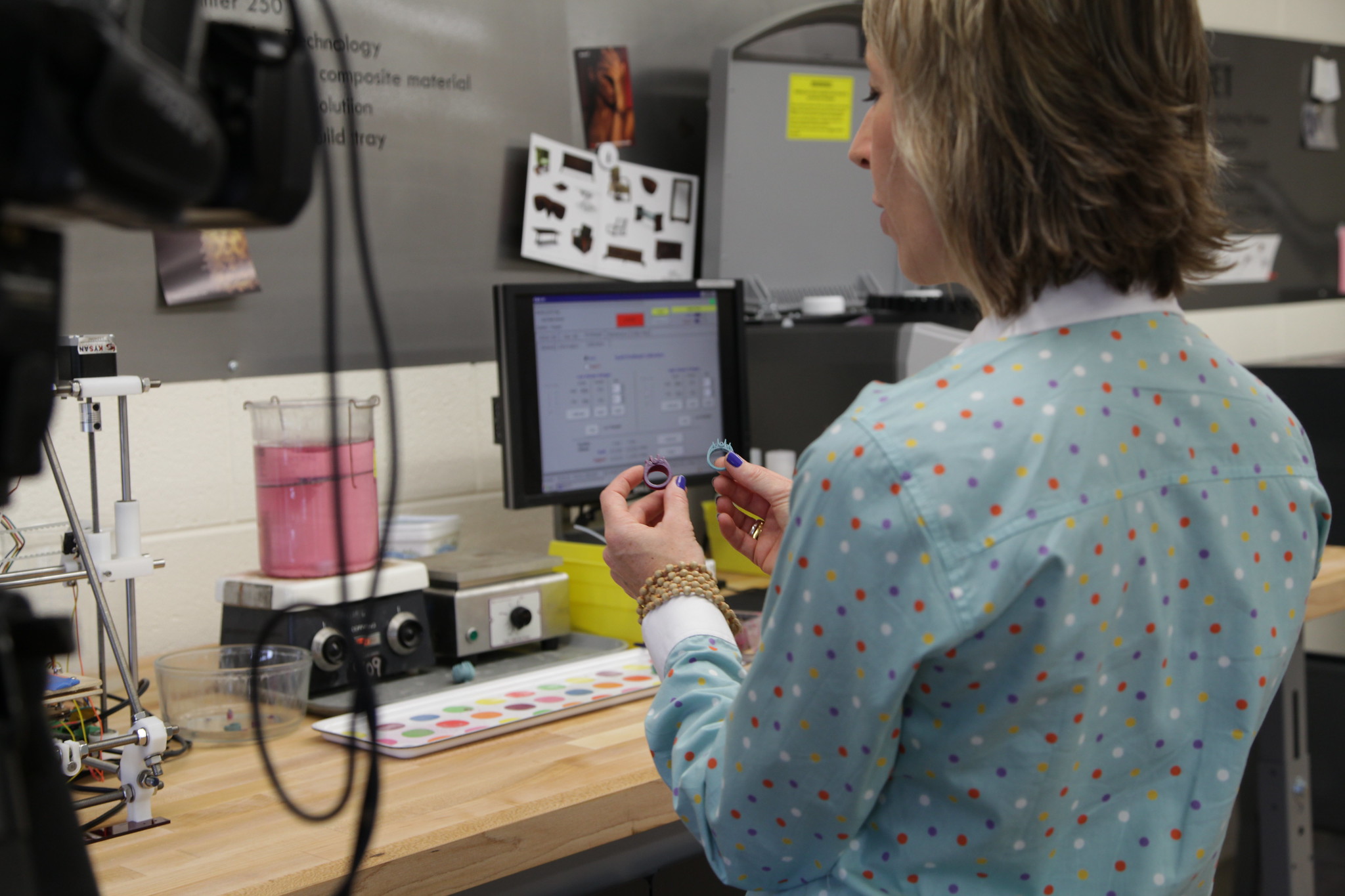
Whether it's an FDM printer or a Resin printer, whether for beginners, professionals or industrial use, there are now a variety of 3D printers to choose from, all with excellent skills and quality. While we are still a long way from printed food becoming a fundamental part of our everyday lives, if we take into account the technological explosion that is currently taking place, it may be much closer than we think. A experts are already predicting, that food printing will become part of our culinary life in restaurants and at home. Manufacturers claim that unlike mass-produced industrial food products, smart food printers can truly improve our diets by allowing us to print fresh, healthy food right in our kitchens. The advantage is maximum transparency, minimum time and effort, and the most important factor today, economy. Vitamins and minerals can be added to the food before printing, making it easy to meet your body's needs. The programmes do the calculations and tell us which ingredients to use to achieve the best results.
Futuristic, but we are already in it
You can set up individual solutions that are important for your health. Food printing is completely transforming nutrition research, everyday life and catering. It could also have an impact on education, as chefs will no longer be needed, only programmers. It could be a shocking and quite complex social change. No more waiting for bread and butter, no more spending hours in the kitchen, no more longing for grandma's pancakes. If this technology becomes commonplace, it will all be just a few clicks of a button. It's a bitter realisation, but this technology could be the key to the future.
Imagine: it's early morning, in the not too distant future. You climb out of bed and a touchpad assesses your body's needs. Oh, are you low on calcium? You press a few buttons. Low blood sugar? Press another button. What do you want to eat? Decide, type. The 3D food printer nutritionally optimises your breakfast, and while you eat your coffee, also made with the press of a button, the machine prints it. The personalised meal will be a reality within ten years, according to food experts. According to US research, sales of 3D printed products and services could reach $40 billion by 2024, with an average growth rate of 26.4 percent between 2020 and 2040. It could also be a new industry from a business perspective.
Welcome to food printing!
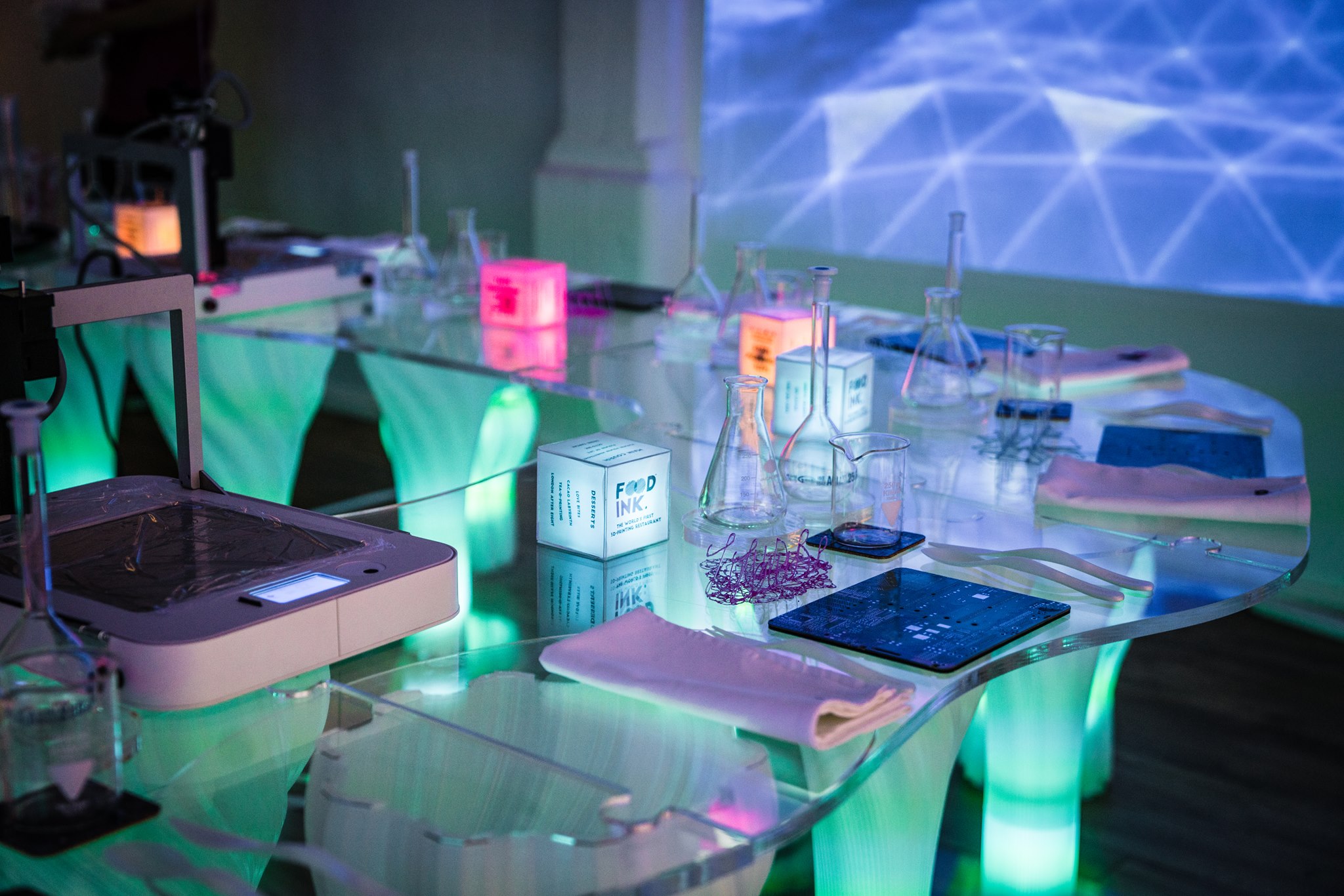
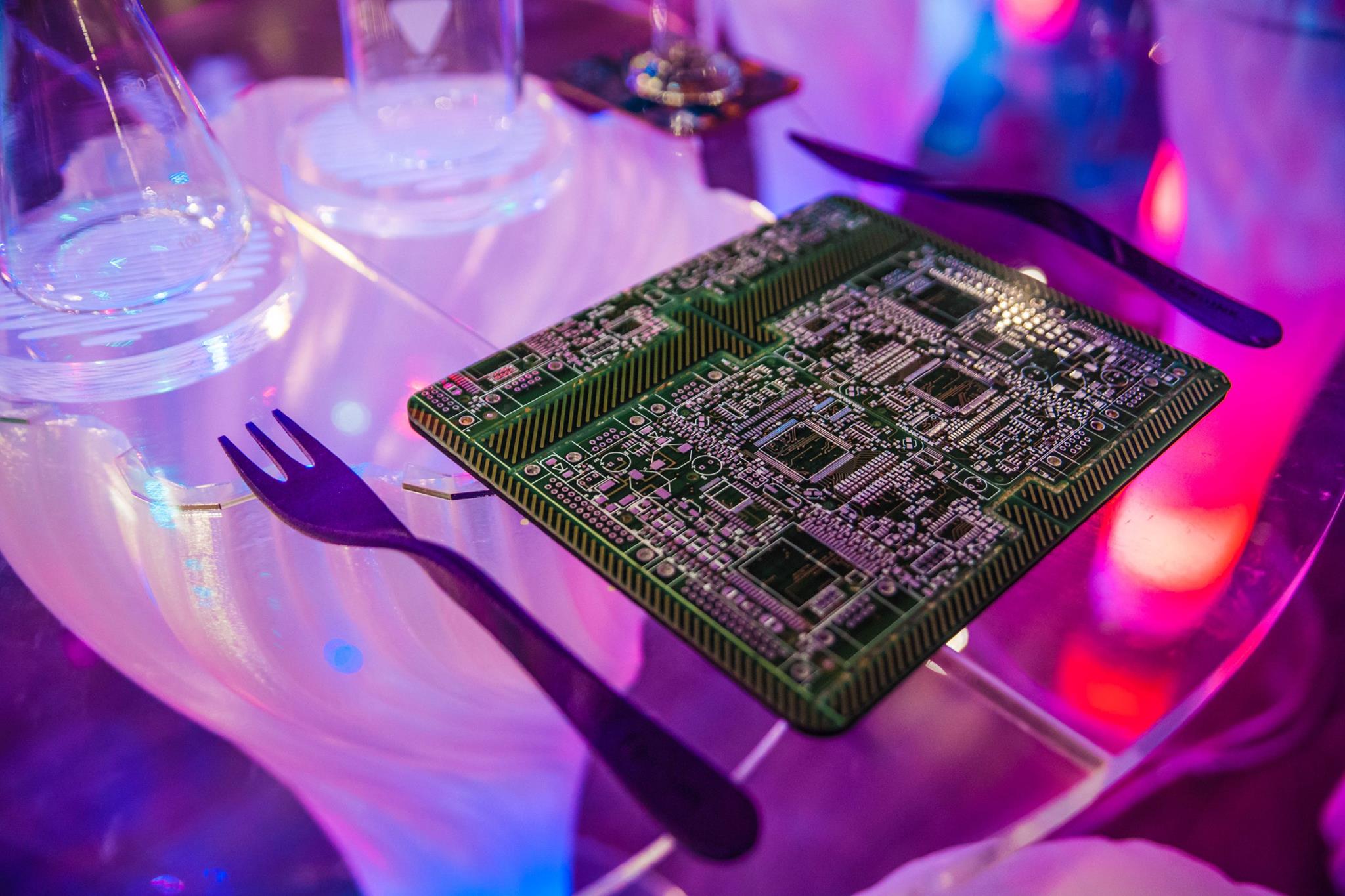
There are already restaurants where layer after layer of food magically appears on the plate. Almost anything can be produced in this way. At FoodInk, the world's first 3D food printing restaurant, the sight is astonishing: when you walk in, the „kitchen” is bathed in a soft pink light, with some chairs glowing green from below. Geometric shapes float on the walls. Not flashy, but very futuristic. A kind of spaceship-laboratory combination comes to mind. Guests arrive and stare at a strange-looking device, breathless with anticipation. The programmed dishes appear out of nowhere with incredible visibility. Is this the future? This is the future!
The FoodInk has taken its concept around the world, and they are not the only ones in this field. Although they have since lost some of their momentum, they have come up with some groundbreaking solutions.
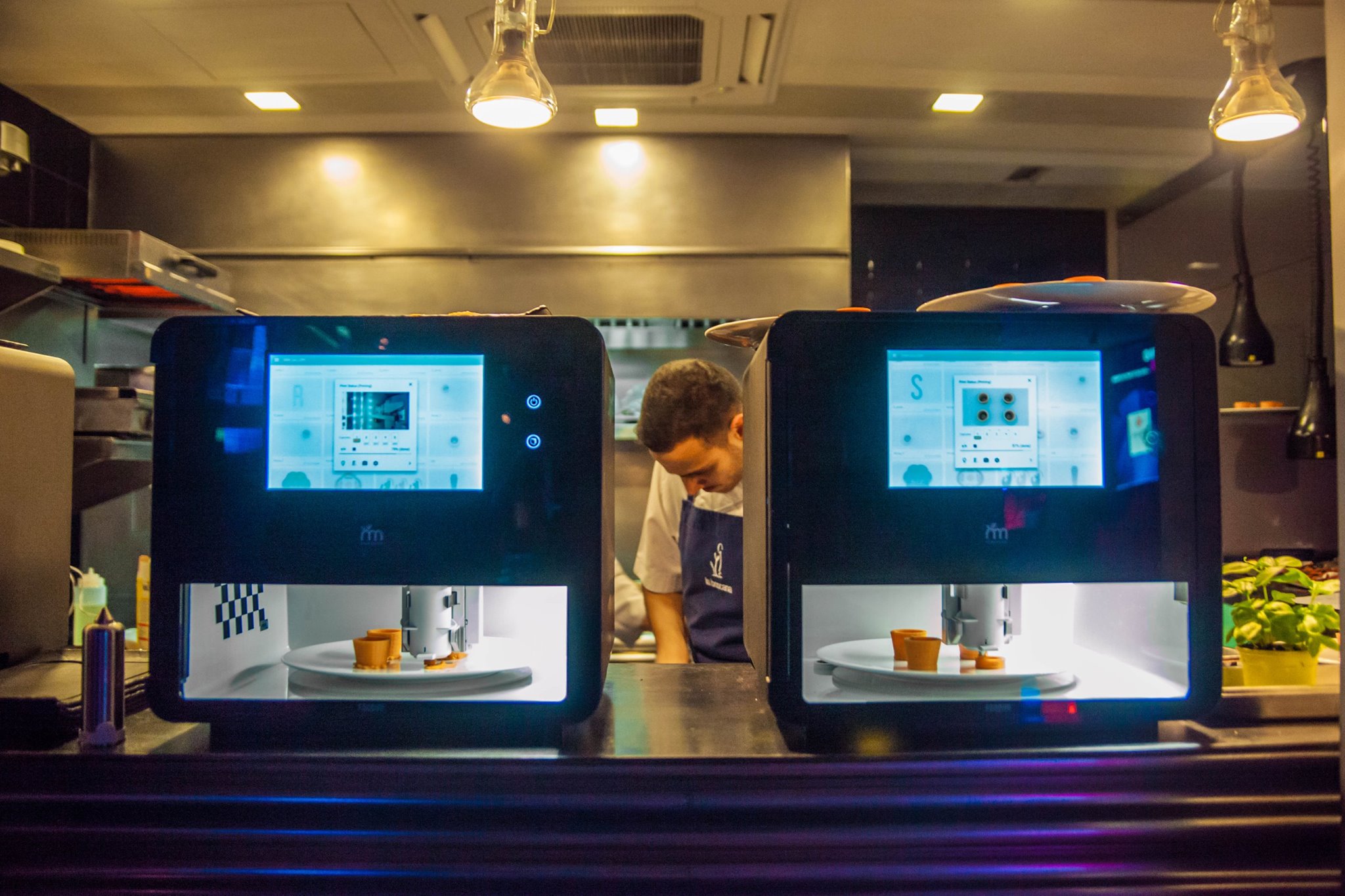
Culinary prints are increasingly finding their way into fine dining these days, whether it's the French-influenced American snacks of California's Mélisse or the printed pastries of Catalan bakery La Boscana. So while we're struggling at home with the usual printer, someone is already making their beef tartare with it. One thing is still common, of course: sooner or later you have to refill the cartridges, and at the end of the day, it's all just technology.
The Israeli startup Jet Eat is a product of their own design, founded in 2018, and since then the founders have been working to make the “meat” as tasty and succulent as possible, and to make it feel like the real thing. According to their communication, the four main components of meat are muscle, fat, myoglobin (an oxygen-binding protein found in vertebrate muscle tissue) and connective tissue. This complex matrix has been copied using 3D printers, and accurately sculpted.
Dinara Kasko, a pastry chef, also uses a 3D printer. She produces unique and astonishing things, taking people from one amazement to another. It has become clear that this technology knows no boundaries.
How does food printing work?
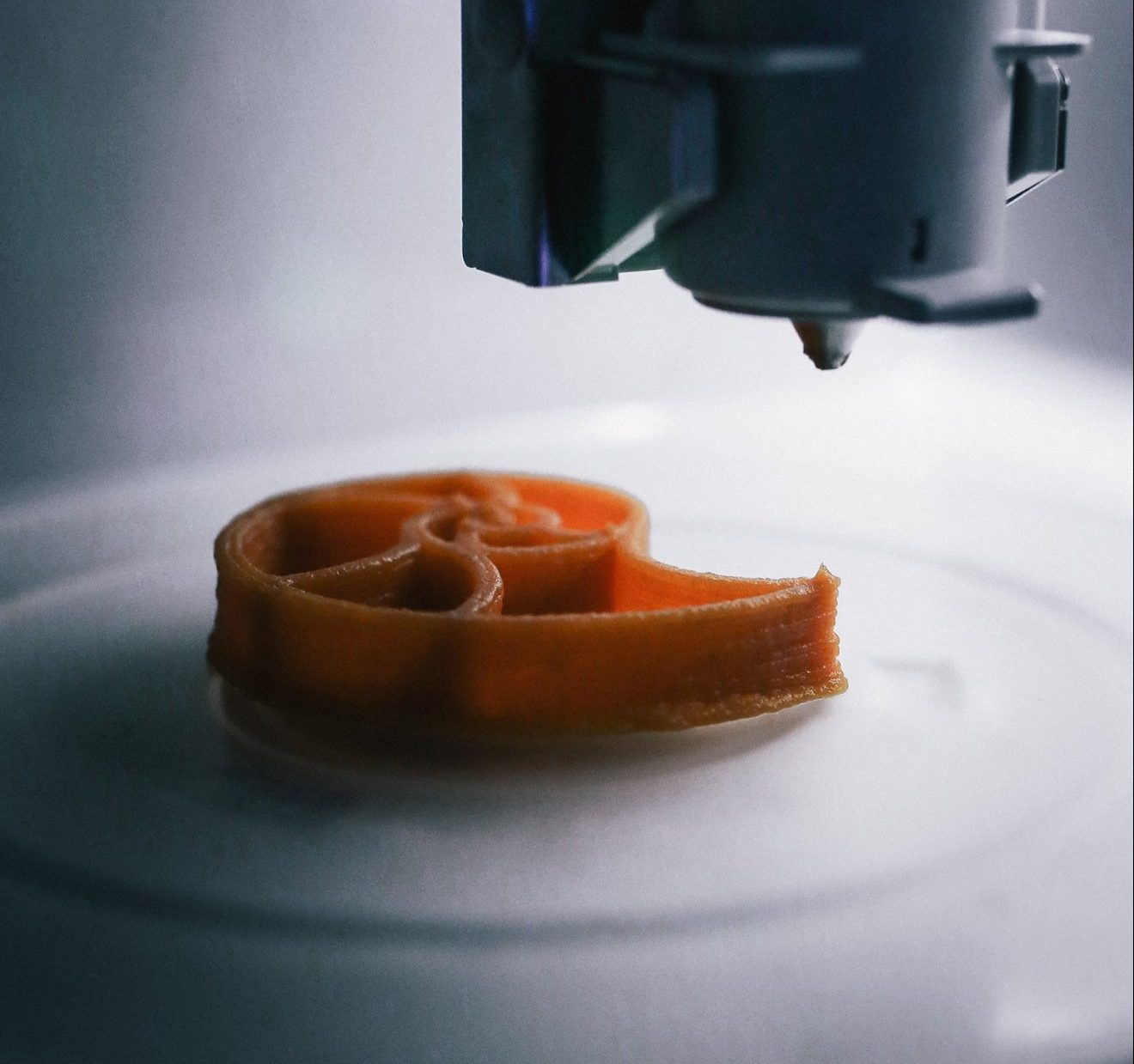
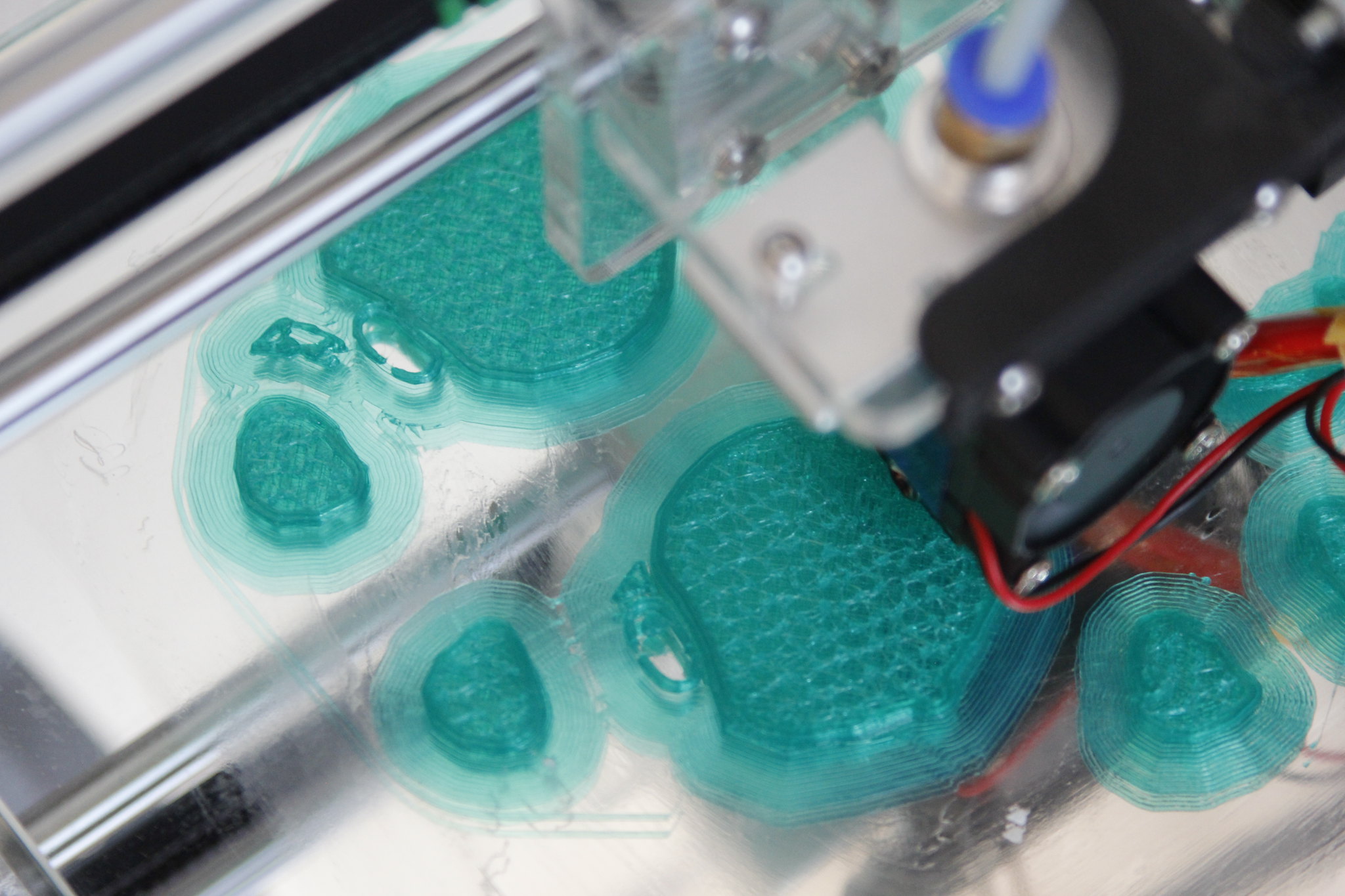
The number of 3D printable foods is currently limited due to the development of the technology. The most common process is the extrusion of food. It requires paste-like materials such as purees and foams. This may seem strange at first, but many foods take this form at the outset, such as cheese, pasta or even raw meat. The process is pretty much the same for most machines. The raw material is fed into a container and extruded, which in turn forms 2D layers. According to experts, the technology is in a very advanced stage of development. It should be remembered that 3D printers are already much more efficient in other areas.
Opportunity or decline
The ability to customise such dishes can open up a whole new world for aspiring restaurateurs. Personalised pasta, breathtaking chocolate creations, avant-garde plate geometry... 3D food printing is a brilliant symbiosis that allows chefs to create masterpieces that human hands could never create.
The simplest way to define 3D printing is as food made from ordinary ingredients that are processed so that they can be extruded through a nozzle onto a surface. An extra feature is that the technology can create elements that are impossible to reproduce manually. However, it has the disadvantage that it takes more time than traditional cooking and, including the cost of materials and learning time, is currently quite expensive. Although the technology of food printing is still evolving, it's worth considering whether 3D printers will one day be as essential to the kitchen as the cutting board is today.
Source : https://www.ktchnrebel.com/3d-food-printer-restaurant/