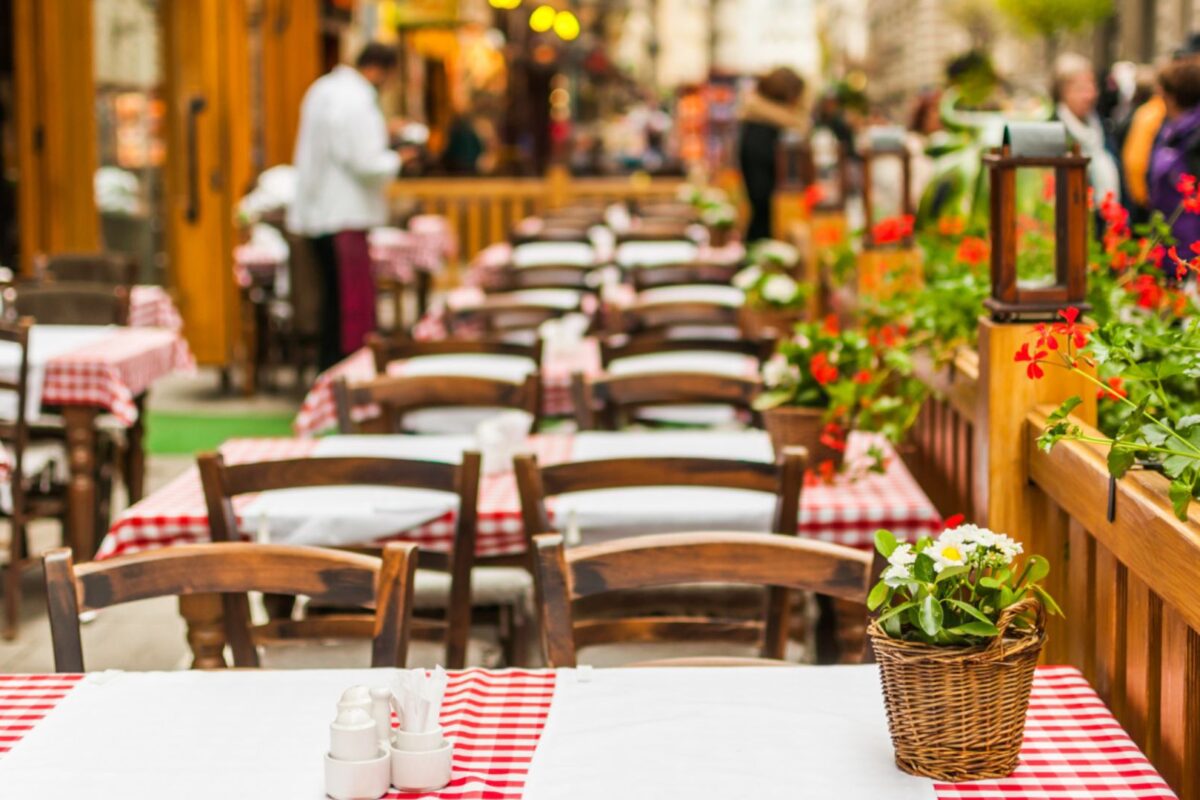






The guest who was not there. How can restaurants fight the „no show” phenomenon, i.e. when a guest does not show up at the booked time?
For restaurant-goers, there are two options: to make a reservation by phone or email, to send a message, or simply to go to the place of your choice. However, many people think of this as an option rather than an obligation and, if plans change, do not let the restaurant know that their arrival will be delayed.
All this is a basic courtesy, and to go further, a human raises questions. The formula is simple: do we think it's fair to cheat others and not stick to what we agreed before? Do we want to experience the same thing in reverse? Whereas in the case of a date or a meeting with friends, it is typically „just” an emotional issue to be tricked and not even told about it. However, when it comes to business services, the financial and economic implications of this are borne by the victim.
Other professions also struggle with the problem
Let's look at examples outside the hospitality sector. It is now common for a wide variety of service providers - be it a doctor in private practice, a masseur or a manicurist - to charge guests. The most common practice is that, if you miss an appointment, you will not be seen again unless you pay 50% of the previous appointment. But while for a manicurist this means paying less than 10,000 forints and preventing one person from seeing you, the bigger the system and investment behind the service, the more problematic the issue. Not to mention that if it's a non-recurring customer, the service provider could be running out of money.
While a manicurist or masseur might find it strange to have a pre-payment system, it is quite common for larger services such as accommodation to require payment of part or all of the price of the booking in advance.
Restaurant targets: damage minimisation
Restaurants are not in an easy situation. Guests of more expensive restaurants may have experienced the phenomenon of wanting to book a table, but weeks or even months before the lunch or dinner date, the restaurant charges a not inconsiderable amount. Many guests may feel that this is excessive pressure, a kind of demand, but no restaurant is forced to do this without reason or precedent.
Think about it: there's a whole team of people waiting in the restaurants at this time of year, and you can't pay them with empty tables. The restaurants that fight the no-show phenomenon are usually the best of the best, because the simpler and more accessible the gastronomy, the easier it is for people from the street (the so-called „walk-in”) to come in and fill up the tables.
A further complication is when a place does not offer a la carte but is tied with degustation menu. In this case, the kitchen is purpose-built to cater for X number of guests, and of course the higher the standard of a place, the raw materials the more expensive they are, the fresher they are, which means the more damage they can cause. In addition to unfulfilled catering and zero revenue, there is further damage, including the cost of opening, rent, overheads, wages and wasted ingredients.
7 tips to consider
1. Let's consider whether booking is really essential! If it's a difficult decision, it's worth holding test periods to see how you can fill restaurant tables more safely.
2. Write a clear and logical booking policy! If the system is too complicated and confusing, it is easier to turn away guests who are not looking to complicate their lives, but to have an unforgettable experience.
3. Let's make a move! Ask for a deposit for table reservations! This is obviously not the solution for the street food sector, but it is the only known way to filter out frivolous inquirers and restaurant adventurers.
4. Increased courtesy. Given that in Hungary it is not common for the restaurant reservation system to ask for payment in advance, it is very important that the restaurant's communication is not rude, demanding or threatening.
5. Advance payment - in style! So let's do the maths: it is also impolite to ask for more than 50% of the price of the minimum expected consumption.
6. Make the process easier! Provide a booking system that is transparent and easy for guests to use. The information requested during the booking process will help you to keep in touch, and the restaurant staff can enquire the day before about the next day's arrival. Again, narrowing the scope for a „no show”.
7. The lifeline: waiting list. However, if you're a latecomer and the place is really popular, you can create a waiting list. They can quickly take the no-show tables in case of a problem, in exchange for a reduced price. If you have more people in the house, you are more likely to find guests for the empty tables.