






Finding a good cutting board is not easy at all. There are a lot of things to consider that even the experts might not think about. Choosing between plastic and wooden cutting boards can seem like a big dilemma, as it is a much more complex issue. Once you know the most important features, the choice is clear.
What they usually decide on
A good cutting board should not bend or warp, and should not crack during use, where bacteria can grow. It is preferable that it does not slide on the counter, and the relevant regulations must also be taken into account. It is important that it is durable and hygienically perfect. There are a lot of misunderstandings on the subject, but luckily we found the expert, Zoltan Angyal, who introduced us to the perfect cutting board.
Advantages and disadvantages of plastic cutting boards
Zoltán Angyal: The advantage of plastic cutting boards is that they won't deform, they are convenient to handle and can easily be used to remove larger dirt particles. They are easy to produce and, as they are colourable, can be used as a practical for different raw materials. However, these cutting boards are not fully cleanable. It is almost impossible to remove bacteria that may be introduced during cutting, even if they are boiled. And it is completely unrealistic in the daily routine of a large-scale kitchen to boil the cutting boards after every cut. A in meat due to the organic cells, bacterial infection can start a few hours after the cut. Research has already shown that the removal of „contamination” from knife surface wounds is almost impossible with plastic.
Something interesting to mention - silicone-based instruments and tempered glass cutting boards, which are hygienically excellent but unmanageable.
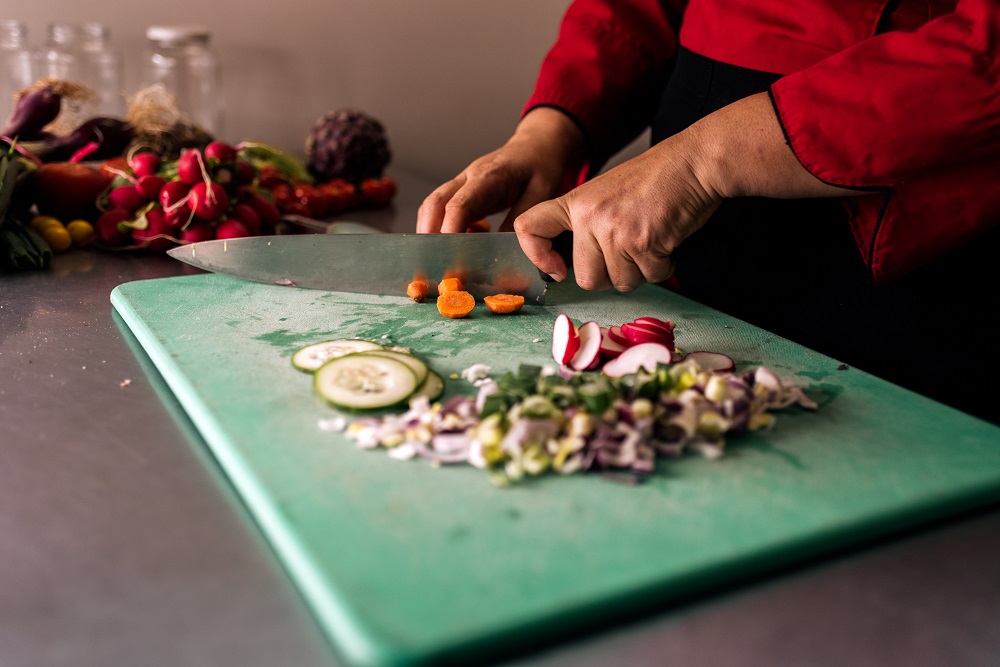
Wooden cutting boards are essential for professional kitchens
Tamás Budafoki: Why should kitchens prioritise wooden cutting boards and tools?
A.Z.: As opposed to plastic, wood as a cutting board material is undoubtedly the best option. However, it is a different matter what kind of wood it is made of. This determines everything! Wooden cutting boards are divided into three types. There are the taste-neutral trees, a trees with high tannin content, and the exotics.
Intact wood in the birch, aspen, alder beech, these have no or negligible tannin content and do not affect the chemistry, texture and taste of food. They should be disinfected and washed after cutting, as bacteria can live on them.
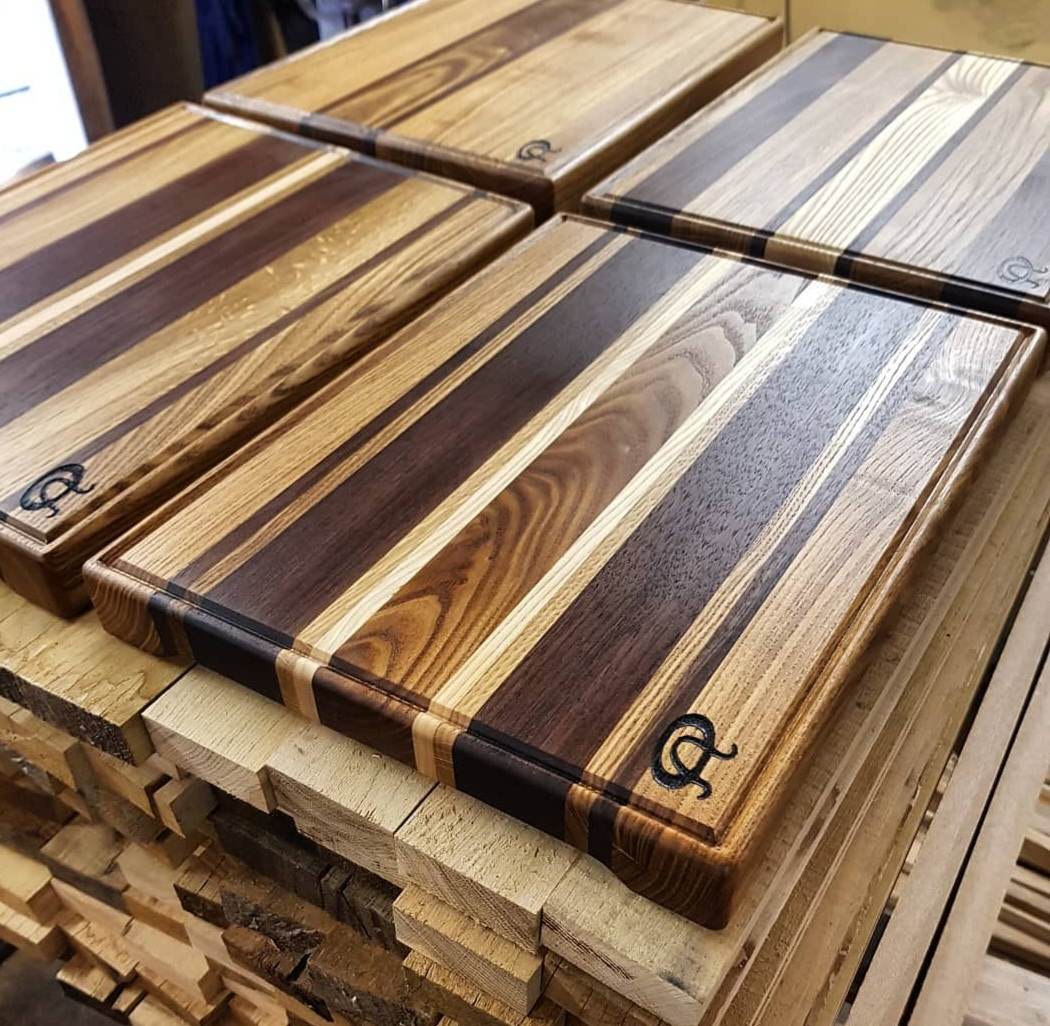
Wood with high tannin content is the biggest advantage against all the others, that it has its own defences. The high tannic acid content protects the structure of the wood from bacteria, so bacteria cannot live on the surface of the wood, so it will not cause an infection if it is not perfectly cleaned. In other words, the higher the tannin content of a tree, the stronger its antibacterial effect. In terms of cutting boards, the most beneficial a tree. In slaughterhouses, for example, they do not allow much wood other than acacia and oak, because their surface is suitable for their tannin and tannin content.
Exotic trees (exotics). They have the advantage of being very durable, waterproof and resistant to alkali and acid. However, it is not good to have these microscopic wood chips as microplastics in the human body as we cannot break them down. Such as rosewood, mahogany, merbau, teak, bamboo.
B.T: Glued wood or a stump?
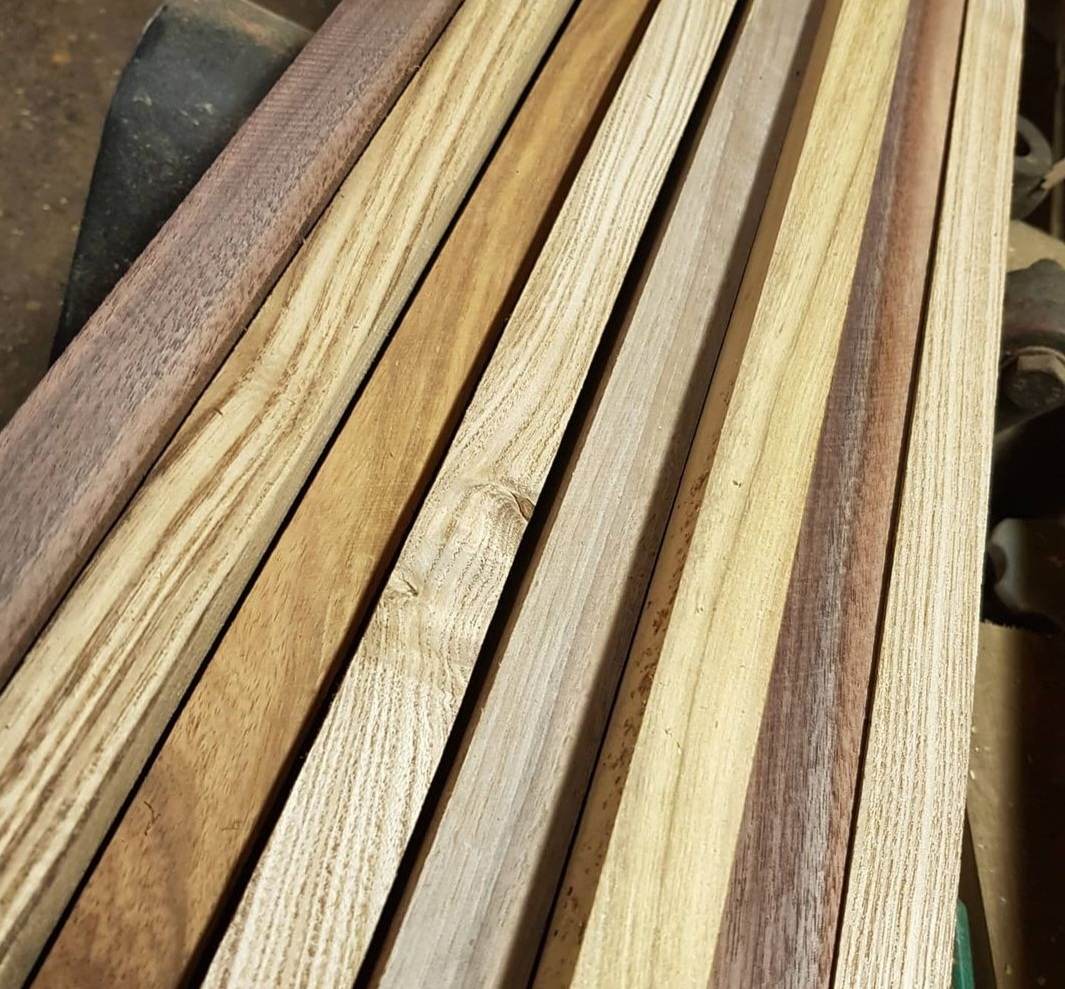
A.Z.: The advantage of glued timber over natural, simple planks is that it has a reduced risk of warping. The structure of the wood is more robust and stronger due to the gluing. Of course, it doesn't matter what glue is used to fix it. Only food hygiene-tested glues should be used, as the soluble substances can cause toxic effects if they enter the body.
B.T.: In which areas should you use segmented cutting boards and from what?
A.Z.: You can make the right cutting board from wood for different materials. Say, for baked goods, I would make one from a flavor-neutral wood, maple, birch, or even beech. I would make it from acacia, oak for meats, vegetables. There are wax treated products that don't affect the taste of the food. There are solutions, different organic products, oils, waxes.

BT: How well known are the properties of wooden cutting boards?
A.Z.: I have to say from my own experience that it is more known abroad, in Germany, England, France. There the chefs and owners are fully aware of it. In Germany, the oak cutting board is typical, they don't use much else, they don't prefer plastic in any form. Here it is still in its infancy. Fortunately, wooden spoons are used in kitchens, made from the flavour-neutral beech.