






I'd like to continue a little bit more on the subject of fasting, mainly because as I've dug into the subject, I've found a lot of interesting things. Anyway, I really like it when science, religion, history are interfered with by the human factor, when ideas are forced to bow to some human need or desire.

I mentioned in the previous article that we fast for 40 days before Easter, but we do it in 46 days, because the Catholic Church was so permissive that it exempted Sundays, so anyone who fasts to any extent can relax a little on Sunday.
Then there's the other one that haln fasting days you are allowed to eat anything but meat. But why? Because, if we think about it from a spiritual point of view, along the line of non-dipping, then poor hal is just as ugly as a chicken or a pigac. Many people believe that once upon a time, a pope wanted to cut in on a fishing company, and that's why he took the fishfrom the ban, but that's just urban legend. The reality is that in those days - the Middle Ages - meat was a symbol of wealth and celebration, and was relatively rarely on the table of the average person, halbut it was much easier to get. And the whole point of fasting was really about renunciation, abstinence, not about the nutritional value of the food or the ingredients, so in penitential times you give up luxuries, and in the present or medieval case that was meat and eggs, and it has remained so in the Catholic Church ever since.
The Scriptures have given us some clues to this, because St Paul writes in his first letter to the Corinthians that not all bodies are the same, but that there are differences between human beings, animals, birds and fish. This was actually referring to the parameters of the resurrection, but it's a great starting point for a little legal wriggle-rigging.

And that's where the human factors come in... In Canada, beavers have been hunted for a very long time, not just for their fur, but for their meat. It lives in water, and has webbed feet, and it was for these reasons that the Bishop of Quebec decided in the 17th century that beaver was a fish, and could therefore be eaten during Lent (above, next to the title of this article, is a pretty specimen). South Americans were not to be left behind, and would have added to the menu. Over there lives the world's largest rodent, the capybara, which likes to loiter on the water's edge, and they've named it fish, even though it's furry, looks like an enlarged guinea pig and is very cute.
Muskies also got their fish certification at the elbow of Detroit, where in the 1700s they were said to have been halThey had such a good survival instinct that they didn't swim into the net. The population was already on the verge of starvation when an ingenious maths professor took the initiative to include musk oxen in the fasting menu, with the same explanation - that the oxen live in water.
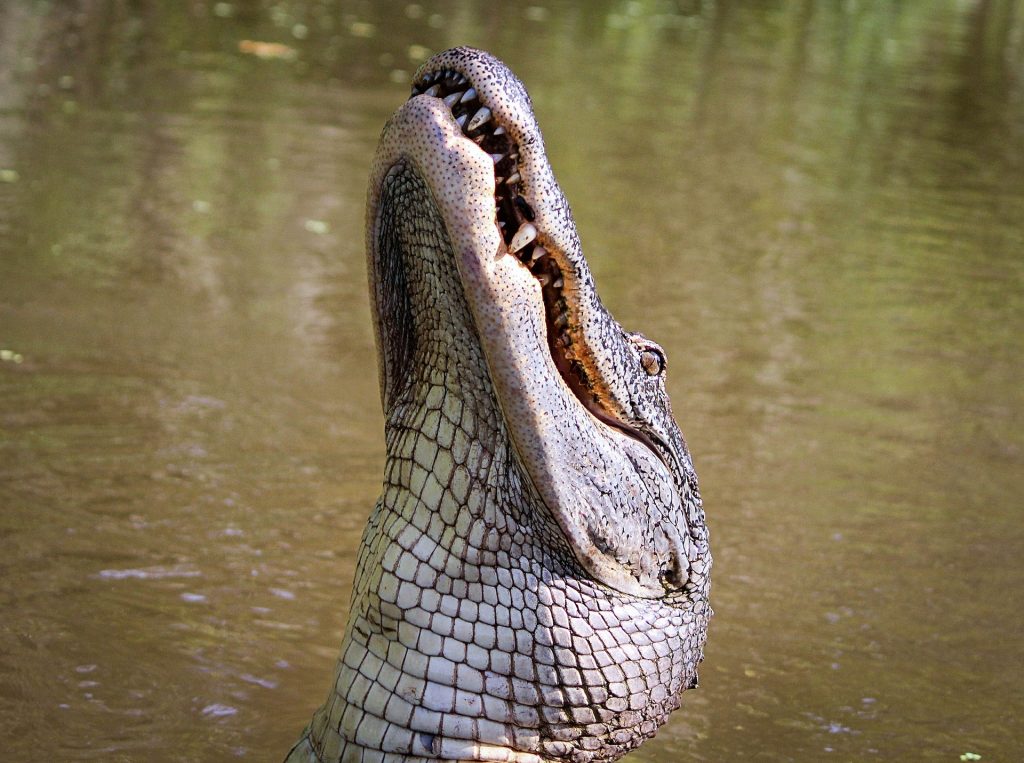
If we think that the time for these human tricks has been over for hundreds of years, that we are enlightened, and that anyone who follows a religion, because they do so of their own free will, accepts the rules, well, we are wrong. The Archbishop of New Orleans decided eleven years ago, in 2010, that the alligator is fish and can therefore be eaten during the fasting period.
Nevertheless, I would caution everyone against making a beaver patty, not to mention that the American beaver is not the same as our beaver, which is a protected animal. Lots of delicious hal there are some worth trying, trout, greyfish, salmon, tooth... stick to tradition, just in case.