






If you're planning to skip your next meal, summon up your courage and of course your stomach, and join us on a culinary adventure where you'll encounter more and more unexpected dishes that for some reason are on menus around the world. We warned you...
We use the most disgusting foods to prove that „one man's trash is another man's treasure” and how resourceful people can be in times of food shortage.
Are you ready? Disgusted!
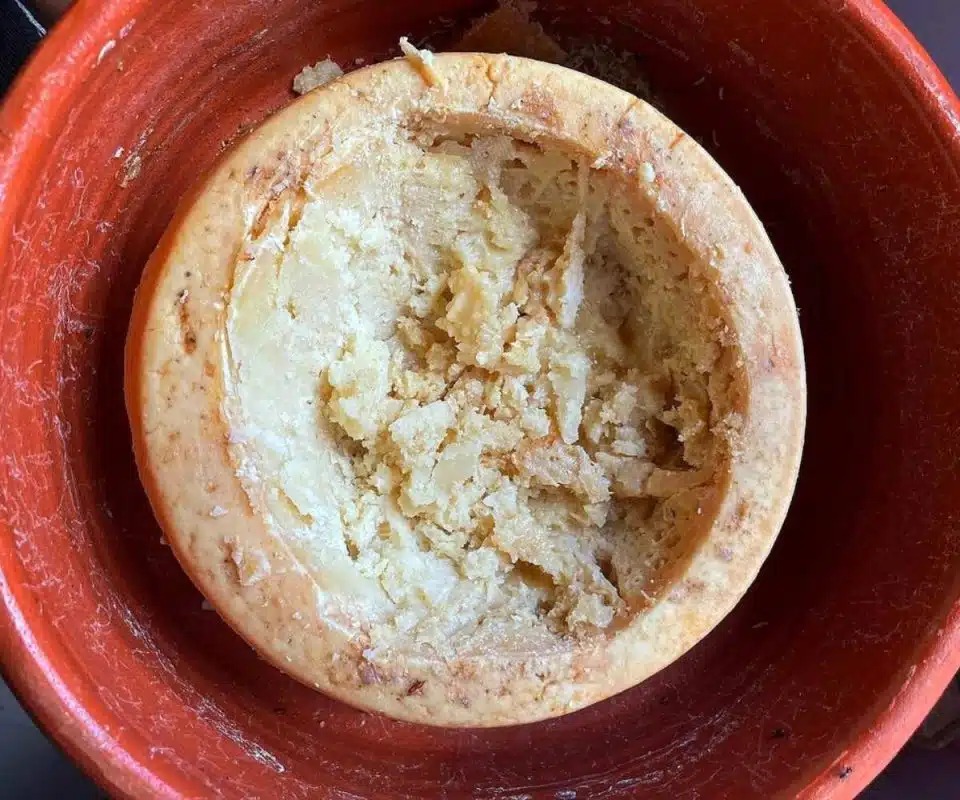
1. Casu Marzu (Cashew cheese) - Italy
Casu Marzu, or “fly larva cheese”, is justly famous as the world's most disgusting cheese. This Sardinian speciality is made from Pecorino cheese, which serves as a natural breeding ground for the larvae. The top of the sheep's cheese is peeled off to allow the flies to fly inside. Larvae develop from the eggs and chew through the cheese to digest the fats that make the cheese softer, it becomes more liquid and almost in a state of decomposition. We don't know exactly if it is the strong stench that makes people cry or the fear of live larvae moving on their tongues while tasting. While it is not surprising that it has been declared illegal by today's modern safety and hygiene standards, cheese is still regarded as a culinary delicacy that has been around for generations.
2. Balut - Philippines and Vietnam
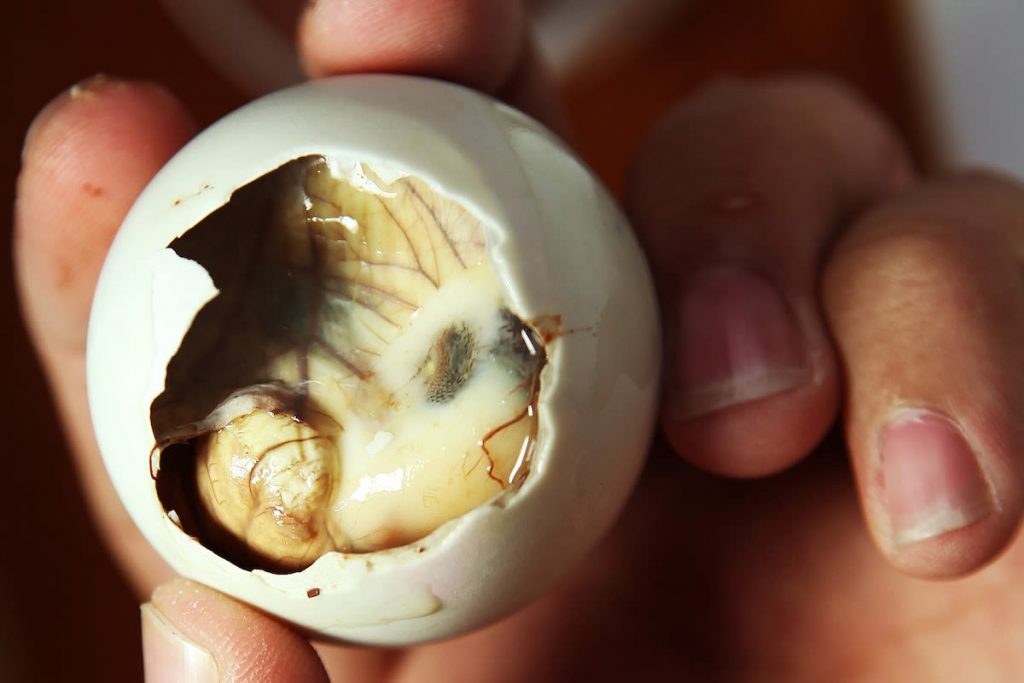
The balut is a chicken or duck embryo, which is a partially developed, live-cooked food eaten directly from the eggshell. This Vietnamese and Filipino dish is prepared for special occasions and religious festivals, but is also available from street vendors, making it easily accessible to tourists looking for something disgusting to talk about back home. To eat balut, you punch a small hole in the top, then sip the liquid (flavoured with salt and vinegar) and, if you manage to ignore the duckling, chew off the bones, feathers and all... It is a real signature dish in local pubs and nightclubs, as it is considered an aphrodisiac.
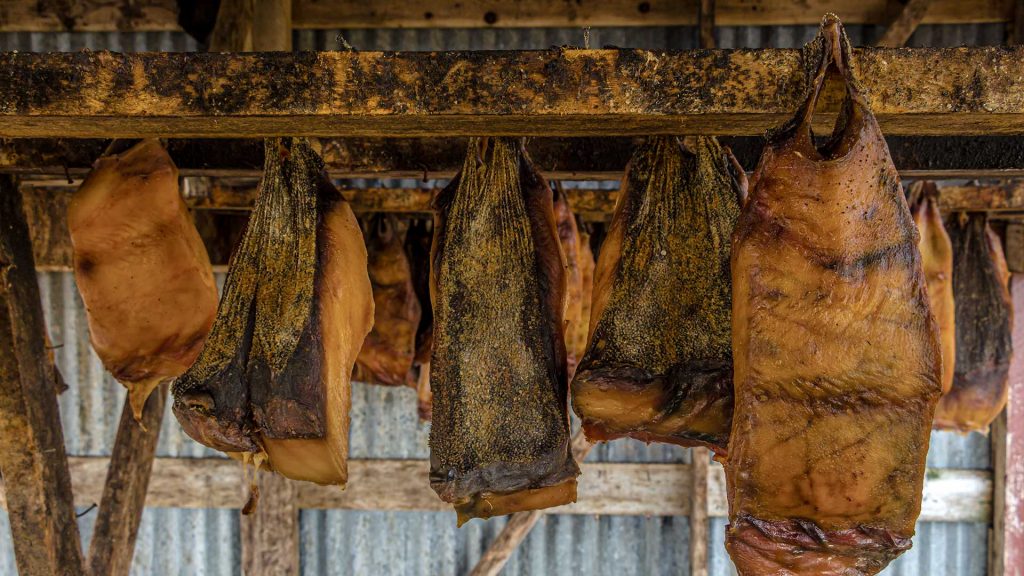
3. Hákarl (Raw shark meat) - Iceland
This dish is basically a decomposed shark carcass that tastes like strong cheese and smells like urine. This food preservation technique was developed by the Vikings when they needed to preserve as much food as possible to survive. This preservation technique is still used today. Basically, the Greenlandic shark Its flesh is toxic to the human body, so locals bury it under stones and sand to remove toxic substances (such as uric acid and trimethylamine oxide). They are kept for 6-12 weeks, depending on the season shark meat buried, then salted by cutting into pieces and strips, and then hung to dry for 4-5 months. When a dark brown crust has formed on the flesh, the shark is ready to eat after it has been removed. But be careful! Those who try it for the first time may involuntarily gag from its pungent smell before swallowing the morsel itself.
If you do try it, you are advised to hold your breath and try not to choke on one of the most rotten foods on Earth.
4. Jibachi Senbei (Wasp rice crackers) - Japan
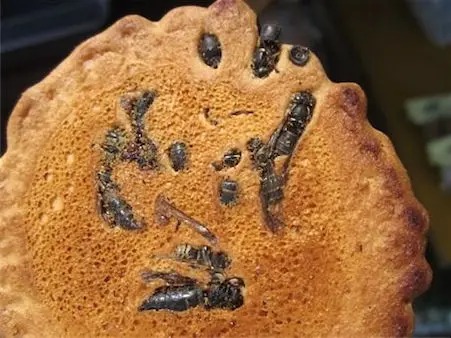
Ready for a snack? This wasp rice cracker rules Japan streets. A group of “Digger Wasp lovers” (yes, they do exist) have created a wasp rice biscuit in collaboration with a local biscuit manufacturer.
It is not difficult to make. The wasps are boiled in boiling water, dried and then added to the biscuit mix. The finished biscuit has a slightly sweet-salty flavour, and the wasps themselves are easily mistaken for burnt raisins - just a little more bitter and sour. Oh, and they have wings in them. And their legs... But if you're looking for a protein-packed snack, this biscuit is perfect for that, as it contains 81% of protein, compared to 20% in the average biscuit. So if you're going to the gym, don't leave your bag of wasp rice biscuits at home!
5. Virgin Boy Eggs - China
What do little boys have to do with a spring dish popular in China? Virgin boy eggs are a particular favourite of Dongyang city dwellers and only two ingredients are needed to make them, one of which is Egg, and the other is the urine of a boy aged 10 or under. There is no explanation exactly as to why it requires young boy's urine, it has simply been the case for centuries. Patience is needed to prepare it, as it takes at least a full day. First, the eggs are soaked in the boys' urine, which is collected from the toilets of the local primary schools. Then they start heating it on the stove and after boiling the surface of the eggshell cracks. The eggs are then eggs is removed and the used urine is replaced with fresh urine, then replaced and the process is actually repeated until the egg white is golden and the yolk has a greenish tint.
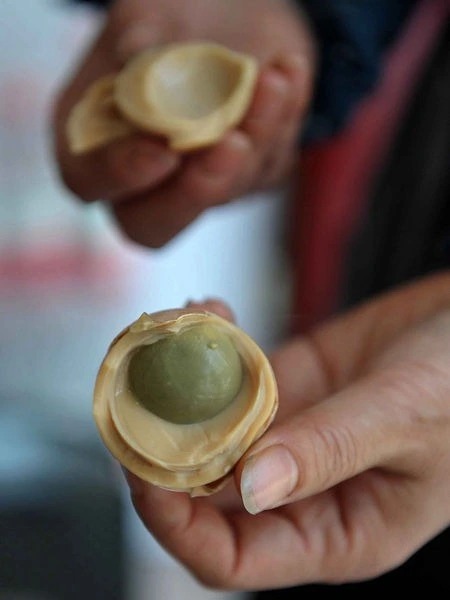
You can buy these eggs from almost any street vendor as a tourist, but the people of Dongyang are known to boil and prepare the eggs at home. Although it sounds bizarre, there are many health benefits to eating them, as they improve blood circulation, prevent heat stroke and even cure chronic asthma.
Something for something, or not?
Although these dishes are not really gourmet, they are traditional in many places, so if you want to learn about the specialities of a country, this can be a way of understanding different cultures.