






The hospitality and tourism sectors have faced many difficulties in recent years. They have had to adapt - and still have to adapt - to changing circumstances. Demands have changed, customs have changed, and this is also true for border catering. There is no doubt that the ordeal facing operators is not yet over.k.
An important driver for the profitable operation of catering establishments is the influx of foreign guests and gastronomic tourists. We all know that there are far fewer visitors than in previous years. This is particularly true for catering establishments along the border. What this means on a day-to-day basis, and what the effects are, is best known to those professionals and owners who are closely affected. Attila Gosztola, owner of the Panorama Restaurant in Sopron, helped us find out.
Tamás Budafoki: Foreign guests determine the hospitality of border towns. What is the source of the problem that now makes it difficult to operate?
Attila Gosztola: You should know that the primary problem was actually caused by the covid. Even last year, the number of guests lost to the pandemic did not come back in 100%. This means that there has been a significant decline, which is approaching the baseline at a terribly slow pace. It is simply that people's habits and lifestyles have changed and with that the way they go to restaurants has changed.
BF: What is it that has driven hospitality in border towns?
GA: Sopron, where we are - and all the municipalities close to neighbouring countries - had the advantage of being able to provide cheaper services. So people from neighbouring countries built up their lives by coming over to us for hairdressing, doctors and even car mechanics. They used various services, including catering and tourist attractions. A lot of people put together daily packages, weekly packages, and did a lot of things in Hungary. These customary systems have changed completely since 2020.
BF: After the subdued period of covid, is it back to normal?
GA: Basically, it started to get better. It was noticeable that foreign guests were trickling back, albeit cautiously. Then came the economic crisis, which again put a halt to this process. I can see it personally, as many of my friends and acquaintances live on the other side of the border. It could be a top executive or an average pensioner, none of them care how much they spend. So they start looking for ways to save money. This means that whereas they used to come over every two weeks to eat out, go shopping, etc... they now come over once a month. Whereas they used to consume a lot, they now skip items, or consume one beer instead of four. Fortunately, they are spending less on food and more on drinks.
BF: If you had to give a percentage, how have habits and turnover developed?
GA: After the covid, turnover fell by about fifty percent. Then we started to recover and went up to seventy percent, now the numbers are going down again. For those places that have been around for a long time and have a large customer base, you can probably talk about stagnation. Those units that still have a presence of age groups with some level of attachment to Hungary or even to the area are having some luck.
BF: What are the best-selling dishes in the Six Seas catering industry, what are the characteristics?
GA: We have noticed that in everyday life, we tend to cheaper category meals they go. It is also important - and this was not an issue in the past - to be able to ‘eat’ as quickly as possible. They don't spend nearly as much time in restaurants as they used to. Weekends have become strong, and I've noticed that we are seeing people who haven't been here for years. The arrival of guests is now completely unpredictable and quite hectic, which is not easy for operators.
BF: What age range do you get guests from? Because this is also a decisive factor...
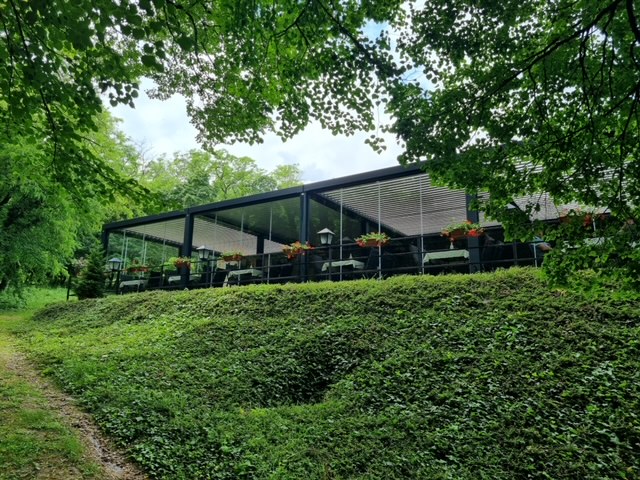
GA: You can see that it is more the older age group who come from abroad, especially on weekdays. If you look at Sopron, it is also typical that the city centre is starting to empty out, and the peripheral areas are more congested. Restaurants in green areas are favoured. This is also a remnant of the „covid” mentality, as safety has become important. Even now, many people come in wearing masks and it is important to sit at a distance from each other. For this older age group, this system of habits has become ingrained in their daily lives. The problem is rather that there are not nearly as many young people coming as there are older people staying behind. In terms of the total guest population, this means that 20 - 25 % is the maximum number of guests from the younger generation.
BF: What can a true restaurateur who has dedicated his life to this do?
GA: We are confident that the 30 - 40%% of the lost guests will slowly trickle back. Personally, I am now reliving the nineties. Then, with the opening of the border, the Austrians started coming, changes had to be made to the menus, we had to rethink every aspect of the operation, the service and our habits. More and more people, whether foreign or domestic, were able to go out to restaurants. We are now experiencing the same thing, but it is a much slower process than it was then.