






Carpaccio is perhaps one of the most popular starters in bistro cuisine. It's no wonder, since in addition to the classic beef version, it can be made with almost anything from fruit to seafood. But who did this delicious dish come from and when was it first served? Find out!
Rukkola
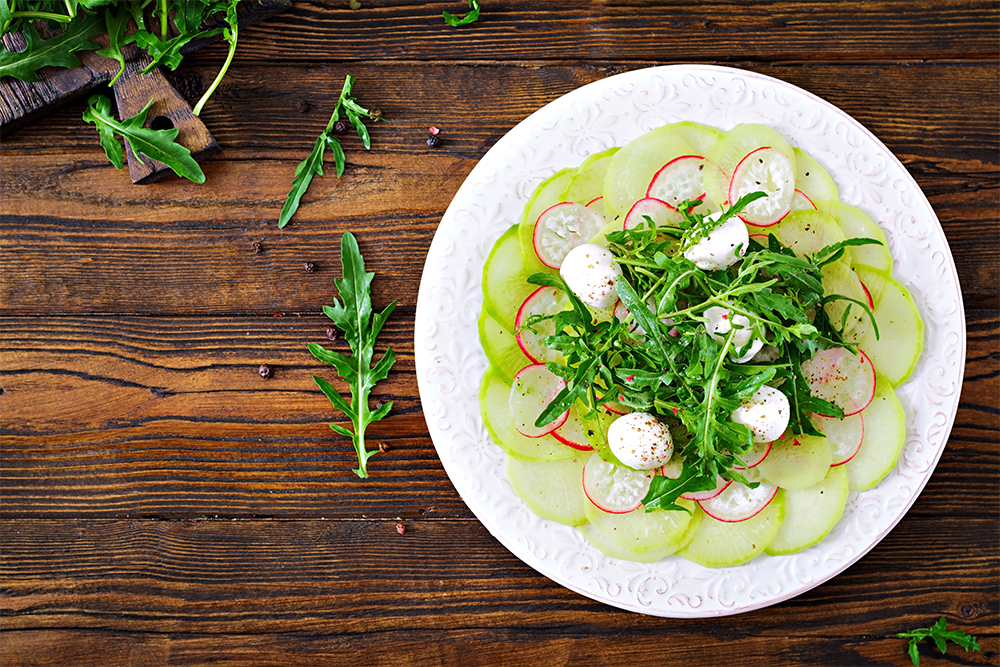
The various meats that are prepared as carpaccio are often served on a green leafy base: the most common is arugula, due to its strong, peppery flavour, but radicchio, endive and river dill are also common alternatives.
Beef
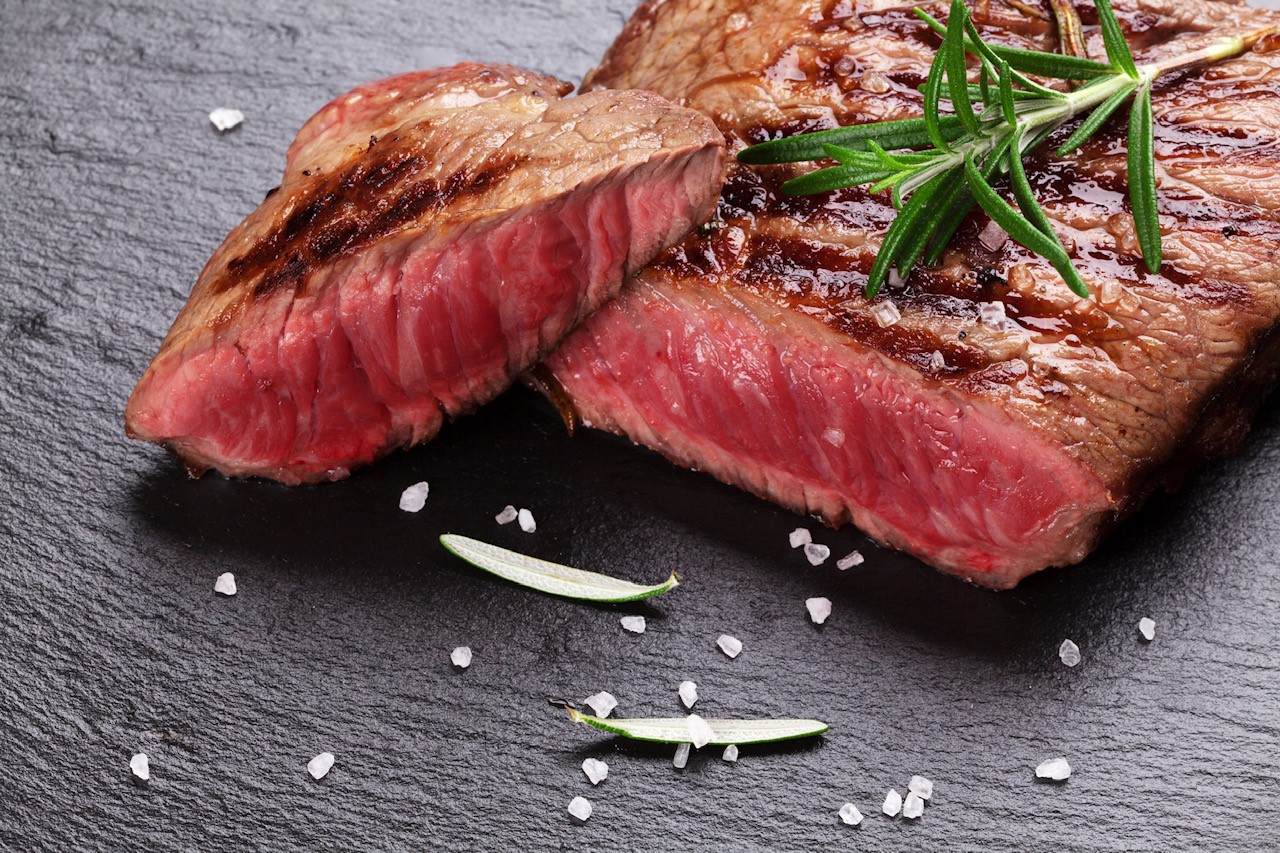
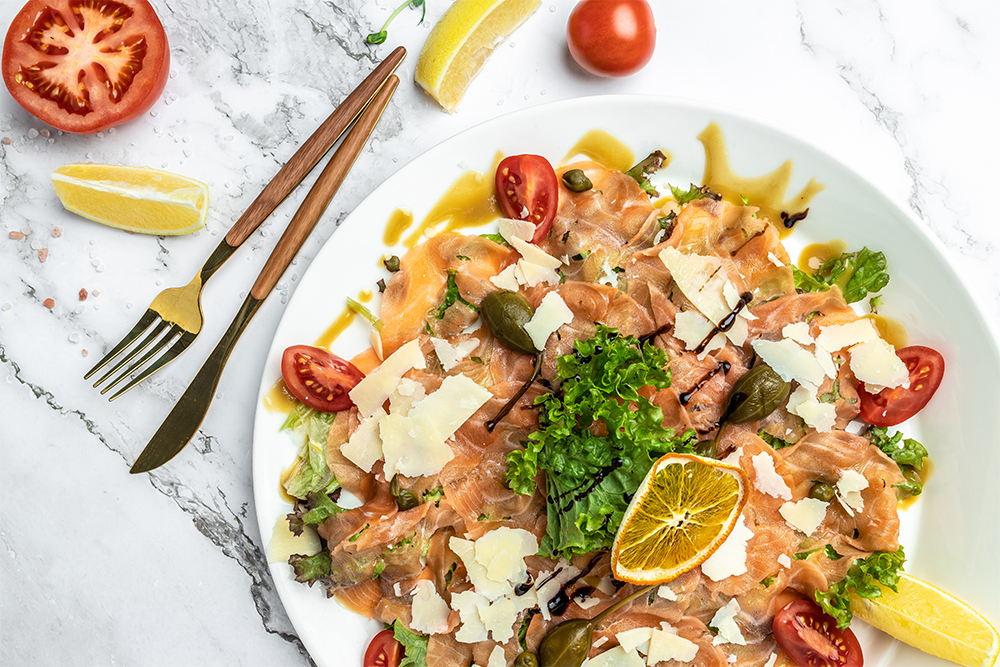
Beef consumed raw, finely sliced and seasoned. Protein is a key element of carpaccio: it must be of good quality, fresh and never melted, and carefully selected to avoid health risks. The fillet and the back tendon are the two most suitable cuts of beef for carpaccio. Over time, carpaccio has expanded to include fish (tuna and swordfish, as well as shrimps, salmon and sea bass) and even certain types of cheese, such as scamorza.
Vegetables
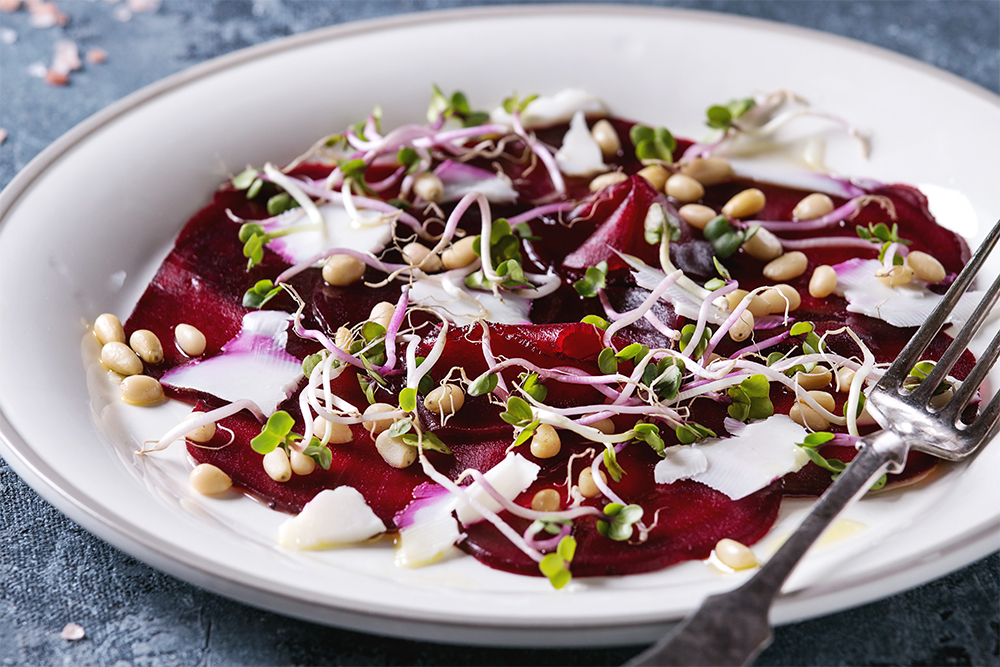
There is carpaccio for every season, at least in the vast vegetable empire. Even normally cooked vegetables can make excellent raw carpaccio if you slice them finely. From courgettes to pumpkins, aubergines to mushrooms, they are prepared in the same way as any meat carpaccio: served cold with the dressing of your choice and herbs.
Chives
A tasty variation on the theme: carpaccio can be enhanced by adding chives, the perfect seasoning for raw fish dishes.
Dijon
Dijon mustard is also used in many different versions of the recipe. Another strong flavour that can accompany raw meat is Worcester sauce.
Elephant carpaccio
Even an elephant can be sliced thin as a carpaccio: a saying often applied to workplace situations. In reality, it has nothing to do with cooking, it just means that even a huge project can be successfully completed if broken down into simpler and smaller tasks.
Julienne
In many versions of the original recipe, the vegetables play a leading role, with one common feature: they are all cut into very thin slices or julienne.
Ingredients
All you need are five ingredients to make the original recipe, published in The Harry's Bar Cookbook: very thinly sliced roast beef with mayonnaise sauce, Worcester sauce, lemon juice and milk and of course salt and white pepper.
Fruit
Carpaccio is a trendy recipe that has now expanded to include any food, including fruit. This may seem silly, because fruit is mainly eaten raw, but in this case it refers to the way it is finely sliced.
Giuseppe Cipriani
It is the name of seven restaurants around the world, from Miami to Venice, where the first one was opened in the mid-20th century and where carpaccio was first served. The idea came from the founder himself, Giuseppe Cipriani.
Harry's Bar
Cipriani was also the founder of the mythical Harry's Bar in Venice, a small place where some of the world's most famous cocktails were invented, such as the Bellini, and where international clientele (including Hemingway and Orson Welles) ordered their own carpaccio dish.
Kandinsky
Although carpaccio takes its name from the artist Vittore Carpaccio, who used warm shades of yellow and red in his paintings, the sauce served with the meat is often named after another great artist, Kandinsky: it is actually splattered on the meat in a way that resembles an abstract painting.
Lemon
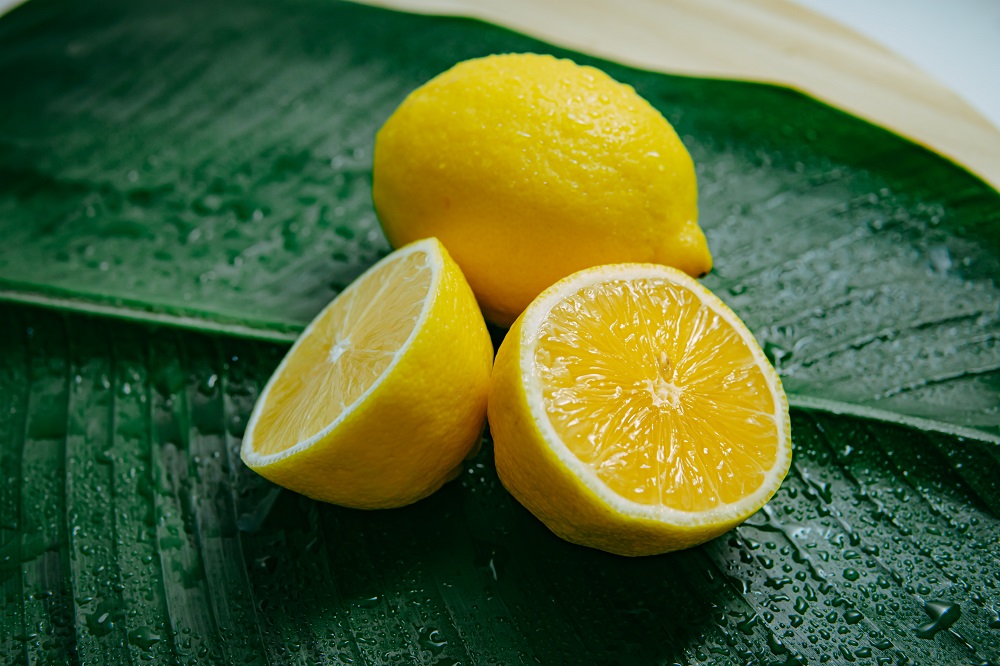
One of the key ingredients of carpaccio is the lemon, which is used to flavour the meat. The lemon juice is added to the mayonnaise sauce, but do not release it too early, as this will result in marinating.
Michelin
Carpaccio is one of the most popular starters among Michelin-starred chefs, who have followed in Cipriani's footsteps and studied a thousand variations on the theme, especially the use of fish fillets. Carpaccio is also the name of a well-known Italian restaurant in Paris, and has been recognised by the Michelin Guide on numerous occasions.
Nani Mocenigo
It is said that carpaccio owes its origins to a noblewoman. Countess Amalia Nani Mocenigo, a guest of Cipriani in Venice, ordered a raw meat dish for health reasons. This is said to be the origin of the first carpaccio dish.
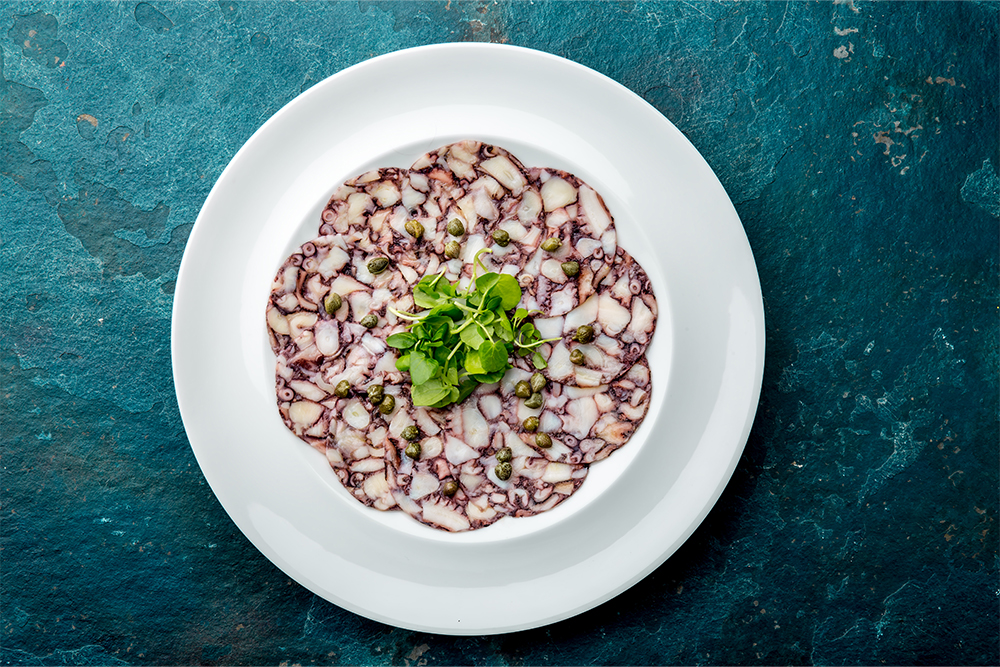
Octopus
The recipe for octopus carpaccio goes by this name, but in fact in this case the meat is cooked and then cut into thin slices and seasoned with oil, lemon, salt and herbs.
Quinoa
Hungry for an exciting recipe? Here's an idea for an unusual and creative starter: serve fish or meat carpaccio as a finger food with an accompanying salad of quinoa and almond pieces - deliciously ingenious.
Tartar
Other dishes are often confused with carpaccio: tartare, for example, also requires the use of raw meat or fish, but in this case it is served finely chopped and served with sauce. The town of Alba in the Piedmont region is famous for its knife-cut raw meat.
Umeboshi
Many Asian chefs who specialise in vegetarian cuisine use umeboshi vinegar, a typical Japanese plum flavouring, to flavour vegetable carpaccio dishes. It is a very salty seasoning often used in place of soy sauce.
Parmesan
Parmesan shavings have become synonymous with carpaccio all over the world. Placed on meat and sauce, they add a rich umami flavour to beef and veal.
White truffles
The most excellent carpaccio of all replaces the Parmesan shavings with delicate slices of white truffle, served on top of beef.