





We have not found a crystal ball, but the millions of data available give us a promising vision of the future, according to Euromonitor. What could the future of gastronomy and hospitality look like in 2073? Spoiler: megatrends ahead!
What's next? What can be expected? What is not? What do we need to prepare for, and above all, how should we do it? Such in difficult times more than anything, restaurateurs are looking forward to answers to these questions, preferably ones that can be introduced in the coming weeks and months. However, those who are able to focus on long-term perspectives take a long-term approach, and with good reason. In the last fifty years in gastronomy, everything has happened, and the opposite has happened. So what will the next 50 years be like?
THE FUTURE OF FOOD
We now have scientific tools that can predict tomorrow with surprising accuracy. So-called megatrends play a particularly important role. Anyone who studies and correctly interprets their messages can draw very accurate conclusions about the (gastronomic) future, at least until 2040. Fortunately, there are specialised researchers who extract these megatrends from the data on a daily basis. The London-based Euromonitor a market research company, does just that. But what are the megatrends?
These are fundamental changes in consumer behaviour that show long-term changes in the market. And they result from a number of circumstances: the economic situation, technological innovations, demographic changes, changing environmental conditions. In short, everything that determines human behaviour. Because megatrends are based on a wide range of consumer data, they are considered to be very reliable. Particularly in the hospitality industry, where we can learn what guests like, when, how and where through consumption from all over the world, so megatrends and their meaning can be summarised surprisingly well.
Question after question
But let's get to the point: how will restaurants buy food and ingredients in 2073? How will they be produced and processed? How will food be served to the end consumer? In other words, what will be the overall concept of catering in the future?
Eating and food will always be one of the tangible things we want to touch, smell and experience with others. This is precisely why we know that catering in general, and restaurants in particular, are fundamentally timeless. Despite digitalisation, no one will want to do without it in the future. For the time being, this can give hope to restaurateurs. But how exactly will we taste, touch, smell and eat with others in the future?
„Ghost kitchens” CREATE THE FUTURE OF VENDING
Based on what we know, we can say that in fifty years“ time automation will permeate every stage of the production process. What seems at first to be an abstract vision of the future has in fact been around for a long time in the form of ”ghost kitchens". While traditional restaurants have a dining room and wait staff, these invisible kitchens prepare food exclusively for home delivery. This is understandable, as their only job is to prepare and deliver the food with the help of a home delivery team. These types of kitchens mushroomed abroad during the Covid era and have been around ever since.
In fifty years, however, these “invisible kitchens" could become production centres. In every residential area, in every apartment block and in every high-rise office building, they will be responsible for the bulk of commercial food procurement and automated (pre)processing. The result will be a significant reduction in the number of private kitchens.
TWO FACES OF THE FUTURE GASTRONOMY
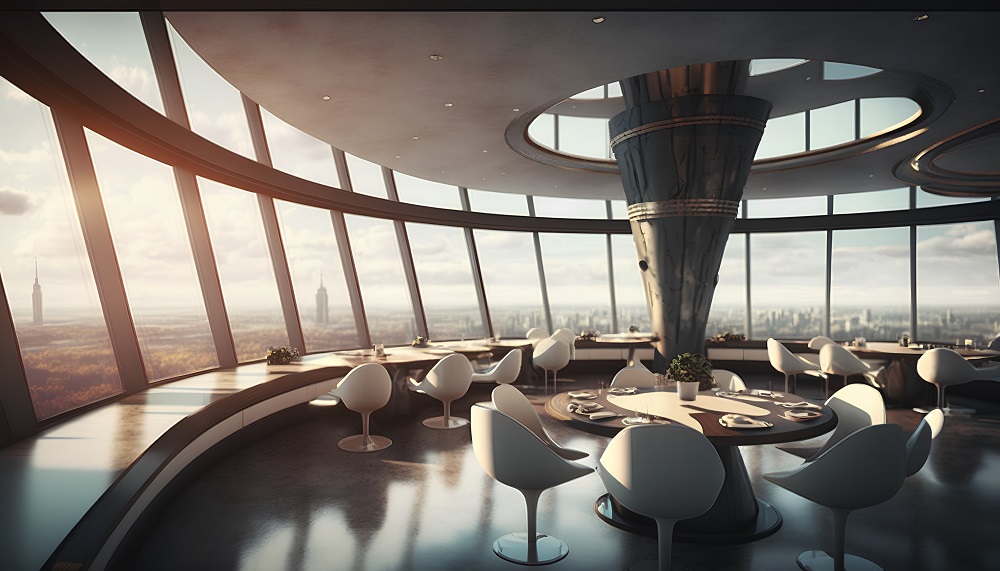
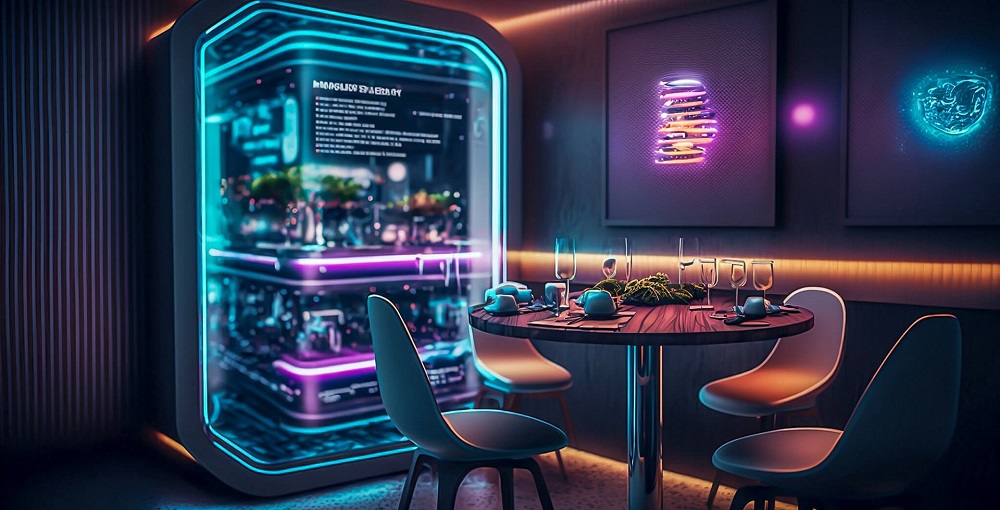
One takes the form of hyper-technologised takeaway vending machines. The other is sophisticated gastronomy, with a high aesthetic value, focusing on analogue, deeply personal experiences. But let's stick with takeaway machines for now.
According to Euromonitor, these are the results of two megatrends, namely the phenomenon of convenience foods and the overall trend towards personalisation, i.e. the development towards individualised meal solutions. We already know a little about this from certain fast food chains where you can “put together” your own hamburgered using individual components, using a “modular system”. In any case, these take-away machines do not require human staff to operate, but can do everything automatically. It is very likely that the components of such meals will be prepared by invisible kitchens, further reducing the time required for mechanical preparation of the machines. In any case, 3D printers are also likely to play a role in the production of individual components of each dish.
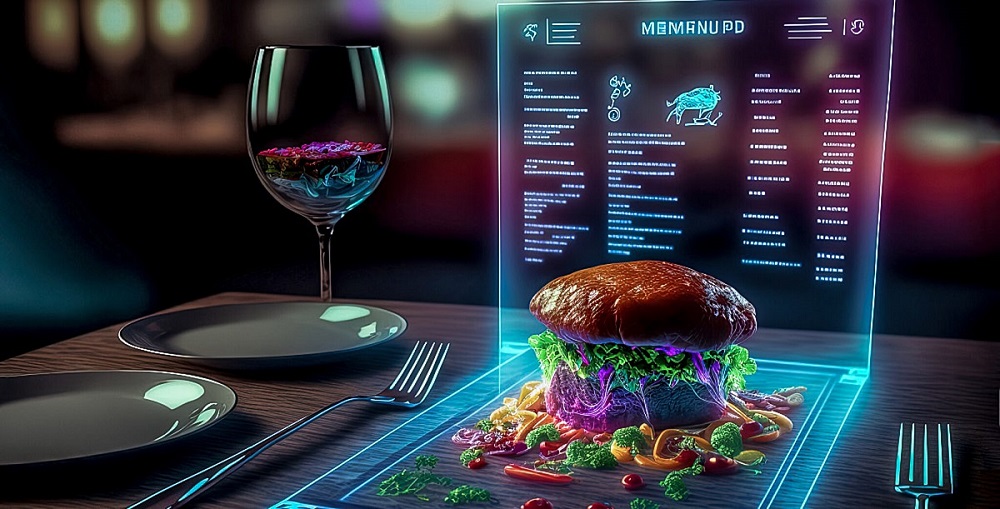
With the rapid development of takeaway concepts in recent decades, it is assumed that by 2073 such machines will be ubiquitous. This is not only because they are practical, but also because they require relatively little effort to prepare food. Of course, this is a very anonymous, high-tech thing. And that's why it's great news for future restaurateurs, who will see restaurants as analogue places of enjoyment. Nevertheless, in 2073, food prepared by real people will still be in demand. The only difference is that these dishes will be even more important and more respected than they are today.
AND WHAT HAPPENS WITH HUMAN RESOURCES AND QR codes?
Today's young chefs will be needed for a long time - at least until they retire. What will restaurant chefs do when their time comes? They can be really creative. Their food will tell stories even more, because that's how they can express what it's really about.
Moreover, service staff will continue to play a key role in storytelling and remain an essential part of the empirical restaurant experience. But they will be intensively supported by modern technologies - the precursors of which are already emerging. The keyword is QR code. In the restaurant of the future, they will be everywhere: on every plate, on every container, on the furniture and even on the bottles of drinks. Whether it's about the elements of a dish, the vintage of a wine, the supply chain of an ingredient, the history of a whiskey or the decoration of a restaurant, QR codes (or even NFT chips?) will create touch points between the restaurant and its guests that will set new standards.
So in the light of this, we are facing some big changes, but as they say - there is nowhere to go but forward!