






The catering industry still throws too much food in the bin. How Artificial Intelligence (AI) can drastically reduce food waste in the foodservice industry - and make money while saving the climate.
Some predict the apocalypse, others predict paradise on earth with the advance of AI. In reality, if we look closely at the rapid rise of AI, we will quickly see that both options are possible. As for the food waste is certainly capable of working wonders. Miracles that the world desperately needs, as around two billion tonnes of food are thrown away every year around the world.
Some studies suggest that up to 40% of this is attributable to the restaurant industry. According to the UK NGO Waste and Resources Action Program (WRAP), around 20% of a restaurant's food waste ends up in the bin because it is spoiled before it is used. 45% is related to the preparation process and about 35% is leftovers from the food served.
The exact figures vary. But studies show that food waste is responsible for eight to ten percent of global CO2 emissions each year. Food waste is therefore not only an ethical problem, but also a climate problem. It is therefore to be welcomed that many Michelin-starred chefs have focused on the fight against food waste in recent years, which has been further has created a trend.
Massimo Bottura and his Food for Soul project is probably the most prominent example. Through his cultural project, he is trying to encourage people to avoid food waste in the interests of social cohesion and individual well-being. However, unlike chefs, AI can address this problem structurally, not idealistically. All over the world at once, and all at once without human intervention.
SMART WASTE BINS AGAINST FOOD WASTE
There is really only one reason for food waste in the culinary industry - lack of data. Too many kitchens still can't answer the following questions. What three three three three three three products in the last three weeks did you order? How much food went in the bin in total? Which food do you eat the least? Which part of this food is thrown away most often?
This is where the main power of artificial intelligence comes in. It can measure and break down all this information - laying the foundations for reducing food waste in the hospitality industry. But how exactly?
Take Winnow as an example. The company was founded in London in 2013 and is now recognised as the world's leading AI tool for food waste solutions, with kitchens in over 40 countries relying on this revolutionary AI - from Ikea to Costa Cruises to major hotel chains such as Emaar, Accor and Hilton. Why? Winnow turns waste containers into intelligent data collectors. This is achieved by placing a camera above the bin, which works wonders. It recognises the type of food that is thrown away and calculates its value based on the consumption of the item. It then shows how many portions of a particular item have been thrown in the bin in a day, how much it cost - and what its CO2 emissions were.
This is not only displayed in real time on a screen directly above the landfill, but also as statistics in the cloud. Weekly, monthly, annually - whatever you want. The magic here is how much food is thrown away exclusively in kitchens. So chefs, cooks and F&B managers can see at a glance what they need to order and prepare less of and when. And so they achieve results that give reason for hope: in 2022, Ikea alone reduced food waste by 50% and Emaar Hospitality Group by 72%.
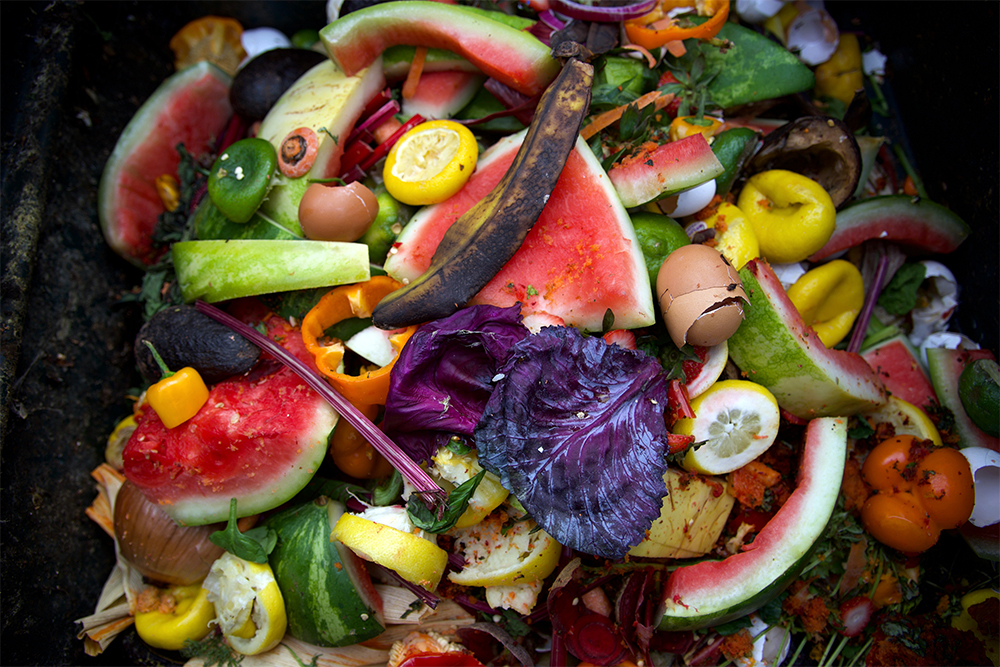
Data is the key to artificial intelligence
As revolutionary as a tool like Winnow may seem, the potential of AI in the fight against food waste is far from exhausted. Why? Again, the answer is: because there is still not enough data. Because information from the waste bin alone is not enough to solve all segments of the problem. For example, we need data on seat occupancy or on the minimum shelf life of each product.
Of course, solutions already exist, with AI tools that can transport and decompose this type of data. But in many cases they are still doing this side by side, i.e. they are not connected. Algorithms for a company's occupancy status can be invaluable for determining order volumes for certain products - especially those that are only available for a short period of time in a season. And this is just the beginning.
AI clouds are the future
In the future, restaurants will be able to connect directly to their suppliers and farms via an AI cloud to coordinate the current supply-demand ratio even more precisely - for even higher quality, fresher and more accurate quantities. for orders. All this may seem like a distant dream at the moment. But progress over the past ten years shows that we need to think big, not just think big, when it comes to challenges of this magnitude.
One thing is for sure: most restaurants cannot completely eliminate food waste, as not all commercial kitchens can prepare French fries potato peel. Even if food waste could be reduced to a practically utopian minimum in the coming decades, there will still be food waste in the restaurant industry. The good news is that, in an increasingly climate-neutral circular economy, AI is likely to provide solutions to these challenges soon. But that's another story.