






Regime change in hospitality - integration is the biggest challenge
Labour shortages are a common problem, but not only in Hungary. Entrepreneurs are struggling heroically to find enough staff to run their businesses, so they will take on practically anyone who will take the job.
But this is a situation that the profession is doubly unable to cope with, because many have not yet realised that the operational system needs to be adapted to meet this challenge.

The American model: integrating the workforce
In America, if you fall out of the labour market, you usually go straight into hospitality and work there until you find the job you want - which is typically 3 months or less. But not only does he or she work there, but thanks to the systems there, he or she can be a productive and useful member of the team from day one and immediately participate in the profit generation. There is a tradition of integrating this type of workforce into the organisation, unlike the Hungarian model. Let's look at the difference.
Domestic practice: restaurant space allocation
In Hungary, if you take a good look at a restaurant plaza, the waiters are divided up geographically, each with a few tables -for which they are responsible- so that you don't have to run around so much.
In this model, everyone is expected to be highly skilled and competent, which unfortunately is almost impossible with an unskilled and unmotivated workforce.
In America, by contrast, operations are divided into tasks, and people of different qualities are given different levels of responsibility, resulting in a system that works perfectly well and smoothly.
Allocation of tasks
Just think, there's a pretty girl at the door, luring you in, sitting you down at the table, handing you a menu and managing the reservation system. It's almost enough to be “just pretty”. Then comes the trained waiter who takes the order, can answer questions, can sell, but can do nothing else. And then, not to put it badly, there is the moderately talented person who, when the chef rings the bell, brings the food to the table. To the exact one marked on the slip of paper under the plate. No skill is required, just to avoid knocking the guest over, find the table and set the plate down nicely. Then comes a worker with similar skills, whose job is just to clear the table and tidy up. Then the skilled waiter who takes the order swipes the money.
In this model, you have one skilled staff, one pretty lady, and two or even six totally unskilled staff for a much lower wage, and the result is not comparable to having these four to eight people sharing the floor space.
This is true for all areas, tasks need to be divided, categorised and the right level of task assigned to the right person. Complexity can only be expected from a highly skilled workforce.
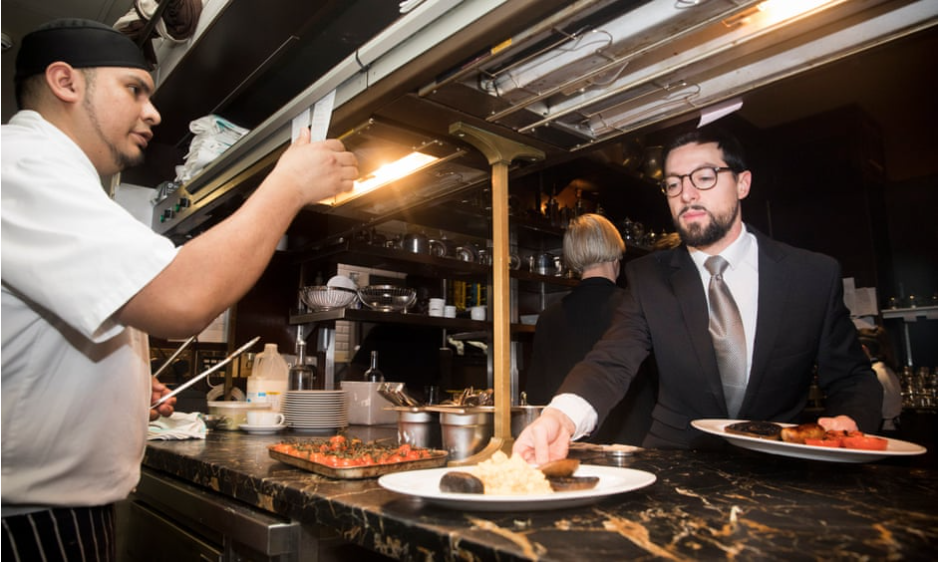
Leaders have a huge role to play here. They can't do what they used to do, which is just watch and nudge people. They are responsible for integration. The unskilled worker has to be told what to do day in and day out, because at night he often forgets it in the morning. Work must always be appreciated, praised if possible, and reprimanded if necessary. You can see the pre-opening meeting in American movies. Employees stand in a circle and the manager assigns tasks, who is responsible for what, and evaluates performance, motivates the team. This is the only key to achieving valuable results with a small, skilled workforce.
Balázs Matusz