




Sous vide technology is known to many and yet it hides countless secrets. Despite its undeniable advantages, many people still fail to exploit its potential. In the catering industry, it is now essential and necessary. It is a way to get good quality food on your plate quickly.
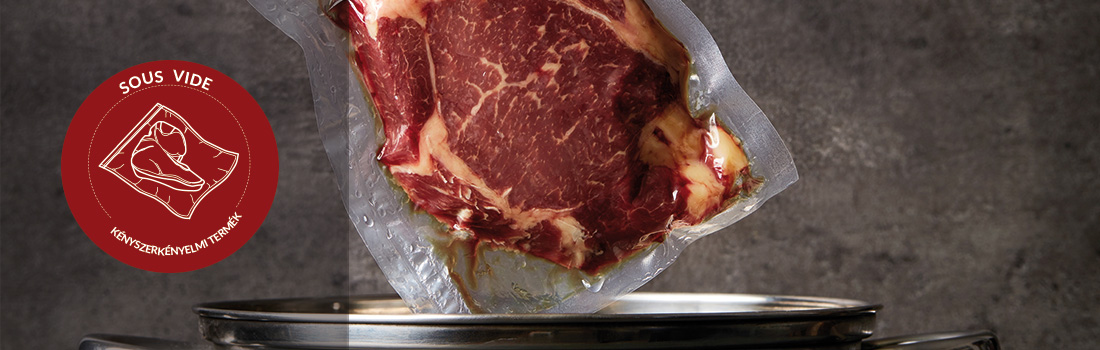
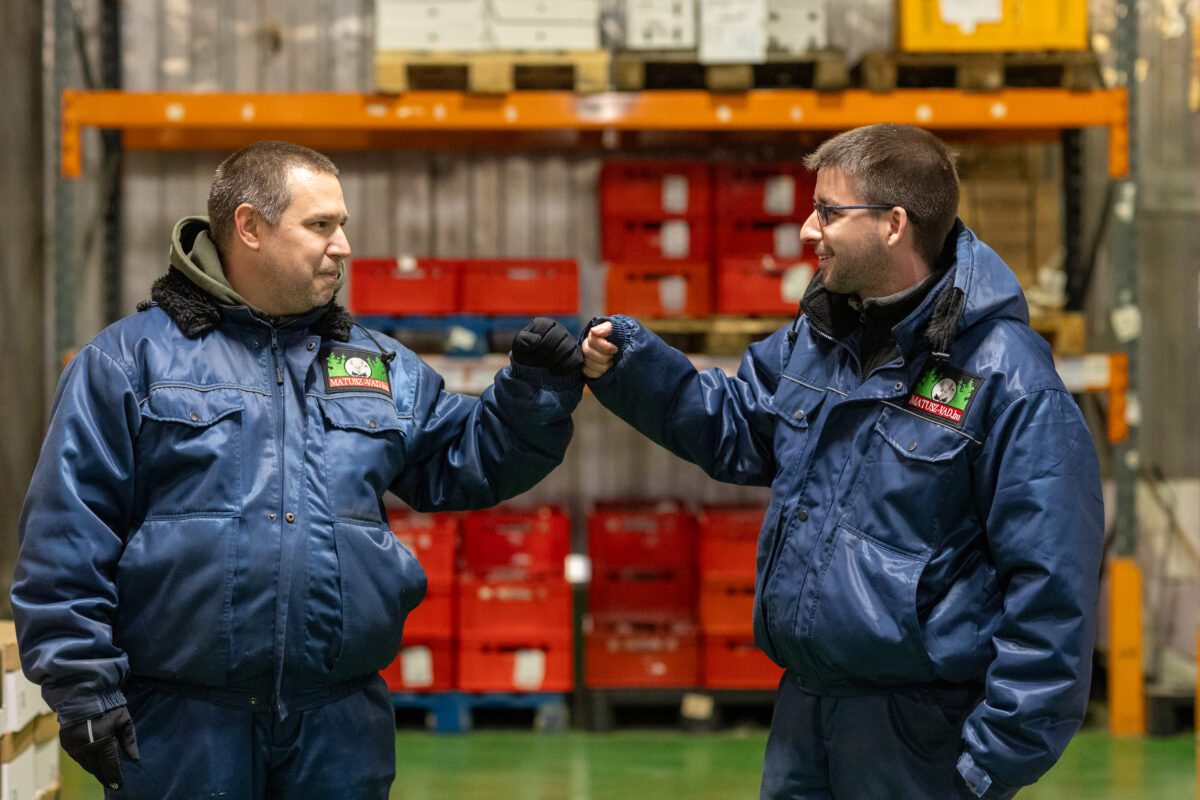
Photo by MATUSZ-VAD The simple and easy-to-understand solution
What is a sous vide
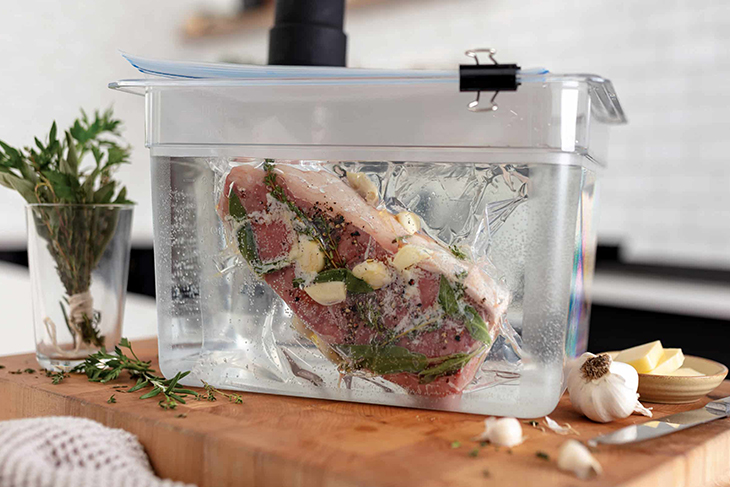
A sous vide (pronounced suvid) is a cooking process. It involves prolonged heat treatment of the raw material in sealed - preferably vacuum-sealed - heat-resistant plastic bags at low temperatures. The process makes the food crumbly without losing its original colour, nutrients and texture. The temperature depends on the type of food, and varies for meat, fish and vegetables, and also depends on individual taste, e.g. whether the meat is cooked rare or medium rare.Compared to traditional cooking times, sometimes up to 50-70 hours and at a significantly lower temperature.
Chef Péter Pataky
Peter Pataky - one of the owners of the factory - lived in England for more than 3 years. While working in serious kitchens, he completed his college studies there. In 2011, he moved back home and was involved in the opening of IKON restaurant as a chef. Thanks to Peter's professionalism, the restaurant has become one of the best restaurants in Hungary.
With Péter Varga - his business partner - he built a meat plant in Tiszalök based on suicide technology, so that the safety provided by the technology could be available to restaurants without the expensive working hours of chefs. Their quality products have been on the market for a long time and of course MATUSZ-VAD offer.
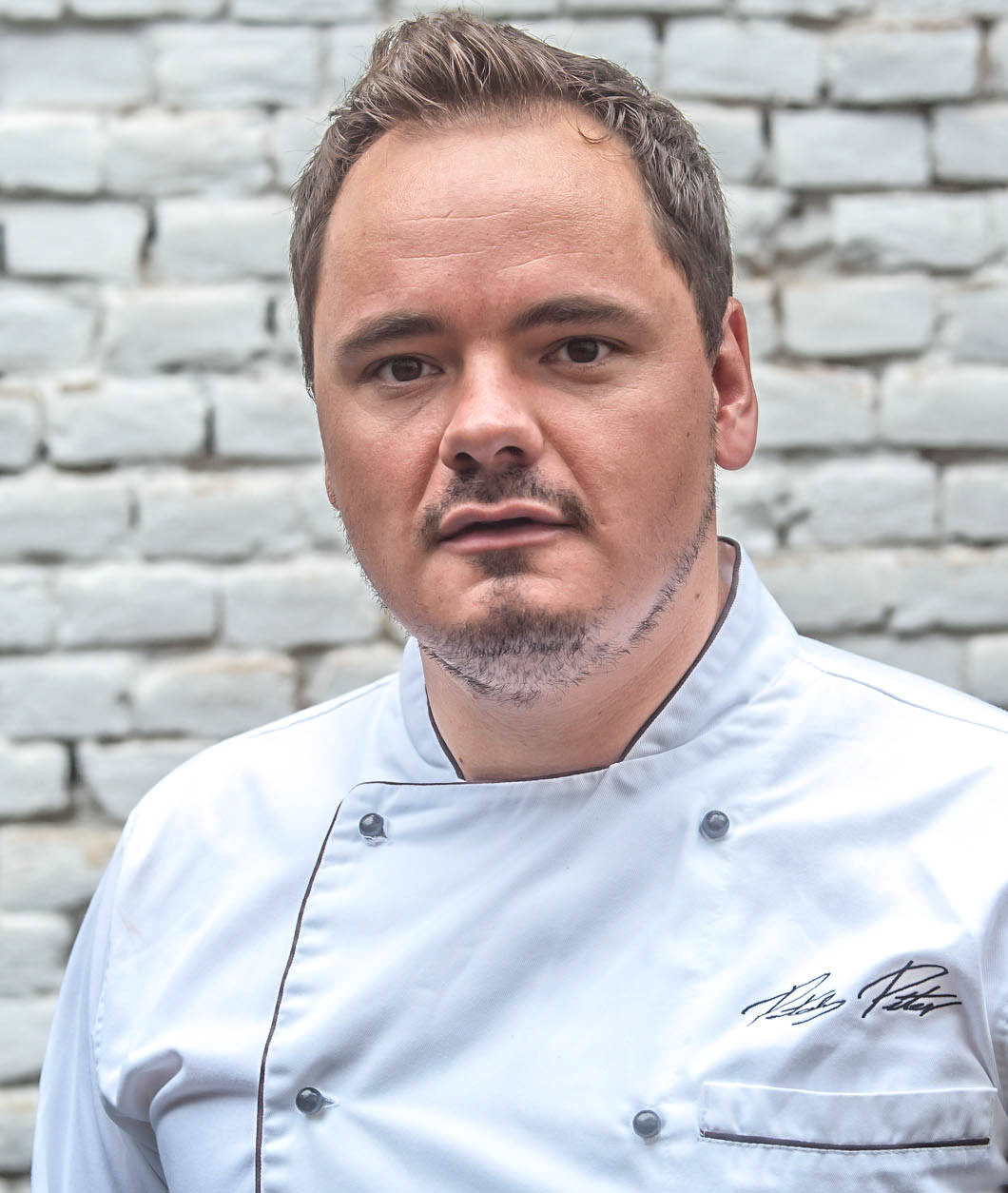
Photo by Péter Pataky
Péter Pataky
„We do the same as a Michelin-starred restaurant, but everything is a little bigger.”
- Let's start with how you came to the conclusion that this technology is a great help in the kitchen!
- In England, it was a technology long ago, a technology that was fully accepted and used even when people in this country didn't know whether to eat it or drink it. I realised how much it could make life and service easier. In other words, when there's time, you can be prepared for the midday and evening rush, but when there isn't - because of the service - it's all kitchen swimming. One of the big advantages of sous vide is precisely this, you can work ahead and it helps enormously because of the speed. To sum up, when Lajos Bíró was just starting out in this genre at home, it was already being used abroad. The point is not that it helps to solve the problems of labour shortages, but simply because it speeds up service and makes quality predictable.
- When you came home, did you jump straight into this business?
- Basically, yes. I've thought a lot about it, I've talked to a lot of people, we've basically started this plant to put together at home. We basically experimented for a year and when we felt we were ready, we went to the market. At that time we had ten or fifteen products. I went through several of the major Hungarian wholesalers, including MATUSZ-VAD- at. In the first round, they were quite lukewarm about it, but finally it was Balázs Matusz who really started to show some interest. After a few meetings and tastings, the cooperation was established and we have been working together ever since. Then we signed a verbal agreement and exclusivity in the horeca sector. It was a huge thing at the time because they put a lot of energy into it. We organised Rod Shows, we travelled all over Hungary. If you look in time, that was six years ago. It's interesting how much of a role this technology has played in hospitality since then. I can safely say that we pioneered what is now taken for granted.

Photo by Péter Pataky Libamell
- Basically, this technology started to take off around 2015?
- Yes, but it is difficult to give an exact date, as it is a complex process. They started to discover it, but then the human resource shortage was not as big a problem as it is today. Quite simply, the professionals realised that the quality of the suvaidated product, prepared in advance in the factory, was good, and if it was needed, it was there immediately. So a leg of duck or goose can be on the customer's plate in ten minutes. Pre-prepared products are very easy to store and do not require expensive machinery, significant investment and skilled staff. It is easy to use and can save a lot of time in the kitchen. And in recent years, those who have bought a sous vide machine and learned how to use it have found that, because of the shortage of staff in the catering industry, they do not have people to work with it. This has significantly strengthened the case for our sous vide meat plant and our products.
- Does this also mean that, beyond its original benefits, there is now even more demand for sous vide products?
- In fact, the market environment and the shrinking opportunities have made the technology almost unavoidable. We responded to the circumstances and started to expand. Because we are a small manufactory, we have the flexibility to deal with the requests and desires of our restaurants and partners. We never stop developing and many people contact us with different requests.
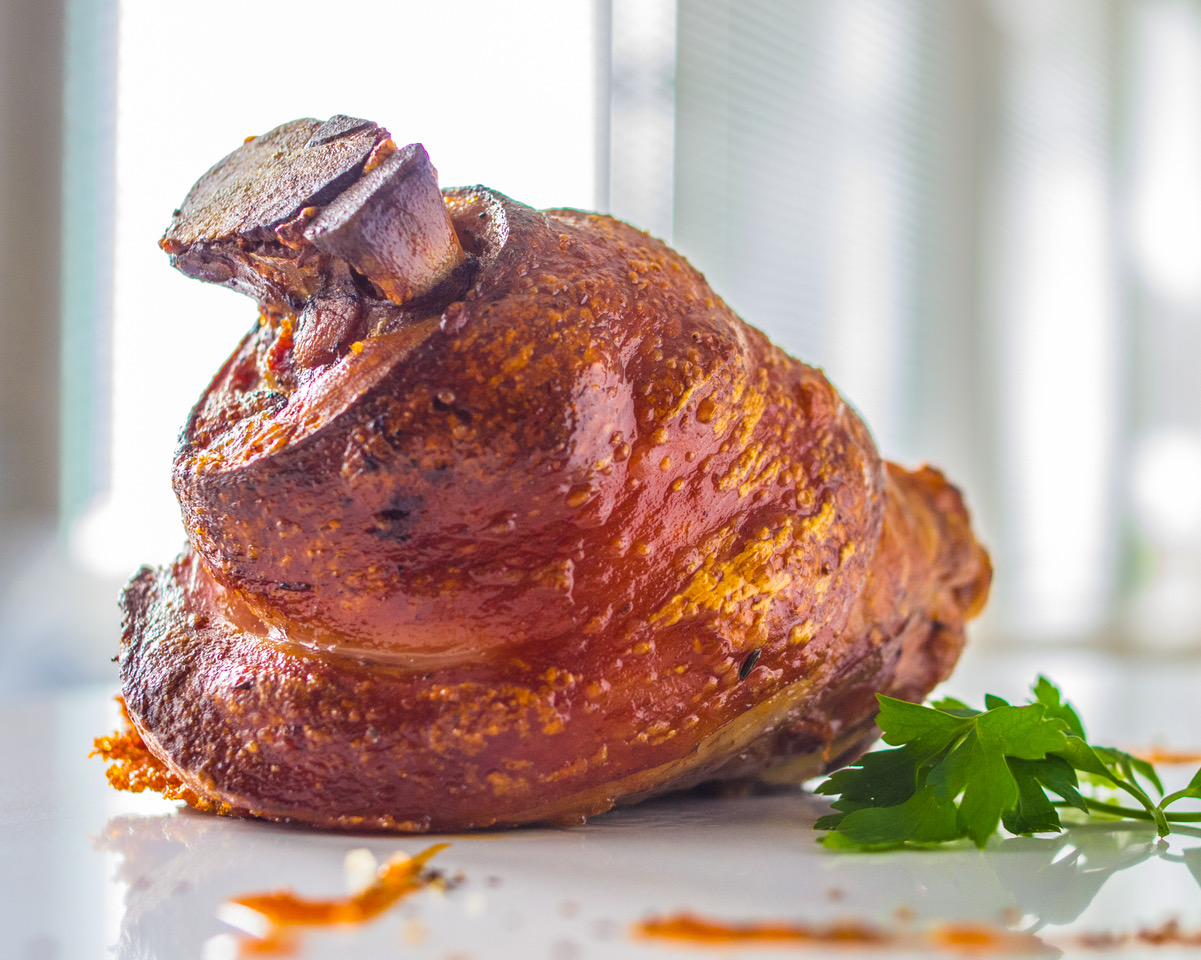
Photo by Péter Pataky Csülök.
- The question arises, is all meat suitable for sous vide?
- Good for almost everything. It's good for some - not for others. For example, it's completely unnecessary to sous-vide a steak, but pork chops and duck breast are also sous-vide. Which is still the point: the result is predictable and very quick. For example, it's extremely topical because of the pandemic, because in a hotel you can't predict what will be sold off the a la carte menu. So, sous vide is the answer to a myriad of problems and is flexible and can solve the unpredictable guest demand.
Hams are a good example. Take a traditional leg. I know I'm going to sell at least a hundred pieces, so we'll make thirty by noon and at least twice as many after that. It's always fresh crispy and it sells out. But in a restaurant, you never know how much you're going to sell and a really good leg takes at least four hours to cook. What can the kitchen do? You can season it, put it in the oven or cook it on a griddle. Either way, it's never fresh! The other is sous vide, where I can prepare it in advance, store the ingredients without any loss of quality and when the guest asks for it - it's perfect, delicious and fresh in twenty minutes! It's not all the same!
- The benefits of sous vide are clear, but at first many people were wary of it. Why do you think that is?
- There was an antipathy at the beginning. The chefs were saying, „don't you think I can't make this?” and “should I buy this?” Eventually everyone realises - it's not that a professional chef can't do it - it's that if you have the manpower and time...
- What's the difference between sous vide cooking in the kitchen, say small-scale, and large-scale?
- The two are completely different. I've been doing this in kitchens for a long time, but it took us over a year to get the plant out into the market. This was because it works in a completely different way. We subject all our products to laboratory testing! Everything has to be experimented, reinvented. Moreover, we work with renewable energies, we heat our sous vide baths with them and, as I mentioned before, we are a manufactory. So people work, people put it in the bags, they salt it,...etc. To put it more clearly, we do the same as many star restaurants, but everything is a bit bigger. Everything is constantly taken care of by putting in human knowledge. That's what makes a really quality product.
- Why is artisanal attention important for sous vide products?
- It is quite clear, especially with meat, that no two animals are the same, and no two meats are the same. Different ages, a little thicker, a little fattier. You can mechanise the technology, but I would say that you need manual control, so to speak.

Photo by Péter Pataky Emperor Meat
- This is an interesting question. Is it even possible to do this on an assembly line?
- Of course, this is also automated. English, Polish, Czechs, etc. Only they can do it by looking at the “from to”. So they send the tenderest or thinnest meat as if it were the oldest or thickest. This is precisely the reason why errors cannot be eliminated. You can make quantity quickly, but you can't make quality. I wouldn't even call this method sous vide, but rather vacuum cooking. There is a huge difference. We're not into that, we go below 60 degrees - which is a real sous vide range. We've had duck breasts below 60 degrees that have been chilled in the lab for a year and they've tested negative for microbial count on everything. It's not just a matter of somebody sticking to the cold chain here, it requires a much more precise, all-encompassing attention to detail.
- Could the technology itself, the machines, be found?
- Not at all. Of course, there are installations for the home, for kitchens, but there are not really large-scale installations. I talk to a lot of people about this. Including Dr. János Kis, who is a retired vice president of Hyatt Corporation and a pioneer in sous vide technology. He's been perfecting the technology of refrigeration for 14 years and there really is no mature large-scale mechanization. To this day, we are still developing our own. For example, the shock machine, the heat treatment machine, which are thousands of litres of tanks, we have experimented with them. That's why we welcome anybody, but we don't do everything. It has taken a lot of energy and work to get us here.
What is important is that there are two international standards in this area, usually only one is requested. The I.F.S. (International Food Standard) and the B.R.C. (Certification to the BRC Global Food Safety Standard proves that you comply with HACCP, the hygiene, food safety and quality system). We have both! Traceability is extremely important. These are less likely to be implemented by a restaurant.
- If you had to say in a few words why sous vide is good - what would you say?
- To sum up, in an ideal world, there is no sous vide in the restaurant. The customer has time, patience and time to spare. The chef has the time, he prepares and cooks it. But this cannot work economically and socially. In a less ideal world, there is already sous vide technology in the restaurant. There's a vacuum machine, refrigeration technology, a shock machine, storage capacity. There are professionals who understand and know how to use sous vide technology and have the time to do it. When the guest comes - he prepares the food nicely and quickly. And we're down to what we mostly have now. We don't have that kind of machinery, we don't have that kind of facility and we don't have that kind of specialist and we don't have that kind of time.
However, in their absence, the restaurant can still obtain good quality sous vide products, where appropriate from From MATUSZ-VAD. It is important that the restaurant does not microwave previously cooked meat, reheat previously cooked stews or continue to grill already dried-out legs. Instead, take a sous vide product out of the fridge and prepare it fresh, nutrient-rich, with the right texture, quickly. Beef sirloin, Deer shoulder, Libamell fillet, Duck breast fillet, Libacomb, Duck leg bacon It doesn't require a technologist, no investment in machinery and no extra time, but the guest experience is always perfect.
Read more:
Sous vide technology from space travel to Hungarian developers