






The saffron is reminiscent of the rich, golden colour of risottos like Risotto alla Milanese and dessert recipes like Bastani Irani. But what exactly is saffron? And why is a mocha spoonful of this spice worth more than gold?
Let's start at the beginning, so what is saffron?
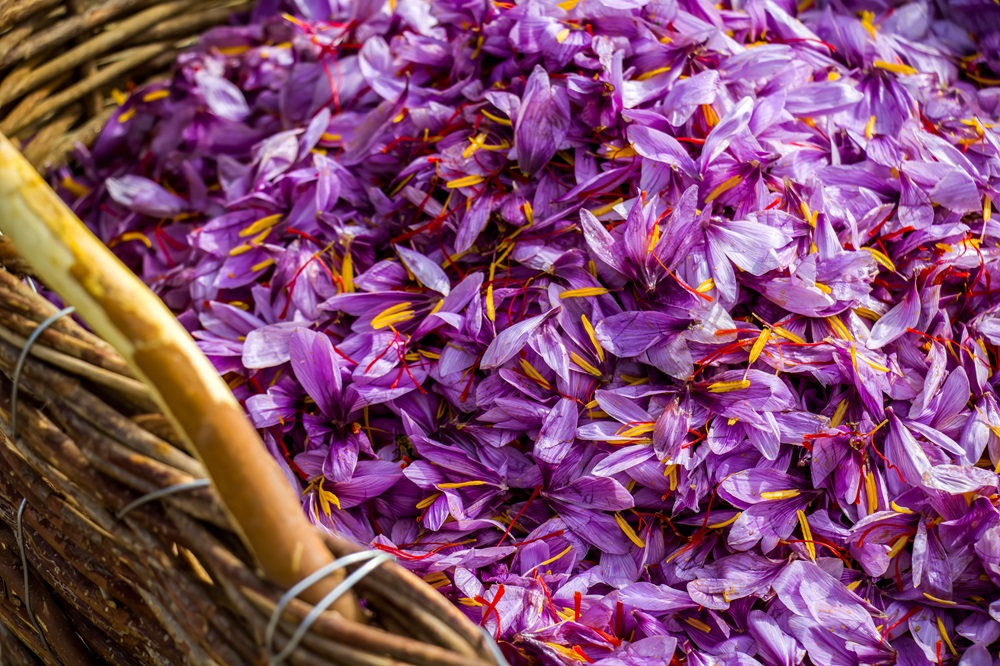
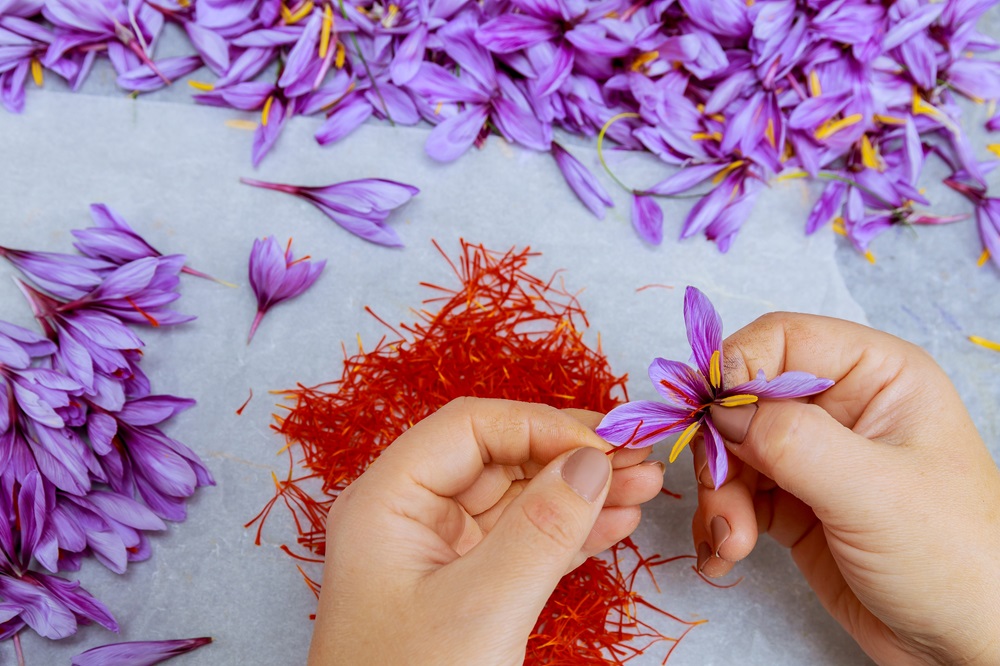
Saffron is a spice derived from the autumn crocus (Crocus sativus), which flowers in the autumn. The flower has three valuable parts. The pistils, the distinctive red fibres in the middle, are called saffron. The yellow stamens, which are also located in the centre of the flower, but the blue or purple petals are also a valuable ingredient in textile dyes. Of these, saffron has the highest value, with a wholesale price of up to 500 000 HUF per kilogram.
What does it taste like?
Floral, earthy, which turns slightly sweet with honeyed notes. The presence of crocin, a carotenoid compound also found in gardenias, gives it its characteristic bitterish taste.
Why is it so expensive?
The high price of saffron in the labour-intensive and time-critical production. The tubers or bulbs are planted in summer and the flowers ripen in late September or early October. They only flower for a few days and when they open in the morning they have to be harvested by hand. Farmers cut the flowers at the base with their fingernails and index fingers, taking care to get clean, fresh plants, which they must be very careful not to damage when handling. The three pistils are hand-picked from each flower and then dried to be used as a spice. The buds weigh about two milligrams. It therefore takes around 370-470 hours to produce one kilogram of saffron, which means picking 150 000 flower buds.
How can you tell the difference between real and fake saffron?
The high demand for saffron and its labour-intensive production make it one of the most commonly adulterated spices in the world. It is often made from other flowers and spices, such as marigold, turmeric and cassia flower are blended into the adulterated versions. So how can you tell if you have real or fake saffron?
- Nose: The saffron bibé should be floral and sweet, with notes of vanilla and honey, with hay-like nuances. There should be no metallicity, which is a good indicator of adulteration.
- Sight: According to the Geneva-based International Organization for Standardization, the saffron bib should be dark red and trumpet-shaped and should be joined at the ends.
- Taste: saffron contains crocin, a compound found in gardenia flowers. It is naturally bitter and disappears after a few seconds before giving way to warm, honeyed and floral notes.
How long can it last?
As far as saffron is concerned, the principle of ‘less is more’ should be followed. Whether it's fibres or powdered, be sure to store it in an airtight container in a cool, dark place so it retains its intensity for two to three years.
How do we use it?
One of the most common ways to prepare them is to soak a few saffron stalks in water just before adding them for a recipe. You can also fry them in a pan for about 30 seconds on dry land or in a bag made of aluminium foil.