






Different sensitivities have become part of our lives. Whereas a few decades ago we didn't know what gluten and lactose intolerance was, what vegan and vegan kitchen, they are now well known. This has challenged the catering also, because special requires preparation and knowledge.
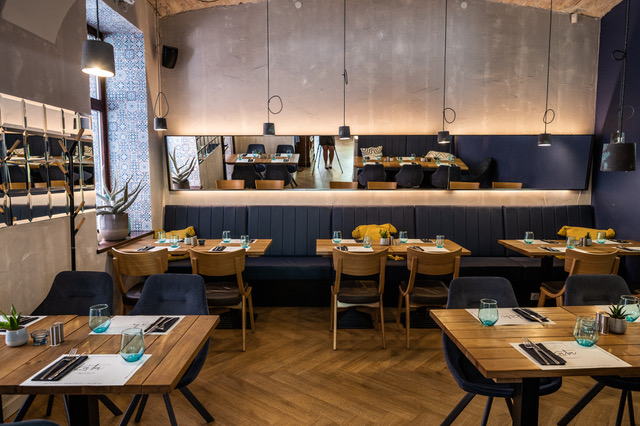
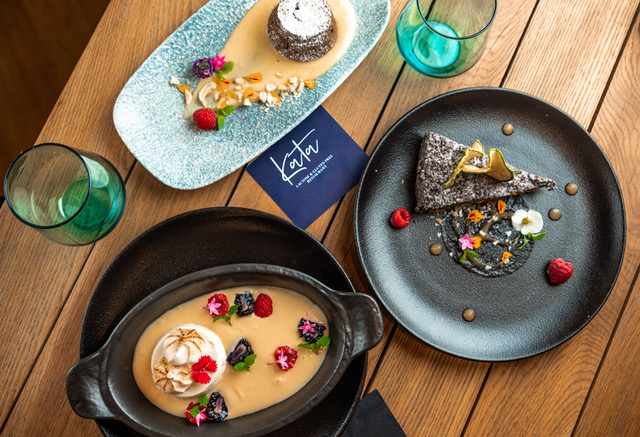
A prominent player in the market is Kata Restaurant, located in the heart of Budapest, next to the Opera. We asked the restaurant owner, Róbert Bilics, how to meet these needs. How to run it, how to source ingredients and what challenges are involved in running such a specialised restaurant.
- How can a restaurant be prepared to meet these needs?
- In fact, you have to think about almost everything. There is a complete kitchen remodelling, new machines, new equipment to adapt a restaurant to this. Of course, in this case you go after it and you don't have to replace everything immediately, but what the equipment needs in this case is a pretty serious cleaning, for example in the case of a stove. But for cutting boards, utensils, etc., everything has to be replaced.
- When you were done with the technical conversion, what was the next step?
- Clearly the raw materials. From a supplier's point of view, we have to look at who can deliver gluten-free and lactose-free, in our case. This is actually the biggest problem. Because while gluten-free is easier to trace and if you have a good product you can continue to use it, it's completely different for lactose-free. At the moment, it is still in its infancy in our country, so much so that you can hardly find products in industrial packaging, only in home packaging. From now on, while you can buy, say, a five-litre bottle of sour cream at a relatively good price for catering, it is impossible to do so in the lactose-free line. The biggest packs are, say, a litre of milk and 200-250g of sour cream. So there is a pretty strong multiplier for lactose free products, but we are a restaurant. Our options are not realistic in terms of quantity and price.
- From here, presumably, comes the price question
- Actually, yes. It's quite difficult to price our food like that, especially because of course we have guests who don't have any sensitivities, but we cook with these special but more expensive ingredients. Not to mention the fact that we have to work with recipes so that people who are not sensitive do not notice that it is gluten-free bread or lactose-free. This is a huge challenge for the restaurant, for the kitchen, and producing this is perhaps one of the most difficult tasks.
- Is it fair to say that there are few of these kinds of gastronomic ingredients available on the market?
- This is absolutely the case. Or if there is, we can see that - you can eat vegan and the ingredients are completely different. It's less tasty, to put it mildly, more sweet. Now, cooking with what is already basically sweeter is difficult. It's not like you add more salt and it's good. It's actually the hardest thing, how to cope with it and what suppliers to find.
- If raw material, is regular delivery and reliable quality a priority?
- That's right! Those who can supply these gluten-free products or even plant-based ingredients of good quality on a regular basis are basically rare. The other is that we are a restaurant, so the quantity is different to a household. It is much more difficult. We have suppliers who have us on pre-order with cottage cheese and butter, for example. And it's not easy - especially in the current situation - to be able to say a week in advance how much we need. It's like asking whether it's going to rain tomorrow or not.
- There is the question of the raw material, which is difficult in itself, and then there is the question of professionalism. Are there enough skilled professionals?
- That's how we've basically built the team already, and during Covid we kept our people despite all the difficulties. We didn't let anyone go! I think anyone who is a chef can do it, it's just a matter of how good they are at it. For us it is important not to start from scratch, but to have a professional who knows, because he is experienced in this line of work. Which ingredients can or cannot be used. Here I also need to expand on veganism, because there is a growing demand for it and it requires an even more trained professional.
- Is it fair to say that today we need a generation of chefs who are better at these dishes?
- I would say yes and no. In fact, it requires a much more diversified knowledge of the material, but it can be learned. Again, we're back to the basics. The beginning is really hard. If you have a gluten-free pasta for example and you make the dish and you find you're choking on it, obviously, you look for something else instead. Then you look for a new supplier, and in the meantime - and this is realistic - they go bankrupt, or they don't deal with it anymore, or they can't supply it in a stable way. But with pasta, there's also the quantity, because unfortunately there are no packages of these gluten-free products larger than 500g! So this is a very difficult area and very few people are cultivating it - precisely because of these facts.
- What is the basic principle of working in a gluten-free restaurant?
- What we have to keep an eye on - for example, the doughnut season - is that we keep testing. It's a lot of raw materials that go into the bin, but if you want to be consistent and sure of quality, it's inevitable. It is much more complicated than in a normal kitchen! Again, there are cost implications, energy, time and materials.

Another thing I would like to mention, and there are countless examples, is that before the reservation, the guest asks for the calorie table of the food, for example, and a description of what is in it. This does not happen at all in an average restaurant, it is common in our restaurant! It's a lot of extra work and administration, for example - and the guest hasn't even set foot in the door. That's fine in principle, because that's what the demand is for, and that's what we provide, but whoever is dealing with this has to be prepared to deal with this kind of issue.
Author: Tamás Budafoki #