




Churros are a sublime confection, said to be originally Spanish, yet their origins are obscure. It's no coincidence that, as simple as it is tasty, it's also widespread around the world. If you want to simplify it, you could say in English, to make doughnuts in Spanish form.
Mi a churros
Basically fried dough sticks - dipped in sugar. The churros are made from a flour-based batter, fried in hot oil cooked pasta. It is typically fried in hot oil and then dipped in sugar, just like a doughnut. To make the original churros you don't need many ingredients, just water, flour, oil and salt.
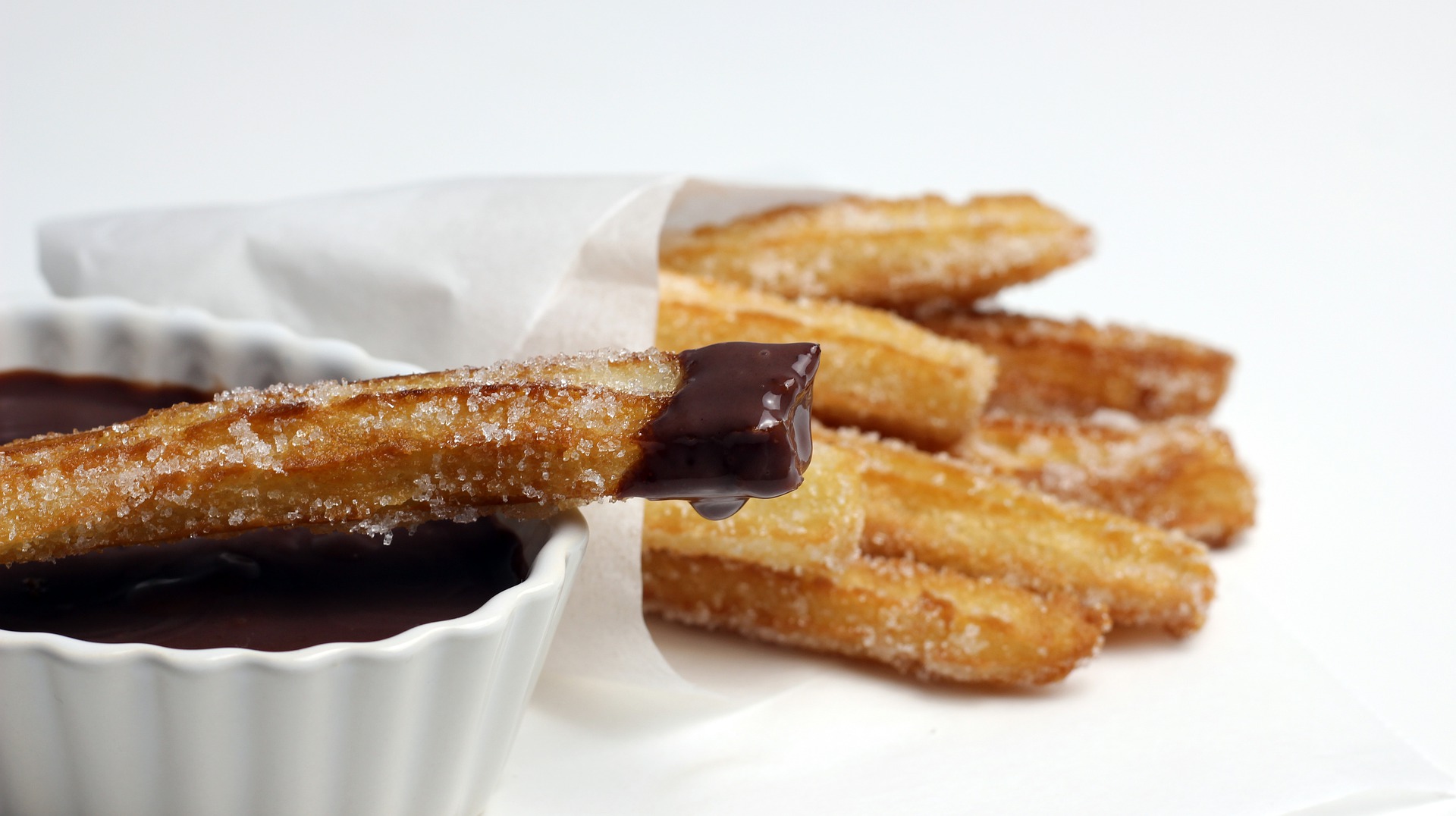
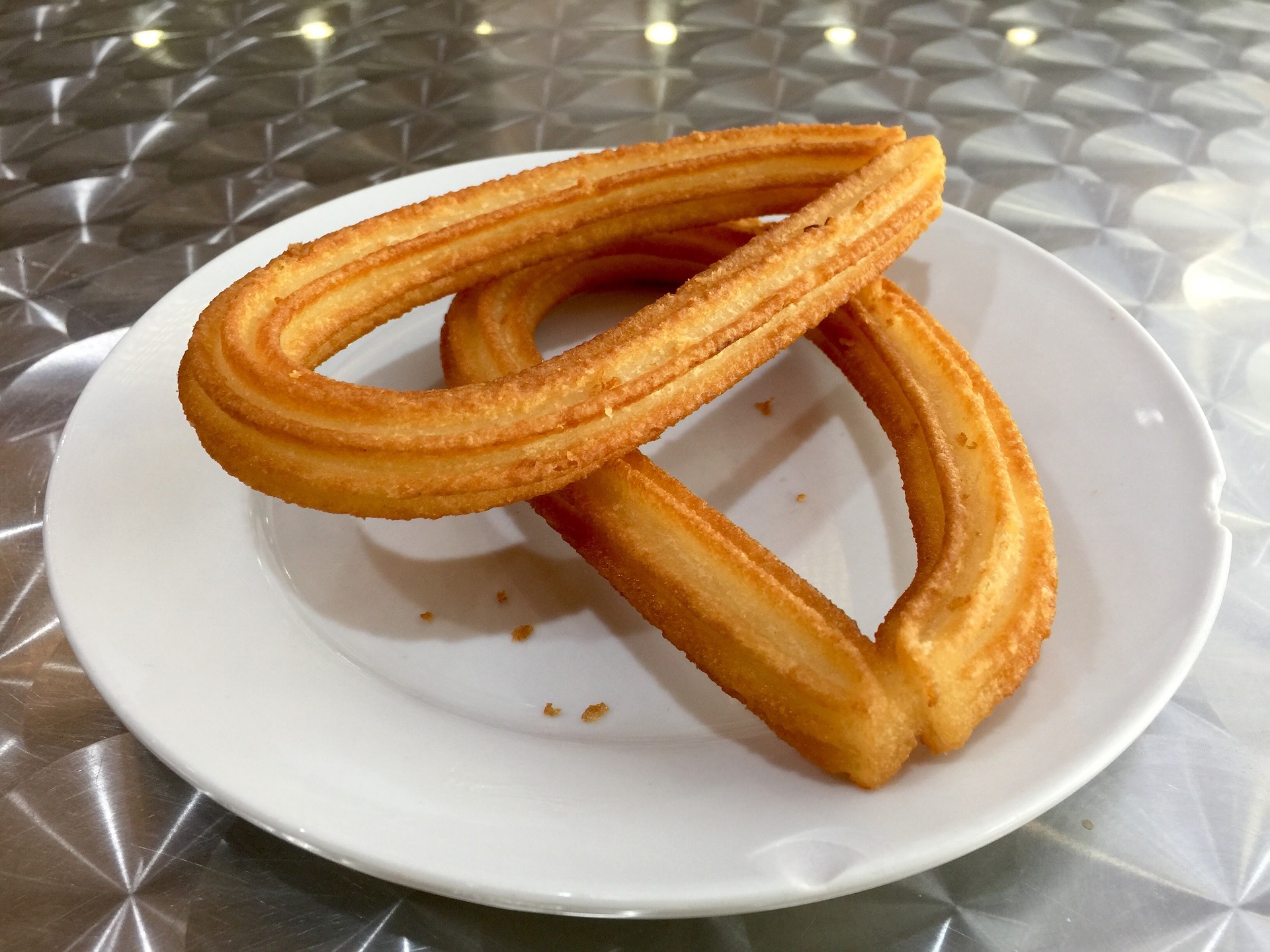
The base of the churros is a paste of flour, water and salt. Once the dough is ready, it is placed in a foam bag or a cylindrical metal utensil with a star shape at the bottom. The dough is then pressed through the device with a press lid. The resulting coiled star-shaped dough snake is cut into 15-30 cm pieces. The already shaped and cut dough is then placed in hot oil. During the frying process, it is turned over a few times, taking care at first not to let it fall apart or stretch. It doesn't take too much time and is ready quickly, in half a minute. It is then prepared in various ways, some hanging it up to drain off the oil, but the easiest way is to place it on a paper tray after baking. The shape of the churros also varies, they can be straight, curved buns or rolled up like a cocoa snail.
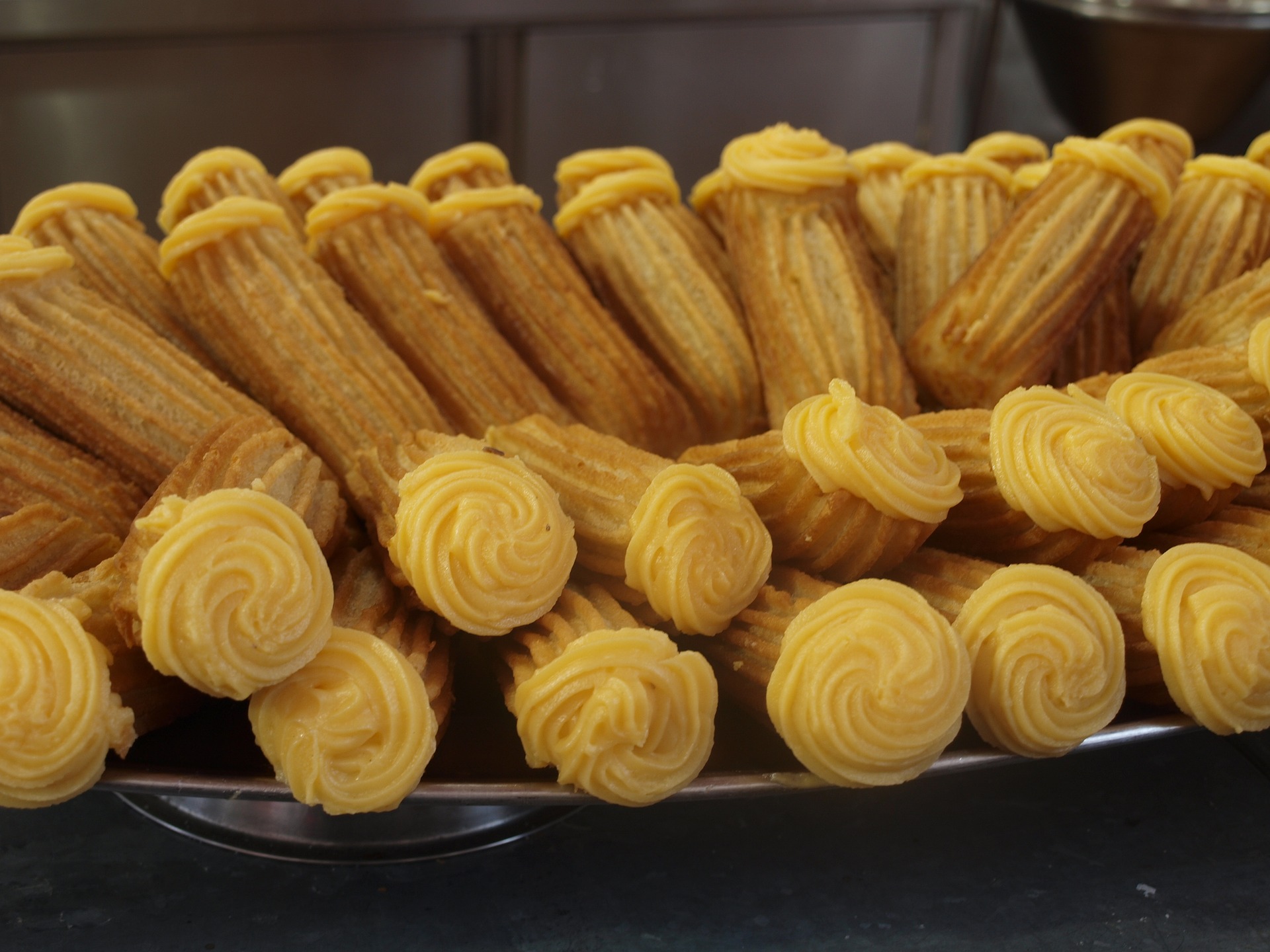
Interestingly, the star shape of the churros is probably not accidental, as the uneven surface of the dough allows the oil to stick to it during the heating process - baking - and thus makes it less likely to crack.
Flavouring the churros
As it is produced in many countries outside Spain, Portugal, France, Latin America, the Philippines, Belgium, Argentina and the United States, it is one of the most widely consumed delicacies in the world. It is one of the world's most popular cuisine. The basic recipe is that it is not flavoured with anything else, just rolled in sugar and ready to eat. There are, however, many different flavourings. They are made with chocolate, caramel, filled with vanilla. In Mexico, for example, it's made in a slightly fattier form and sprinkled with cinnamon. In Chile, it is simply sprinkled with icing sugar and eaten mainly as street food, walking down the street. In Panama it is also a street sweet, but there it is flavoured with condensed milk, which has already been pre-sweetened.
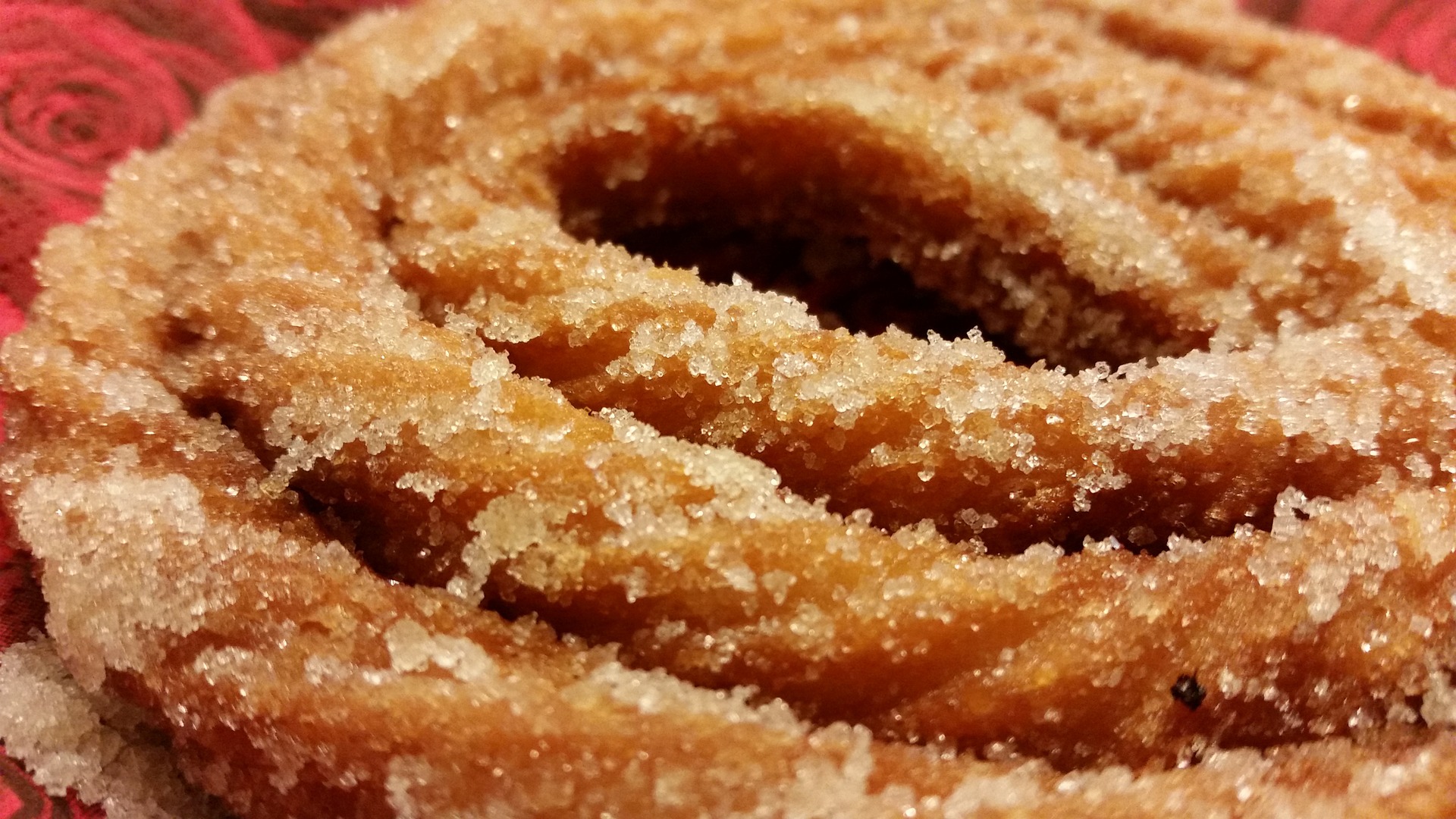
It is a well-known sweet in our country, but we follow the Spanish line. It is not yet as popular as the traditional doughnut, but you can buy it in many places. You can find it street vendors and there's a dedicated Food Truck, which if you come across one - shouldn't be missed. What do we season it with? The best answer is everything. We eat it sugary, jammy, with chocolate sauce, vanilla sauce, nutella and in fact any sweet sauce you can think of, even the American maple syrup version is a mouth-watering treat.
The origins and stories of Churros
The origin of the churros is a bit vague and mostly based on conjecture and conjecture. There are several theories and stories about its appearance and spread, including some interesting tales.
The Captain's story
According to one account, a Portuguese captain who had made his way to China saw similar fried noodles in the port market. When he tasted it, he liked it very much, so he ordered the sailors of the martalóc to catch the Chinese goods under cover of night and bring them on board. When his men brought in the unsuspecting, terrified merchant, he seated him in the ornate captain's cabin. He drew his shining sword, which had seen many seas and many battles, and raised it high, as if to strike the wretch down. But the motion caught in mid-air and instead of striking, he slowly placed his sword in the lap of the merchant, followed by another bottle of Portuguese wine and some glittering jewels.
The vendor did not know what to make of the captain's action until he came up with his request, asking him for a recipe for fried pasta he had tasted at the market. The vendor, of course, after his first fright, laughed and accepted the exchange. That was how the captain got the recipe, which was not for churros but for a Chinese fried noodle called ”youtiaoét". The captain made the dessert several times on the way home, perfecting it as he went. The more places they docked, the more sweets he tried.
By the time they arrived in Portugal, he had almost finished the churros in its current form. Word spread very quickly and he eventually opened a small shop, where every day there were long queues for the wonderful sweet. The captain's investment paid off, he made a fortune from the sweets and in the process it spread.
The case of the Spanish shepherds
Another suggestion is that churros was invented by Spanish shepherds. The shepherds walked the mountains for many months. They could hardly return home, as they had to constantly look after the flock. At first they could fill their bellies with food from home, but as time went by their food supply dwindled. They had to find their own ingredients and prepare their own food. They were not short of meat thanks to the flock, but after a while they had nothing else. They missed the warmth of home, the smell and crisp taste of warm bread, but there was no oven for those wandering in the hills in the middle of nowhere. So the shepherds thought of building a fire and trying to bake bread over an open flame.
It was an impossible task, but they did manage to get something, in the form of a quick-cooking, elongated dough that kept them warm in the cold. After a while the dough got better and better and they made it when they got home. They rolled it in the sugar they had at home to make it even better, so after a while they made it consciously and the churros were formed. #
Author: Tamás Budafoki
Photo by Pixabay