





The breakdown of beef into parts varies not only between countries but also between smaller regions, not to mention between continents. Of course, a lot depends on the butcher and the type of food the meat will be used for.
With the help of our colleague Bence Óvári, we try to help you with different beef cuts.
In Hungary, there is no specific name for many steaks, so we use the French or English equivalents. Some steaks did not exist years ago, either because they could not carve a large enough cut (smaller animals) or because they were not considered very important.

The aim of choosing the right part is to satisfy the consumer, in terms of texture, taste, colour and size. So that it is a pleasure to eat. The different cuts of beef have their own individual character traits, each major group has its own characteristics, which help to guide individual preferences.
Age plays a big role in the size and especially the texture of the animals (including steaks). To achieve the best quality, adult animals are slaughtered before 36 months of age. This is the age when the animal has reached the right weight and maturity.
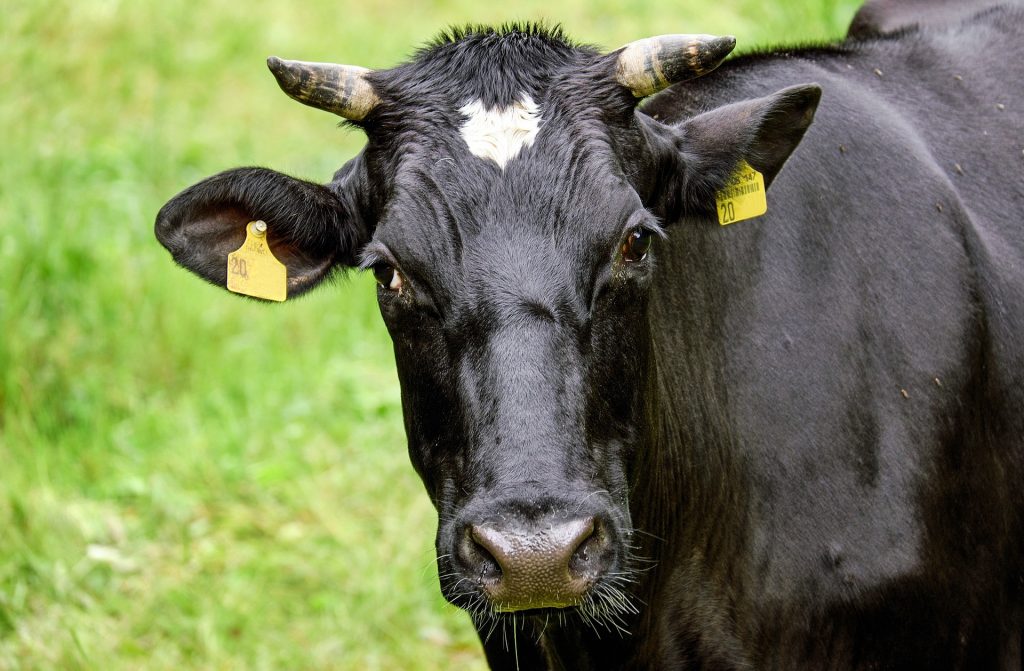
The taste experience can also be affected by feeding and housing. And the type of breed.
Marhapofa: It has recently become very popular in our country, but before 2010 it had almost no use at all. Value for money, it is one of the best parts of the animal, requiring prolonged cooking to prepare as it is heavily used muscle. Gelatinous, hard part.
Chuck: Upper-front quarter of the animal. Includes the neck and shoulder blade.
This part of the beef is very rich in connective tissue, making cooking difficult. This, however, makes it possible to prepare tasty dishes with the right degree of tenderness for the required process. It is the cheaper part of the animal and is a good choice for stews, stews and minced meat.
Several smaller steaks can be cut from the large Chuck section. Top blade (Flat Iron), Chuck roast, Chuck Eye, Denver Steak
Stefania (Top blade): this part makes an excellent stew and stew. It can be roasted in the oven at low temperature with vegetables - tomato or wine - until perfectly tender. Also suitable for barbecue. A thin layer of collagenous membrane runs down the centre of the steak, separating the two Flat Iron Steaks. The Flat Iron is also grillable, with a high connective tissue content that minimises the risk of overcooking.
Chuck Roast: It is one of the cheapest parts of beef, yet it can provide an extraordinary taste experience. It melts in the mouth when cooked over a low heat.
Chuck Eye: Located in the middle of the neck. This part is essentially a continuation of the Rib-Eye muscle. However, the surrounding fat and connective tissue makes it less crumbly. Excellent for roast. Also suitable for mincing and stewing.
Denver Steak: It is considered the fourth most savoury steak. It can be cut from the Chuck Flap (Spiny steak) cut. It is also crumbly and has a very nice marbled texture. It has a strong beef flavour. Marinating before grilling is recommended.
Brisket: Part brisket. Its frosty and fatty parts make it extremely tasty, with a strong beef flavour. The brisket is heavily loaded during movement, so it takes time to „break down” the hard muscle. BBQ is where you can get the most out of the meat. Because of its strong flavour, grinding off the fatty, fattier parts can produce meat patties with a perfect blend and flavour, without any loss of raw material. Marinating can shorten the cooking time and enhance the flavour.
Ribs: High-grilled, grilled
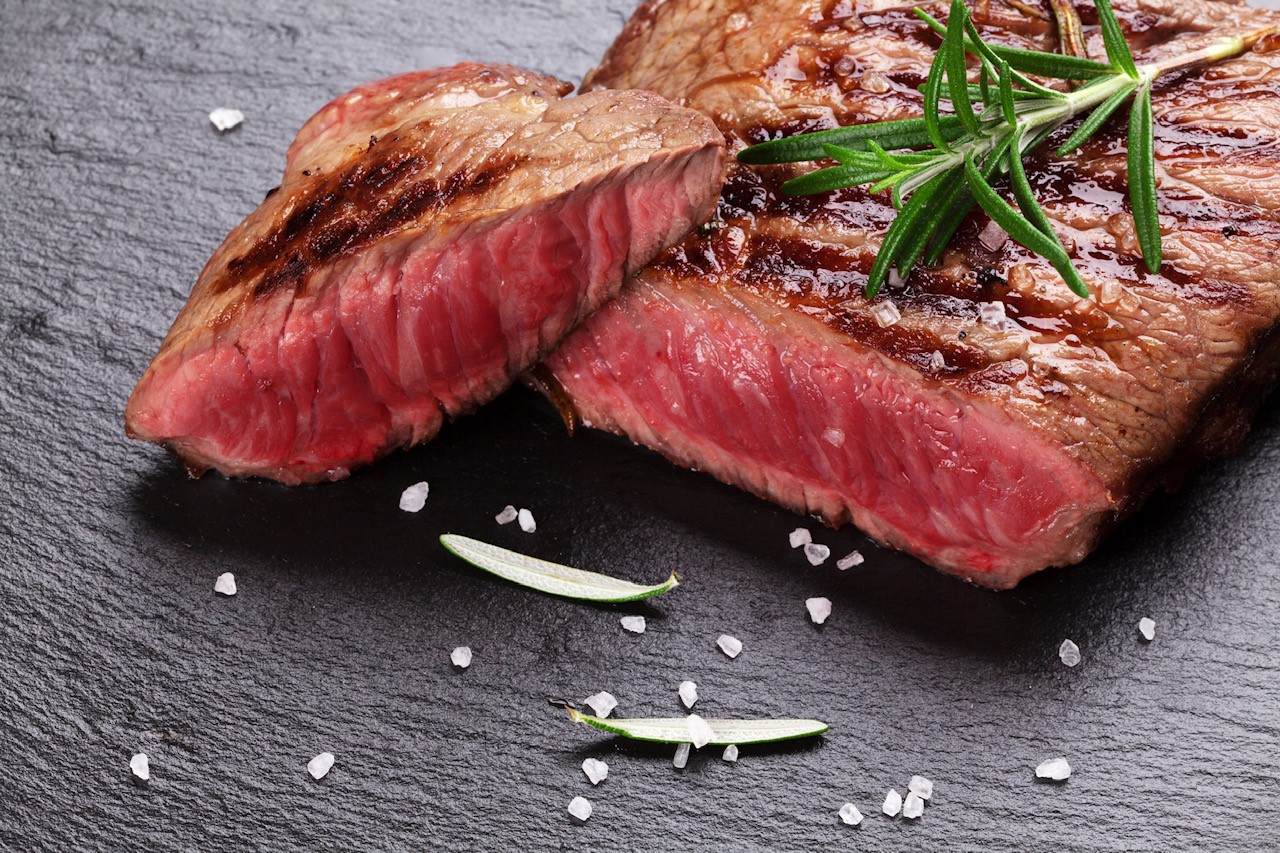
Rib- Eye (Tomahawk, Cowboy Steak, Rib Steak): probably the best known cut after the steak. The rib-eye is a boneless cut, portioned with a rib bone and named after other steaks. For example, the cut known as Rib Steak, which runs along the Rib-Eye, leaving the rib longer, yields Cowboy and Tomahawk steaks. Ribs are more elegant, adding flavour and juiciness to the steak, but can make it more difficult to cook, taking longer to cook.
There are several reasons for its popularity. The main muscle, which runs from the sacrum (hip bone) all the way to the shoulder blade (blade muscle). The reason for its softness is that the muscle is not under direct load. Its characteristic marbling is due to the layer of fat in the muscle.
Sudden frying at high temperatures allows the right texture and flavour to be achieved. This way, the internal juiciness and flavour is not lost.
It's not a cheap piece because of its features, but in the right hands, the price will be worth the enjoyment.
Prime Rib: Also known as the Standing Rib Roast, it began to be used specifically around the industrial revolution, and was a Sunday lunch for British and Irish families. It was mostly eaten with potatoes and roast vegetables. The whole roast is the part between the 7 ribs, cleaned of bone and fat. It is identical to Rib-Eye, the difference being that Prime Rib is prepared whole and sliced after roasting.
BBQ and slow cooking are excellent techniques to prepare it. A herby Dijon mustard marinade, for example, is the perfect pairing.
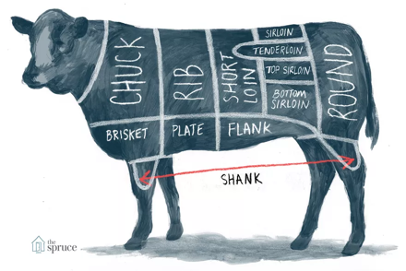
Plate:
Skirt steak: Also a lesser known, yet one of the best value for money. Long, flat section. Marinating before grilling is recommended. Slice thinly and use for salads or tacos.
Short Ribs: Sidealas. Part of the animal's abdomen. A truly outstanding part, despite being underrated by many. Not widely known in Hungary. In the Far East, however, it is one of the most widely used and versatile parts. Sous-Vide is used to achieve an ideal texture.
Despite the fatty parts, it is tasty, with more or less meat on the ribs depending on the size of the beef.
Short Loin: flat back. This part of the animal includes T-Bone, Porterhouse, and strip steaks.
The short loin is cut from the side of the muscle tendon towards the back of the animal. So the first steak you can cut is the NY strip. The „longissimus dorsi” part, which includes the Rib-Eye and Chuck-Eye. The sole muscle, a soft piece of muscle poor in collagen and connective tissue. It therefore does not require a long frying time.
Moving on towards the tail of the animal, in the middle is the T-Bone steak, usually 6-7 pieces can be cut. It is wedged between the NY strip and the sirloin. This positioning makes the steak Two marbled sections of meat separated by a T-shaped bone. Size is largely influenced by the age and physical condition of the animal. It is also excellent for grilling and pan-frying. Don't be fooled by the bone, it doesn't take away from the enjoyment of the steak but adds to it. When grilling, care should be taken to avoid overcooking the side of the steak above the tenderloin, and to avoid this, it is best to place this side of the steak on the less hot part of the grill. It should be eaten and cooked by competent persons, it is not a typical easy-to-eat cut. It may be a bit much for those new to beef steaks. A favourite of more experienced steak consumers after Rib-Eye.
The last piece of the big short loin section is the Porterhouse. This cut is a very special cut, also because it is located very close to the loin. Often this part is cut only to the T-Bone or the Kidney Loin.
Hanger Steak: French for Onglet. A robust tasting part. It is located around the ribs. Similar in taste and texture to flank steak. A V-shaped pair of muscles interspersed with a membrane, one side larger than the other. It has a similar crumbliness to sirloin. Also known as butcher's steak, butchers used to keep this cut for their own use. An increasingly popular cut, the Rib-Eye has a strong flavour and sirloin texture. It goes very well with salads, and the right marinade and marinade will enhance the flavour and juiciness. Chimichurri sauce and lemon-herb butter are a good choice.
Sirloin: The part from the 13th rib to the hip bone of the animal, up to the belly of the animal, which is now part of the Flank. It is divided into a lower and an upper part. Steaks cut from the upper part are more suitable for grilling, as the meat is a little firmer when cut close to the hind leg of the animal. The lower part is recommended for barbecue.
The best known part of sirloin is the tenderloin, but the short loin gives this steak its tenderloin. No marinade is required as the meat is already sufficiently tender. The muscle is not exposed to stress, it is protected in the chin, so perfect tenderness is guaranteed. Marbling is not typical of kidney steak. In the classic sense, the tenderloin is already cleaned and in its natural state is surrounded by a very fine layer of fat which can be used for cooking. Next to the main muscle are the head (iliacus) and chain (psoas minor) which are either removed or not during dissection. In general, as this is a noble part of the animal, seasoning is very restrained (salt, pepper) to allow the natural flavour of the beef to be properly expressed.
We are talking about a small part compared to the size of the animal. If you consider that 65 animals had to be slaughtered to produce 100 kilograms of sirloin, you can see why this part is so special.
The filet mignon ( a steak sliced to the right size) will result in additional drops, so the amount will increase further.
Round: The large part comprising the upper part and the tail. Like sirloin, it can be divided into a lower and an upper part. Lean part, very minimal fat content. Less expensive part of the animal. The muscle is tough and requires prolonged heat treatment due to the constant wear and tear, making it perfect for stews, steaks and slow-cooking.
Rump Roast: Spitzfartő, one of the driest parts of the animal. It can be divided into mountain and crustacean parts. Don't be fooled by the name, there is no significant difference between the two. Top and Bottom Round Steak.
White bacon: The hindmost part of the animal. Also called fricando in the case of calves. The part just below the tail. It is cylindrical, contains little fat and requires braising, both sliced and in one piece. Preferred by kitchens for its value for money. Steamed with vegetables and red wine, it makes a tasty and crumbly dish.
The black loin and rump are the middle part of the animal's thigh. In this country it is treated separately from the thigh, but it is the same part of the thigh, with a similar texture and cooking reactions as white bacon.
In the case of roast, for example, larger portions are left intact for a full flavour experience. to achieve.
Farok: It covers a 3-3,5kg piece. Very rich in gelatine. It is used in stews and other slow-cooked dishes in various parts of the world. In Jamaica the national dish is oxtail stew, eaten with rice and beans. In Korea it is made into a thick jelly-like soup.
Shank (shank): Meat infused with arches. Therefore, its preparation requires a long simmering and cooking. Because of its price, it is a popular choice. For older animals, the cooking time is longer. Perfect for bourguignon.
By cross-cutting the leg, we obtain the part called Osso buco, which can be used to prepare an outstanding dish of the famous Lombard cuisine. Osso buco is an inexpensive part for preparing tasty and substantial dishes. The bone in the middle and the marrow in it contribute greatly to its distinctive flavour.
Flank: The belly of the animal, known in French as Bavette, which means "forequarter", refers to the shape of the meat, which is relatively thin. It is a lean part, with almost no fat. It is a favourite food in China and can be dried after curing to make jerky. Tasty , but if not properly prepared, the meat may remain chewy. Whisky and red wine as a marinade is perfect for the mild acidity of the meat. In addition to marinating, you can also braise the meat for the right texture.