






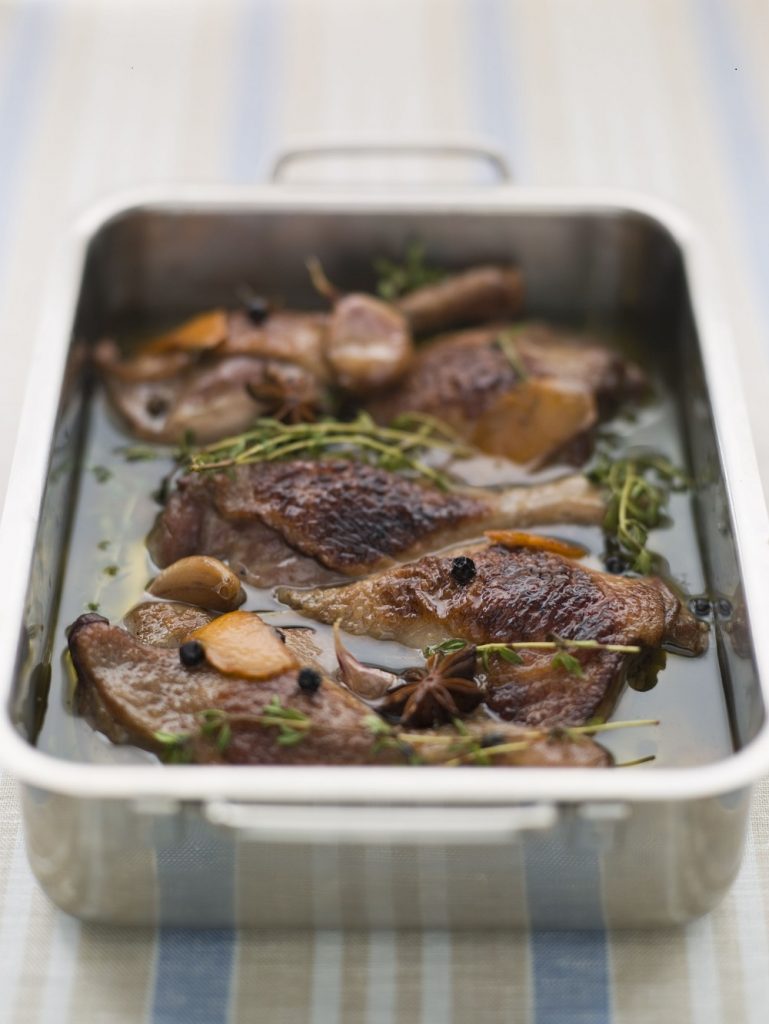
It certainly sounds elegant when you see confit duck legs or confit mangalica on the menu. But if you say duck or mangalica in fat, you're more likely to think of the old peasant world. How is it actually? The subject is confit.
The elegant overtone is no coincidence, confit is a form of the French word confire that has become established in the Hungarian language. At first sight, the origin of the word may seem surprising, since in today's colloquial language confit is mainly associated with red meat and garlic, but the French term originally referred to pickling and pickling, and was already used in medieval France. It is still used today as confiture steamed fruit, we must understand jam, and it can be seen that a preservation process is covered by the kitchen method.
From conservation to modern kitchen technology
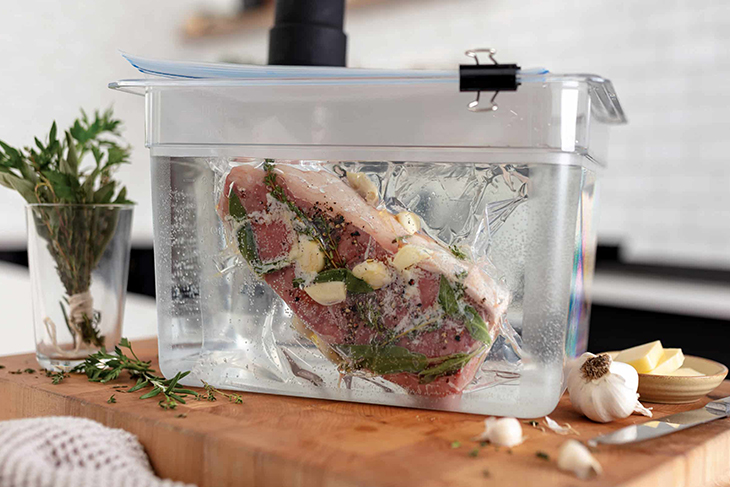
For centuries, preservation was indeed the main concern, before the invention and widespread use of refrigerators and freezers. Today, this term is used to describe slow heat treatment over a long period of time. An essential element is that it is tenderised in a rich fat, or less frequently in a rich oil, for at least an hour and a half and up to several hours. During the confit process, foods may be heated up to 100-120°C and fresh herbs, even whole dried spices, fresh or dried fruit are added to the confit dish. The really long confit can be done in a heat range of 50-90°C.
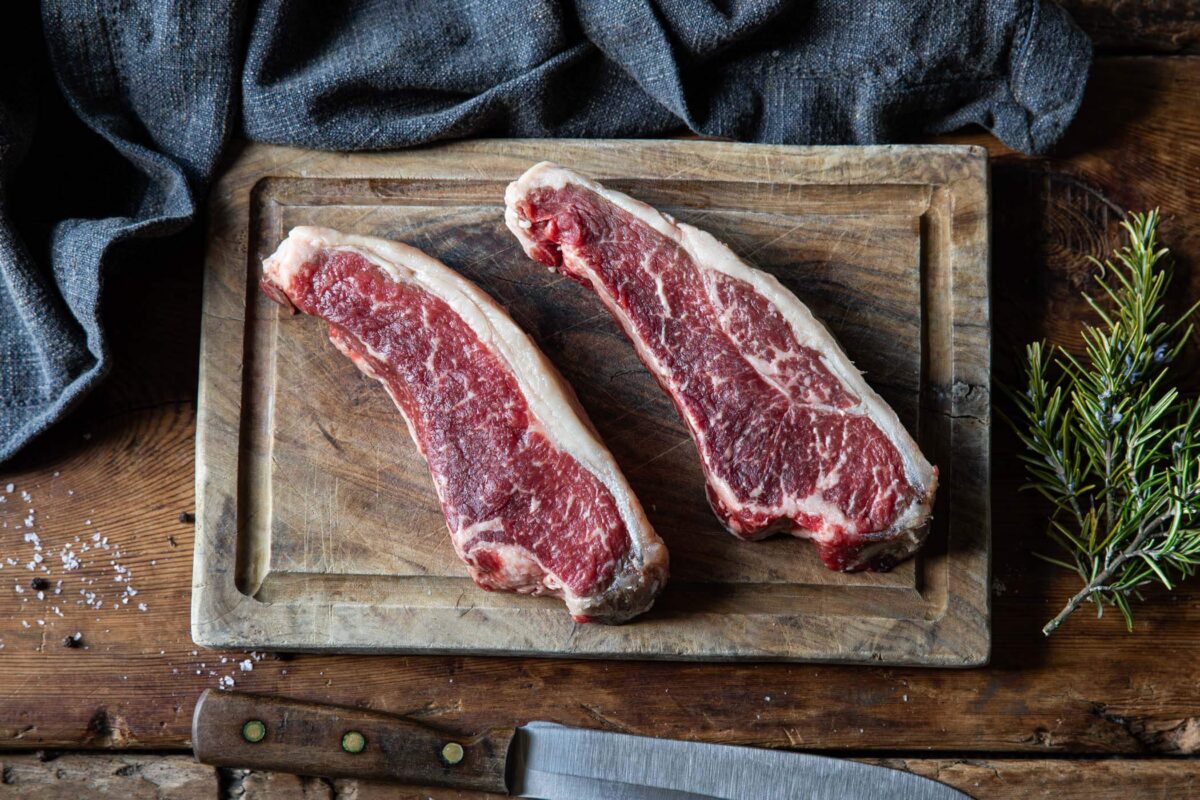
Food cooked using this cooking technique can be meat, fish, vegetables or fruit. For more difficult to tenderise ingredients, especially red meats, it is advisable to use an oil or dry marinade beforehand. In addition, the use of an alcohol marinade is also very effective, as the alcohol will cause the meat to fibre, be it beer, cognac, whisky, etc. Alcohol also aids the confit process if it is added to the confit rather than the marinade.
Severance vs. confit
In contrast to confit, proofing refers to the softening of food at temperatures below boiling point, but in a watery medium rather than a fatty one. Renneting is also used for preservation purposes and, by implication, fat rendering is itself confit.
It is clear that the concept of elegance is once again a technology that has been invented long ago and used for centuries. The fatty medium seals the meat, fish or other food from oxygen, and it is not insignificant that not only does the confit meat/fish/vegetables taste great, but the fat itself surrounds and preserves it.
Confitting in everyday life
It is still a reality in many families today for gourmet is to fry chicken livers, pork sides or other cuts of pork in fat - with lots of garlic and onions. We've seen for ourselves that liver and meat can keep for a long time in the rendered fat. Although in today's modern kitchen equipment this is no longer necessary, if you really want to preserve meat in this way, you should drain the fat from the cooking juices after cooking and then put the fat-preserved meat away. Shockingly, this cooking method can preserve the meat for up to six months without refrigeration or deep-freezing. meat (if covered by the fatty medium).
But the best part is the flavourful fat, the oniony, salty, peppery, possibly thyme, rosemary pork mixed with the fried meat, duck- or goose fat, one of the most delicious toppings you can put on a slice of fresh white bread.