





Artificial intelligence has also recently gained momentum in the hospitality industry. Hotel owners and restaurant managers can improve customer service, automate some processes and reduce costs. That said, it can also be challenging to implement AI technologies, as there are so many different ways they can be used.
AI TO OPTIMISE THE MENU OR MENU DESCRIPTION
In 2019, the KTCHNrebel reported on an Israeli startup, the About Tastewise, which uses AI to identify trends in the hospitality industry. Using real-time data (social media), menus, online recipes and other sources, it generates trend reports, analyses the most popular products, evaluates new concepts and provides other insights. This allows restaurant managers to draw valuable conclusions for their own restaurant, hotel or business, allowing them to tailor menus to their guests' needs.
But that's not all. You can now use voice-based AI like ChatGPT to create new or modified food descriptions for the hospitality industry to use on your website, social media or on the menu. After entering the text, the tool generates the entry.
OPTIMAL COOKING PROCESSES USING ARTIFICIAL INTELLIGENCE
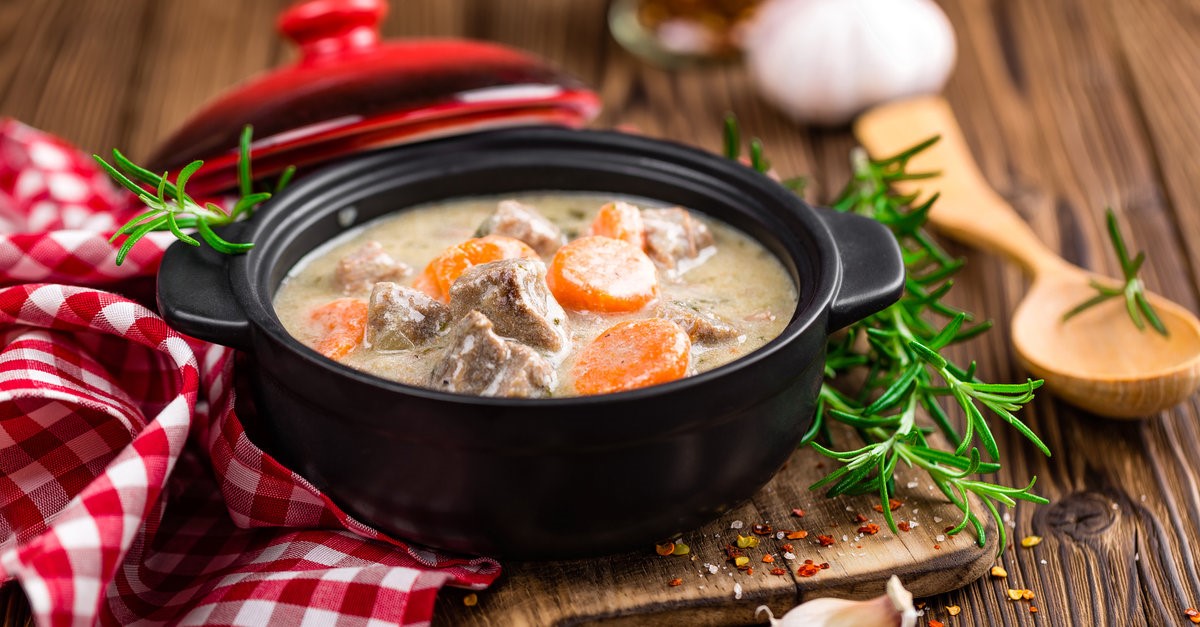
As for the food on offer, it must be prepared in the best possible way, no question, and it seems that artificial intelligence is now playing a role in this area too. Markus Paschmann, head of the Rational AG's Marketing and Sales Management Office (CSMO), emphasises the role of AI in optimising professional cooking equipment for even greater customer benefit. For example, by combining customer needs and wishes, available data and the knowledge of our own chefs, AI can now help develop new cooking processes.
This allows us to react quickly to industry trends and offer the right cooking options for catering businesses. Paschmann also points out that creativity and knowledge of quantitative data, as well as the short- and long-term challenges of customers, form the basis for the further development of AI at Rational.
A SOLUTION TO THE SHORTAGE OF SKILLED WORKERS?
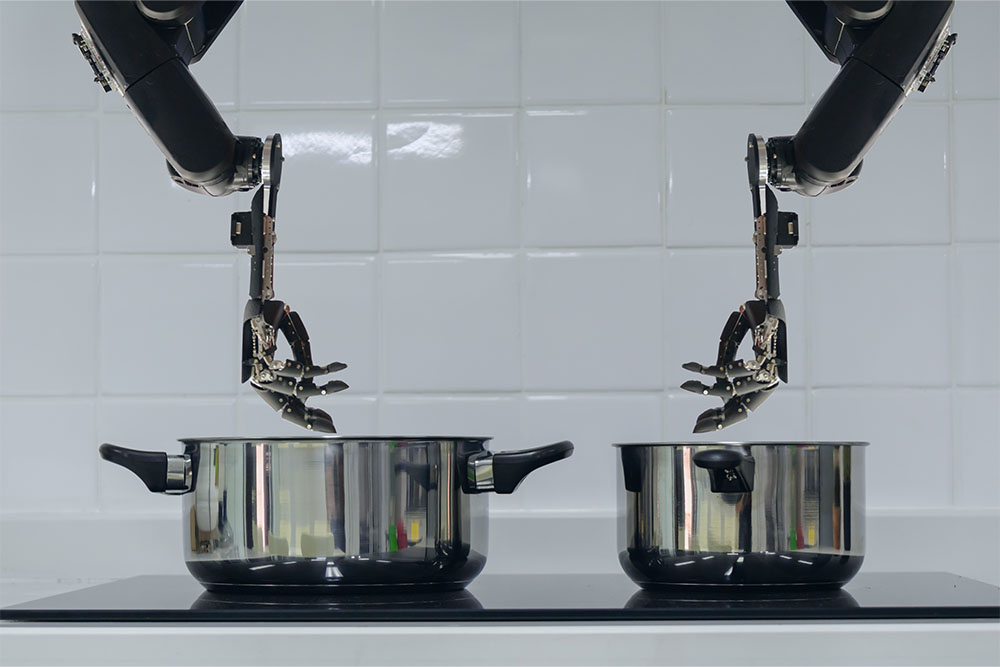
A central theme that is regularly discussed in relation to artificial intelligence is the extent to which it can replace human labour. Perhaps even a solution to the shortage of skilled workers? Will it replace any professions, and if so, which ones? Or will it create new jobs and develop existing ones? There are no simple answers to these questions. On the one hand, AI can help with certain tasks, such as staff scheduling, serving (using robots), or even training catering staff using virtual reality.
According to Oliver Feiler, Head of Market Analysis at Rational AG, AI has great potential for data management. „The speed at which data is collected, transmitted and analysed by AI is now impressive. Kitchen equipment maintenance and servicing provides a real-life example. In this case, impending failures can be predicted before they become obvious. The restaurant manager and/or service technician are notified and solutions, such as replacing worn parts, are planned in advance. In this way, failures due to wear and tear can be minimised, if not prevented. This saves time and money.”
The need for such a solution will be greater than ever in the future. This is partly because products are becoming more complex, and partly because there is already a global shortage of technicians who can carry out repairs and servicing at short notice. In the future, AI can quickly and efficiently show every technician on site, and perhaps even the restaurant manager, the solution to all trouble codes without the need to manually flip through countless manuals and other documents.
THE LIMITS OF AI
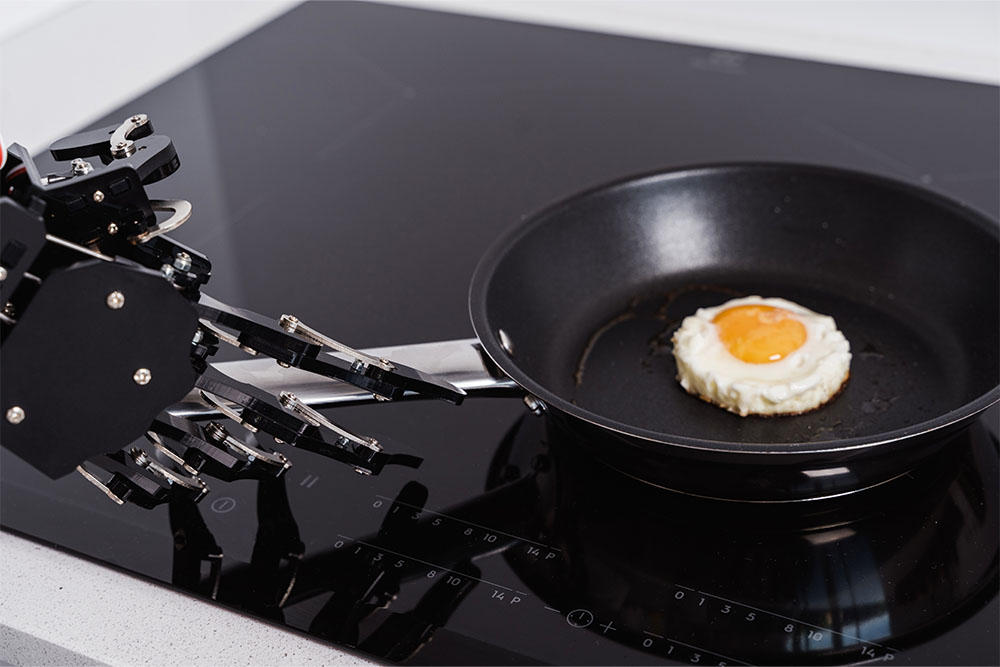
Recipes Feiler stresses that the creativity and unique skills of a chef cannot yet be replaced by artificial intelligence. He suggests that AI-generated recipes should always be subject to a probability check.
A New York Times test published in November last year confirms similar findings. According to food journalist-cum-author Priya Krishna, the Thanksgiving Day menu looked promising, but was rather disappointing in execution. Based on the feedback from the tasters, the flavours of the dishes ranged from inedible to unseasoned. Artificial intelligence has not yet been able to write complete, realistic and tasty recipes. However, the author says it can already be used as a source of inspiration or to gather ideas for personalisation. However, artificial intelligence is constantly evolving. Who knows? Perhaps the kitchens of the future will include the truly delicious recipes it generates.
OPTIMISING THE USE OF MASSIVE INTELLIGENCE/span>
Despite the benefits of AI and digital innovations for professional kitchens, catering entrepreneurs often remain sceptical. Oliver Feiler stresses that restaurateurs are generally open to improvements as long as they solve their problems and offer them benefits. These should increase customer benefits and alleviate the shortage of skilled labour. Paschmann adds, „We generally find that innovations are adopted in different ways depending on the target audience. For example, system-level gastronomy is a real driving force that challenges us from time to time. For other audiences, we run training and live events so that everyone can experience the benefits first hand.”
Overall, it is clear that AI has potential in the hotel and catering industry, but it also poses challenges. Carefully integrating AI into existing operations and critically examining its applications are essential steps to both maximise the benefits of AI and minimise the potential risks.
TOP 6 APPLICATIONS AND BENEFITS OF ARTIFICIAL INTELLIGENCE IN THE PROFESSIONAL KITCHEN
- RECIPE DEVELOPMENT AI can help you develop new recipes by analysing data on ingredients, flavour profiles and nutritional needs, and suggesting innovative combinations. However, probabilistic control is necessary.
- OPTIMIZING THE FOOD OFFER By analyzing customer data and preferences, AI can help you create personalized menus or customized recommendations for your guests.
- OPTIMISING COOKING PROCESSES AI helps you optimise cooking processes and improve the quality of the food you prepare. For example, AI can automatically adjust the temperature and cooking time based on the properties of ingredients or the duration of door openings.
- CONTENT CREATION AI makes it easy to create content templates for websites, flyers or social media.
- TRAINING AND TRAINING OF EMPLOYEES AI systems can also be used to train workers, through interactive learning programmes, tutorials or virtual