


If we ask someone to imagine a chef, a white chef's coat will probably appear before our eyes. That's because it's been the traditional chef's colour since the 19th century, and was introduced as a way of acknowledging the importance of the profession and showing respect for chefs. But of course, white was chosen mainly for hygiene reasons, as it allowed chefs and kitchen staff to spot more easily when their clothes were contaminated. It also carried a certain prestige because it was associated with respectable professions such as science and medicine.
Although many people and places still keep this tradition, in many places, especially in open kitchens, you can often see kitchen staff in other colours, but mostly in black. The reason for this is that black chef's coats are quite common in many kitchens. a stylish look and it is also useful from a practical point of view, as it makes food stains less prominent, which can be important in a show kitchen. A clothing colour is not limited to black and white.
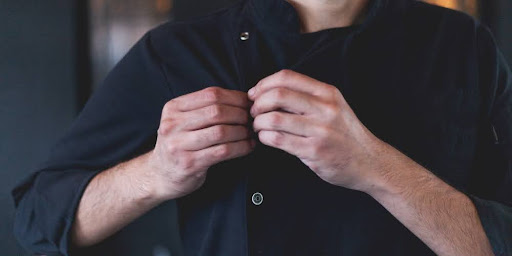
What do the different colours mean?
The answer is simple. They are not karate belts, so there is no specific, universally agreed upon or official system of meaning for chef jackets its colour. It's what you associate with it that counts, especially in line with the style of the restaurant. Most often, it depends on the personal preference of the chef and what he or she wears, standardised by the restaurant to match the style he or she wants to represent. But it also happens that the owner of the restaurant comes up with a colour scheme to give a different indication of the different tasks. For example, the head chefs and the chef may be in white and the other chefs and staff in black, and different colour variations of this scheme may apply.
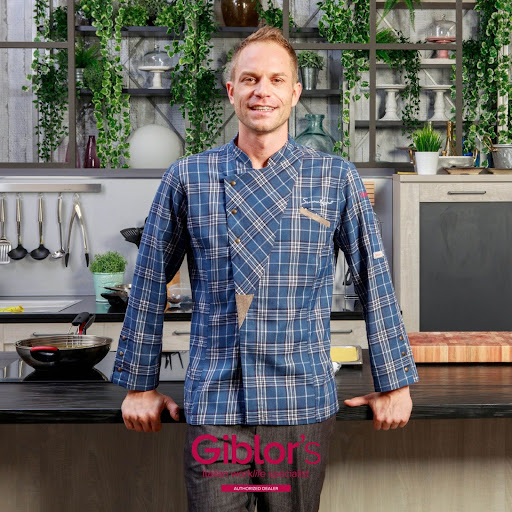
What about the coloured buttons on the chef's coat?
It used to be a tradition for lower and intermediate-level cooks and apprentices to have white buttons while skilled and senior chefs should wear black. But today, most kitchens have looser rules on colour buttons, with no specific colour requirements, unless of course set by the catering management.
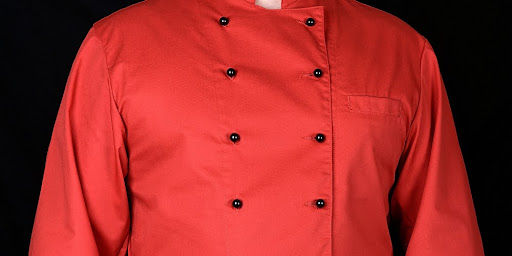
What to combine with what?
A good approach to this is to consider matching the chef's uniform colours to the brand identity and style of the restaurant. Probably consciously selected all colours for interior and exterior spaces. There is certainly a basic mood of the place, which makes it easy to choose a colour, but you can also base your choice on colour psychology. In other words, if you want to add a touch of sparkle and romance to your open kitchen, you should choose red. If, on the other hand, you want calm, naturalness or vegan lifestyle, you should emphasise the colour green. Rustic and cosy, more elegant or more traditional restaurant? You can come up with a number of colour schemes based on these. Don't forget that you can also play with the colours of the chef's knobs, making the whole outfit more interesting.
(The article was created in cooperation with chef.hu webshop)