





It's no coincidence that around Martin's Day, roast goose and new wine are being served all over the country. 11 November is not just about delicious food, it is also an ancient tradition with many customs and stories attached to it. Who was Saint Martin and how did geese become a symbol of the day?
As Martin's Day approaches, after sunset, small and large groups of children wander the streets with glowing lanterns in their hands. As children, we didn't understand why we were making lanterns out of pumpkins or jars, but every year we looked forward to marching with them through the village. Last night, we smiled as we watched the group of children march through the district, accompanied by their parents. This tradition, originally more common in Swabian areas, is known as the Martinsumzug, a torchlight procession that commemorates St Martin, with the light symbolising Martin's good deeds.
Who was Saint Martin and how is the goose connected to him?
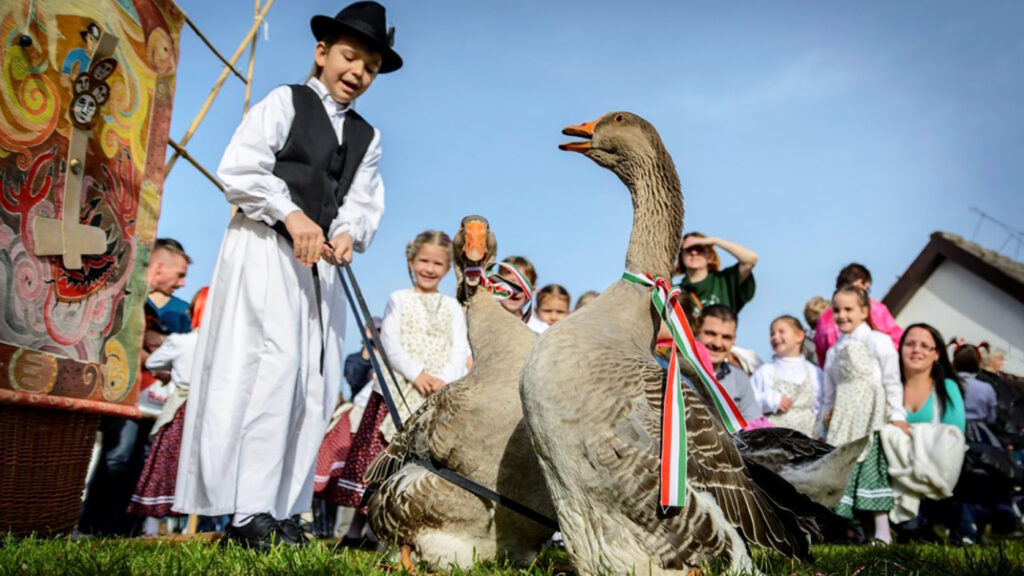
„If Martin arrives on a white horse, it will be a mild winter, if he arrives on a brown horse, it will be a harsh winter.” - so the saying goes. The cult of St. Martin was already popular among our conquering ancestors, since St. Martin himself was born in Savaria (today's Szombathely) in 316/317. The cult was further strengthened by the fact that King St Stephen painted the image of the warlord Martin on his flags. According to tradition, Saint Martin appeared in the king's dream and rushed to the defence of the king and the country. Thus Saint Martin became one of the patrons of the country.
Source:Amazing Hungary (https://csodalatosmagyarorszag.hu/hirek/itthon/marton-napi-es-gasztronomiai-programok-2024-novembereben/)
Martin initially served as a mercenary in the Roman legion. During his stay in France, he helped an old beggar and gave him half his robes. Legend has it that he was subsequently baptised at Christ's offering, which led him to leave the legion and serve God as a priest until his death. Not only did he excel in evangelism, but he also had many healings to his name. Because of his excellent priestly ministry, he was elected Bishop of Tours, but Martin, wishing to escape from this position, hid in a goose-house, but the loud gurgling of the geese betrayed him. Three days after his death, which fell on 11 November, he was laid to rest, making him the patron saint of geese and naturopaths.
Why is goose on the table on Martin's Day?
The tradition of eating geese and drinking new wine on Martin's Day comes from two sources. One dates all the way back to Martin's consecration as bishop, when the festive menu was roast goose and wine. The other source dates back to Roman times, when 11 November was the start of the winter quarter and the new wine was tasted. On this day, festivities were held in honour of the Roman god of medicine, and people sacrificed geese, which were later roasted. This is where the goose and new wine traditions are linked. However, the first official record of the feast of geese on Martin's Day was not made until 1171. In the folk tradition of the time, St Martin's Day marked the end of the peasant year, the end of the economic year and the beginning of the winter rest period. The landlords would distribute the annual wages, which were accompanied by a goose that had been fattened since the summer. It was also the day on which the peasants tasted the year's new wine, and when the stuffed goose was slaughtered and roasted.
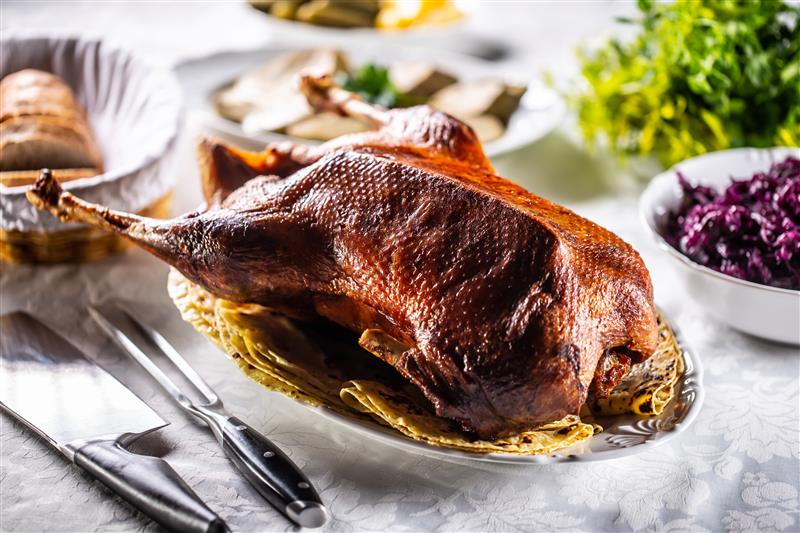
Image: www.shutterstock.com
It's a tradition that has been passed down through generations, and in today's fast-paced world it tends to be pushed into the background. That's why it's important for us to pass on these stories and give meaning to the goose leg that ends up on the plate, preserving its true values. If for no other reason, a delicious goose dinner is the perfect occasion to bring family and friends together, over a glass of new wine of course.
Finally, we'd like to help you with a quick and easy recipe so you can easily prepare the perfect Martinmas dinner to spend the evening with family and friends.
Confit goose legs with braised apple and red cabbage and onion and courgette
(for 6 people)
Ingredients:
- 6 pieces goose leg sous vide
- 1 kg steamed cabbage with apples
- 1,5 kg potato balls
- 2 large heads of onion
- 15 dkg goose fat
- salt and ground black pepper to taste
- 0,5 ec ground red paprika
Preparing a goose leg:
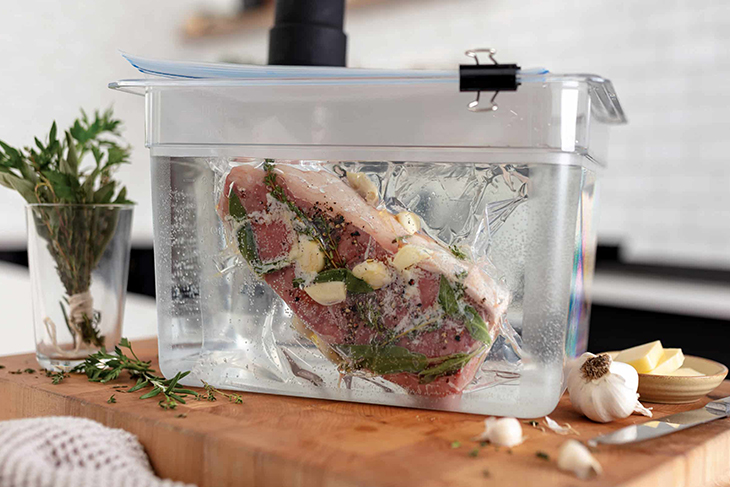
- Preparation: place the goose legs in their own bag in 40°C hot water for 15 minutes. Meanwhile, preheat the oven to 220-240°C, depending on the oven.
- Cooking: once the thighs are cooked through, remove them from the bag. Wipe the skin dry with a paper towel. Place them on a baking tray lined with baking paper, then place in the preheated oven and bake for 12-18 minutes until the skin is golden brown.
Preparing cabbage:
- Heat up the frozen steamed cabbage in a large pot, it will be ready in about 10 minutes.
Preparing mashed potatoes with onions:
- Cut the onion into small cubes and fry in a saucepan until golden brown.
- Remove from the heat and season with red pepper and pepper.
- There's not much to do with the potato balls, as they're already peeled and cooked. Just wash them in running water and add them to the fatty onion. Heat and fry them through the onion fat and then crush them.
- Season with salt to taste and you are ready to serve.
TIP: Add a little goose fat to make your mashed potatoes even juicier.
To serve, we recommend sprinkling the mashed potatoes with a little finely chopped chives or spring onions. To accompany the dinner, we recommend a nice Pinot Noir.
Bon appétit for your Martin's Day goose feast!