






- Part 2 - The beginning of the story
In fact, sous vide technology goes back centuries. The concept itself is not new, we just understand the essence. Building on this, sous vide has been in development for a long time. It is complex and far from simple once you get into it. We asked Dr János Kiss, PhD, member of the American Academy of Culinary Arts, three-time Master Chef, chef to the chefs, to whom the process owes its current level of development on a global scale.
It's important for readers to know how you came to be associated with the world's most important hotel chain. Be the first to tell us about it!
For me, being a chef was never a job, it was a love. I started my career at the Pilvax restaurant. As a young man, I earned the title of Young Master of the Profession and worked as a chef at Restaurant Europa and then as head chef at the Parliament House Restaurant. In 1969, I decided to leave the country, choosing Yugoslavia at the time and working in Italy, England, France and Germany. I came to America at the invitation of the chef of one of the best restaurants in Cincinnati and from there I had a fantastic, almost fabulous career. I became head chef at the five-star Maisonette restaurant, then opened my own restaurant, and finally came a major turning point in my life. I got an opportunity through a friend and went to Detroit for a job interview.
Was that the Hyatt chain?
That's how I started my career at the Hyatt chain. I started working at an 850-room hotel in Detroit on December 27, 1979, and soon I was working at a 1,400-room hotel. Soon I was chef at a 2400-room hotel with 8 restaurants and 140 chefs working with me. In 1985, I became corporate chef for the Hyatt group, which then had 70 hotels. I'm proud to say that as a Hungarian, it was almost like a fairy tale - something that has never been seen in the industry since. For more than twenty years I was the group's corporate chef, later vice-president, and during this time I managed the opening of 64 hotels and more than a hundred restaurants, travelling all over the world.

What is sousvideo? Using sous vide technology. Conversation with Dr. János Kiss
It is a very unique and serious career. With such a varied and time-consuming job, how did you have time to develop a technology that was in its infancy?
It happened once that Pritzker called me into his office. He asked me to go to Washington, where there was a bread factory. But there he heard about a new kind of thing they were trying - it's called sous vide, but nobody knows anything about it. He asked if I knew it. I told him of course I knew about it, but I didn't know much about it at the time and I admit it didn't mean much to me. Anyway, he asked me to go and see what it was about because he saw a fantasy in it. So I did. There I found out that they really didn't know what they were doing yet and I wrote a ’memo’ (the internet wasn't widespread then) that I thought we would have to wait. This was in 1990. Then the next morning I got up the courage to do it, because I had learned that you never say no to your bosses. If they give me something to do, I will do it. So I rewrote my report and put into eleven points what we needed to do to get this going.
I knew even then that the idea of sous vide had been used in Hawaii 200 years before that, when they wrapped the pig in palm leaves and buried it and aged it in the ground. So the process wasn't new, the technique just wasn't there. When he called me in to see you, I told him what was involved. You need cooks, technicians, lab technicians, location and a lot of other things for the experiments. It's only fair to say that the Pritzker family is one of the richest in the world, so the answer was that there was a budget, no problem, let me do it... I'm not a genius, I've never boasted about my knowledge. I simply had a background behind me that allowed me to start research.

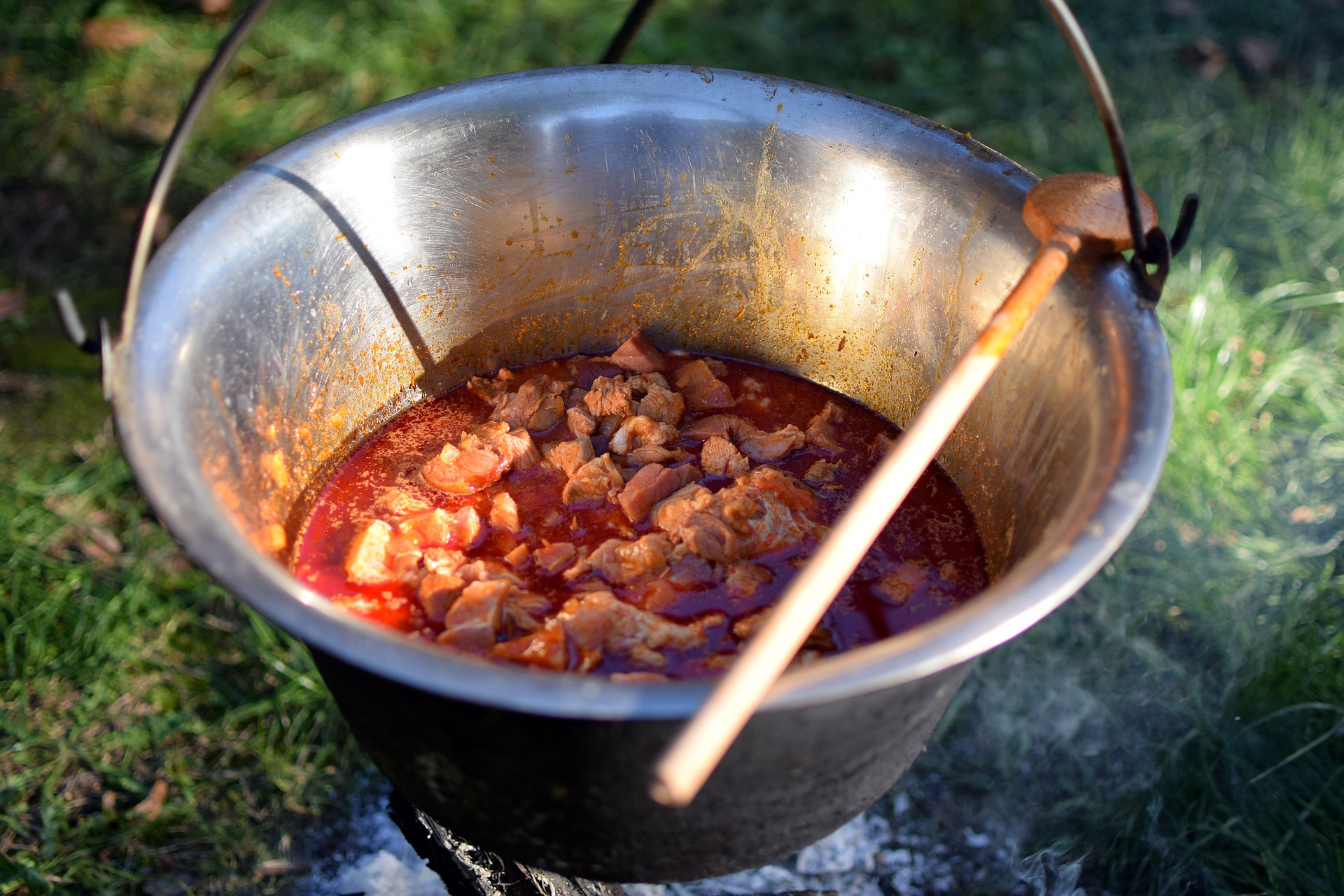
Photo: illustration by Pixabay Research has been carried out by whole teams.
How can you start research and development in a completely untapped area?
I knew Bruno Goussault at that time, he was already experimenting with this and foie gras. He was the one who laid down the first stones of sous vide and you could say that I picked up these stones and continued to work with them. I started from Bruno's base and started to develop it. First he made liver pâté, which he sous vide'd and I started talking to him about it. Bruno Goussault is more of a scientist than a chef, so he had a completely different perspective on the subject. Anyway, I talked a lot of things through with him and then put together what to do next. Before we go any further, it's important to note that sous vide is a French word that means under vacuum. So to cook- under vacuum. Of course, there were already nylon pouches back then, but the technology was far from mature. There were many times when the pouches exploded because of the different temperature changes. At the beginning it was more cook-chill technology than sous vide.
I knew it was at low temperatures for 5-7 hours, but at that time we had very rudimentary data. Because of the need to continuously analyse the data, I had to put together a team of people who were already computer literate and who could record the data, so we could get a complex overview of the experimental results. Gerard Bertrarn, the sous vide chef, played a big role in this work. But this was not enough, as we did not have the right equipment. I knew what I wanted, I knew how to do it, but I needed engineers who could make the right equipment based on our ideas. It also took a lot of time to design and test the machines.

So there was a whole team working on the technology - led by John?
Of course. Chefs, engineers, researchers, you name it. We've gone through a lot of realisations, including the fact that the ingredients work differently in the pouch. Just to give you an example: if I put a 16 dkg salmon on a griddle, by the time I take it off it's only 12 dkg. But if I make it in the bag, it's 15.5 dkg. For this reason, you only need to use 1/3 of the spices when cooking in a bag! Of course, it's easy to say this now, but it was a long time to experiment, as there was no recipe available, no manual. Everything had to be tried out, documented and interpreted by ourselves.
This is where the basic thesis of what should a chef know comes in?
Exactly right! When I hire a chef - I always ask one thing, and that is what the chef should know. The right answer to that is knowledge of materials! This is the primary in our profession. I have been asking questions all my life. I've always asked why things work the way they do, whatever they are. But I ask you: how can anyone ask any questions if they don't know the material? It's as basic to a chef as air! That's exactly what I did when I was developing sous vide, always asking questions about everything, whether it was a machine, a technology, a temperature, or even the biological, chemical behaviour of the meat I was testing. We could go step by step. We looked at cooking times, quality of the raw material, changes in texture, flavours, etc... We put these into tables. In fact, it was a job that required a great deal of scrupulousness and precision.

How was it developed further?
After we had experimented with cooking under vacuum, the next very important part came. Steam was created around the material cooked in the bag, creating the vacuum. After that, the water was sucked out of the container and straight away came the ice, the snow! This is important because the bacteria do not cease to exist at 3-4 degrees Celsius - but they do cease to multiply. This is the cornerstone of the whole technology, the cooling! Because it is the only thing that determines how long the raw material will keep in the vacuum bag, when it will be frozen or used. This is how it all started in the 1990s. I knew then what is one of the most important parts of sous vide technology: refrigeration and freezing - because without them, it's just cook-chill. At that time we didn't know how to sous vide much, pretty much just fish and meat. There wasn't even talk of anything else.
Yet how did the current technology - what sous vide actually means - evolve from there?
What I'm about to say will be strange. It was fashionable in the late 90s for some of the wealthier people to freeze themselves, hibernate and then live on in the future. For this reason they developed a process, namely to freeze you with nitrogen. I have looked into this. The idea is that it freezes you inside and outside at the same time. You can freeze it to minus 60 degrees in seven seconds. We started experimenting with nitrogen, but we ran into problems here too. It was plus 50 degrees in the kitchen and minus 60 in the machine. So you can see that I can't take all the credit for the development of the technology, because a lot of people worked on it. But I was the one who organised it, and it was my ideas and leadership that led to the creation of sous vide as we know it today.
Source: chef Dr. János Kiss
Photos: Matusz-Vad
Read more about your summer:
Sous vide technology behind the scenes, with chef Péter Pataky