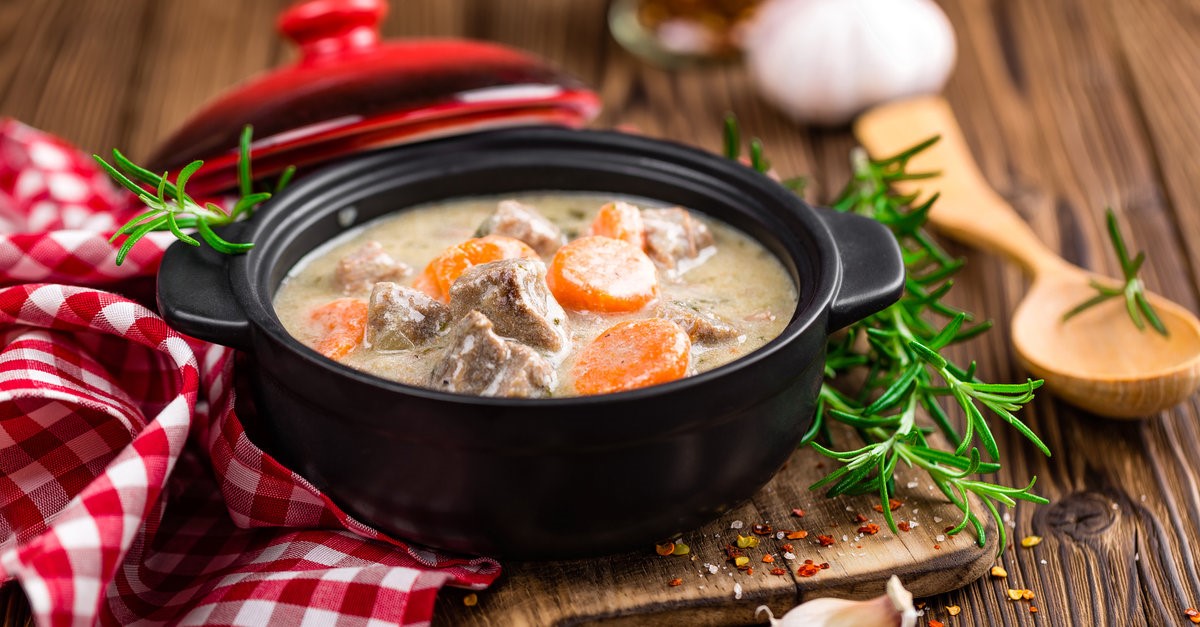







Sous vide cooking technology is fundamentally changing the way we think or think about cooking. With chef Tamás Csidei, we looked at the many benefits of the technology. A must-read for professionals, knowledge for households.
What are the basic equipment for sous vide?
Absolutely depends on whether we imitate at home the sous vide cooking in a restaurant or professionally produced under industrial conditions. Good technology practice at home would also require more equipment than can be sold to households today. As long as air is being squeezed out of plain plastic bags by hand, or 30 mq thick toxic substance containing and emitting folpack is being thrown into lukewarm water, there is nothing to talk about.
Váhotgép
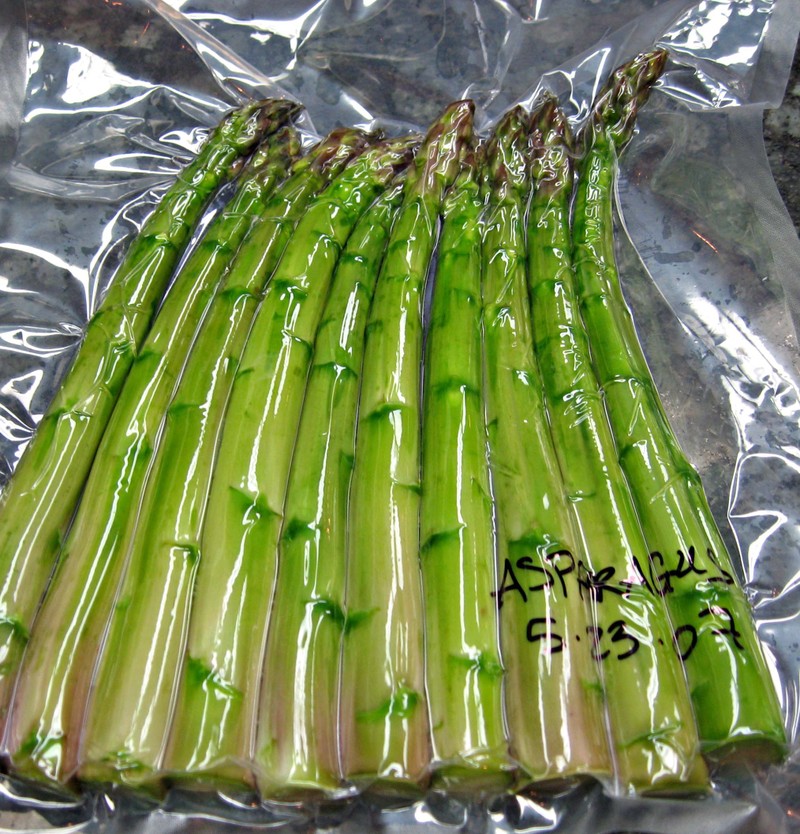
Vacuum packaging is a very important part of sous vide. By using vacuum packaging - which does not allow air and moisture to pass through - the exclusion of oxygen inhibits the growth of aerobic bacteria. Welding must be continuous and damage-free at all points. 99 % of the air must be exhausted from the vacuum bag and only equipment with a suitable vacuum pump is recommended. A further important function of the vacuum cleaner is to be able to vacuum the raw materials with liquid in order to be able to heat or cold marinate in sauces, gravies, stew bases, spice oils, marinades - a function that can only be provided by chamber vacuum machines. It is also important to use a double-wire vacuum cleaner for a secure airtight seal. This will ensure that no air can enter the vacuum bag even if one of the welding filaments is not working perfectly (greasing, burning, liquid spillage).
Váhotspot
A very important aspect of the composition of vacuum bags is that they should be heat-resistant, i.e. they should not release toxic substances from the plastic bag when exposed to heat. Therefore, only special sous-vide bags are recommended. The thickness of vacuum bags can be expressed in microns. The minimum requirement for sous vide is a bag thickness of 90 microns, but the most important is the composition of the material so that no toxic substances leach out of the plastic into the finished product. The special ‘Sous-Vide Chef’ sterilising vacuum pouches are guaranteed Bisphenol free and have unrivalled toxicity leaching values backed up by laboratory tests. It's not worth the risk of using something else and eating poison.
During the heat treatments, the core temperature can also be controlled by needle probe - a vacuum patch that does not let through moisture or air despite the needle prick.
Heat treatment, temperature control devices sous-vide
3 types of heat treatment devices can be used for sous-vide heat treatment with high safety. One of them is the so-called Roner, a temperature control device developed for laboratory use. It requires an insulated bath in which the device is placed. With great precision, the water is tempered and circulated around the product. The temperature difference is only 0.1 degrees.
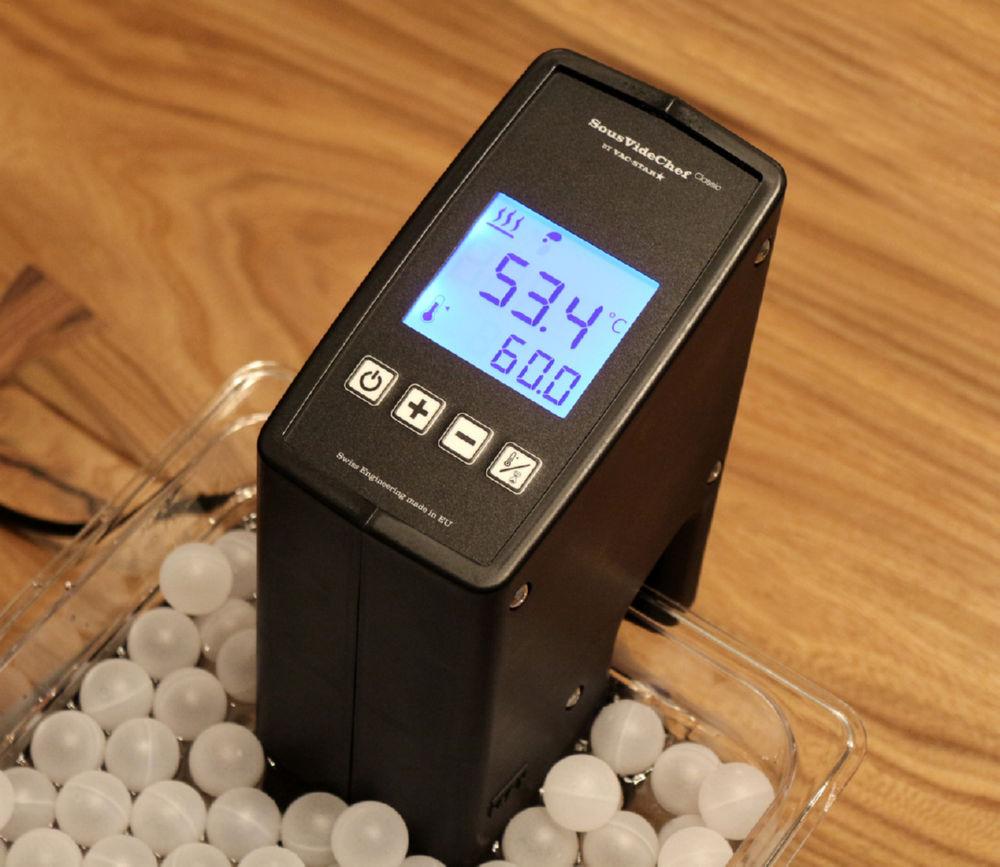
Another possible tool is the water circulator sous-vide a tub with a drainage tap, which independently circulates the tempered water around the product. It has a temperature difference of 0,3 degrees.
A third solution is the static tempering bath, which reaches 0.5-1 degree Celsius, making it ideal for regeneration and possibly also for the heat treatment of not too delicate raw materials.
The tubs are complemented by polypropylene balls that keep the product submerged.
Ice machine:
The ice machine is a tool for the application of the ice bath. The finished products must be followed by sudden shocking, surface cooling, so that the shock cabinet can cool the sous vide semi-finished product optimally (within 1 hour)
Shockoló cooling
After the ice bath, it is used to cool the core temperature. Fast and accurate, it has a core temperature gauge. It can be used for hard and soft shocks by rapidly cooling the air.
The problem in the overall spread of sous-vide has been that the equipment was available from imports at a rather high price. The breakthrough was the domestically marketed Sous Vide Chef product group, which were improved after a lot of experience and development work, priced according to the financial possibilities of domestic restaurants and available from Gasztronauta Ltd. They also offer their customers the opportunity to learn the theoretical knowledge of sous vide technology.
And what is it for? Why should you use it?
For economic and quality benefits first, then for storage and rapid availability also for.
The essence of sous vide
Energy use
The heat treatment devices of sous vide technology consume 1-2.5 kW of energy during the heating-up period, but heat retention requires only a tenth of the energy used during the heating-up period.
Heat treatment loss
With the classic whole-cooking process, 36% there is a heat treatment loss, which is further increased if frozen raw material is used. Taken together, this is a loss of 46%.
Sous vide, on the other hand, is based on fresh ingredients, with a heat treatment loss of only 1-5%. This heat treatment loss difference can result in savings of 6-7 dkg per serving.
Extended warranty period
Since sous vide is effectively a microbiological preservation process that produces a high quality end product, by precisely observing the technology, temperature and time relationship, microbial growth can be inhibited for long periods of time by radically reducing the number of bacteria.
Storage optimisation
No specialised storage is required for the chilling of sous vide semi-finished products, as each product is prepared in its own vacuum bag using vacuum technology and stored in the bag even after blast chilling, so no selective storage is required in the cold room. As the products are in an air-conditioned space, the oxygen is not stored with the food, so up to 50% of refrigeration capacity expansion can be achieved.
No unpleasant kitchen odours
Although many people like the smells in the kitchen, the majority of guests do not appreciate the strong smells in the restaurant being carried over into their clothing. This is not the case with sous vide, which is why it is the perfect food for show kitchens.

You can prepare several dishes at the same time, at least during regeneration.
Better pricing - less raw material, or lower prices, or higher profit
Because the heat treatment loss with 30-40% is more favourable than conventional heat treatments, and the operation of your equipment is more economical. So we are free to choose whether we can make a higher profit or sell at a lower price and thus achieve a higher turnover. The lower unit production cost means that kitchens with higher added value do not necessarily have to sell above average, which can lead to the spread of sophisticated and varied gastronomy.
Work faster, more efficiently
Sous-vide food preparation technology is fundamentally changing the way we think about food preparation, the way we think about food preparation, the way we think about sales processes and the time we spend on them. Preparation is a time-consuming and skilled task, but regenerating and serving the food is a simple task that takes only a few minutes.
As a result, more time is available for communication with the guest, for well-planned serving and decoration. Chaos can be avoided.
Preservation of moisture content
During the process, if the product is heat treated at precisely defined temperatures and the proteins are not denatured, no or very little leaching takes place, so that the raw material retains almost all its moisture content. This retention of moisture retains a higher enjoyment value through a juicier meal.
Does not lose much fat
Since the melting point of fats is lower than the denaturation point of some myofibrillar proteins (proteins), some of them may be lost, but vacuuming to the right degree of intensity does not allow most of the fats to leave the meat, as there is no room for them to melt.
As a result, the meat remains not only succulent but also nutritious. The higher nutritional value means that relatively smaller portions will result in sufficient nutrient intake, giving you a feeling of fullness, while also giving you the freedom to enjoy creative serving concepts.
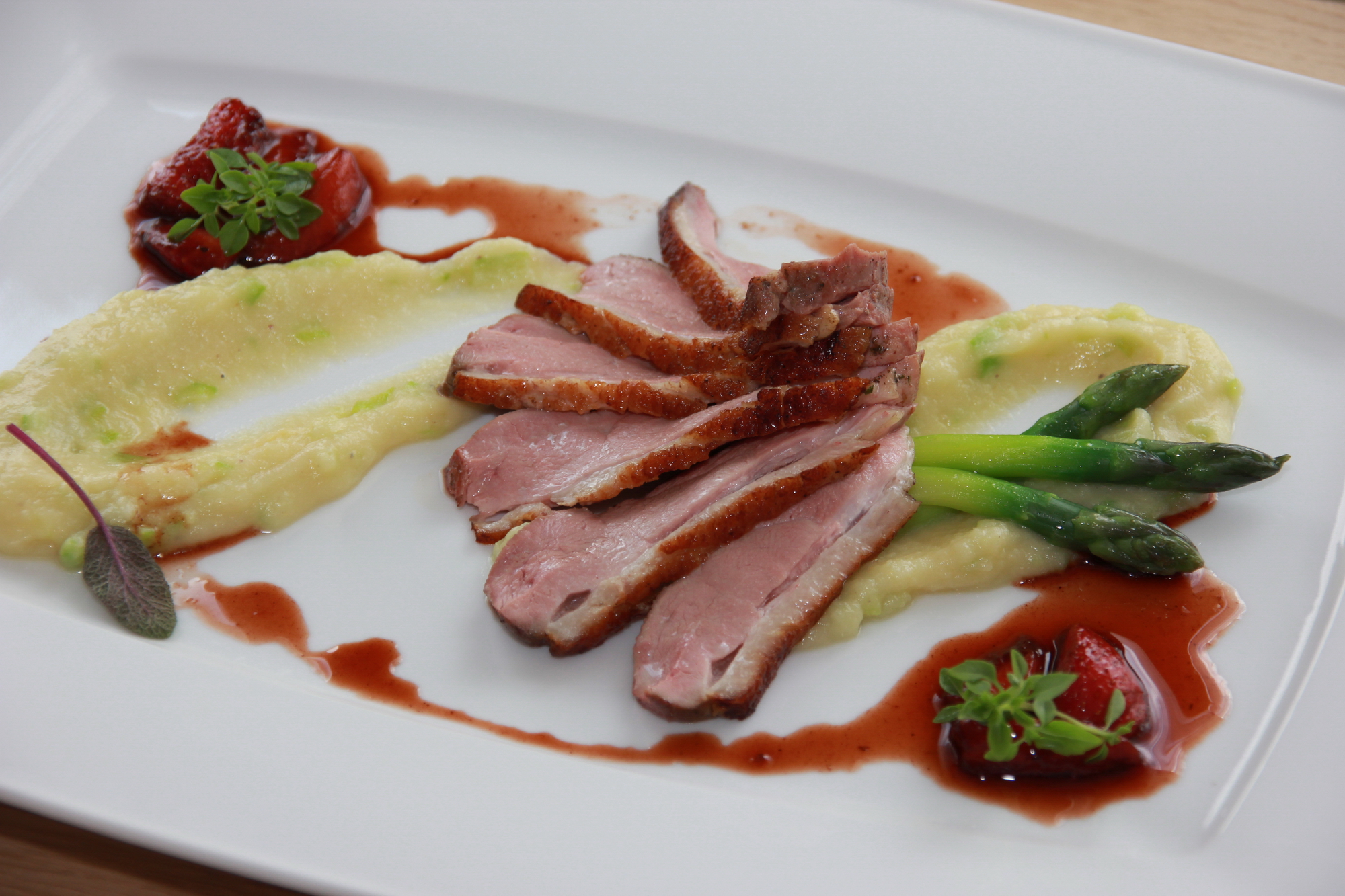
Preservation of nutritional properties
In addition to their protein and fat content, heat-treated products retain their fat-soluble vitamins and other vitamins that are released at low temperatures.
Flavours under vacuum - fresh herbs, extracts
Heating under vacuum requires significantly less spices to be added, because we don't use spices sprinkled on the surface, so they don't wash off, clump and separate into the cooking fat as they do in traditional cooking, but everything stays in the vacuum casserole.
Seasoning, flavouring for sous vide
Sous vide is essentially a natural flavour enhancement, so there is no need to use artificial flavour enhancers found in seasonings and spice mixes. The sous vide technique is ideal for flavouring with fresh herbs, as the fresh herbs are not burnt during the process, leaving no bitter aftertaste.
Diverse use of raw materials
Using the same method to prepare the ingredients does not necessarily mean that the dishes will be monotonous, as sous vide is only a semi-finished product, but the added values such as the accompaniments and the serving styles can make the dishes completely unique.
Incorporating kitchen styles
It is a false dogma that the name, which refers to the French origin of the technology, makes sous vide food French. It can absolutely fit into any type of cuisine, style or flavour. It is only the technology used to prepare the food that changes, the flavours are not changed or are more expressive and intense. The Hungarian flavours we have developed, as well as the classic recipes of Hungarian gastronomy, work absolutely well under vacuum.
Source: Airchef (Tamás Budafoki & Tamás Csidei )
Photo by Tamás Csidei Gasztronauta Ltd
„I first introduced sous vide to the Hungarian public in 2000”
https://blog.matusz-vad.hu/gasztrofesztivalok-2021-szeptember-17-19-kozott/