





István Veres, who competed again this year in the most prestigious world competition for chefs, immediately gave an interview to our magazine. Bocuse d ’Or competition in Lyon where the Hungarian team finished in 11th place.
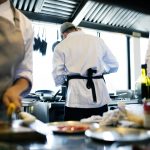
István Veres's mentality was perhaps measured by the fact that he immediately accepted the interview, despite the fact that they were unloading the truck of the competition while cleaning. The chef never rests and his perseverance and stamina are an example to many of us.
About István Veres: He was born in Târgu Mures (Romania, Transylvania), where he grew up in his parents' restaurant. He studied at the University of Bucharest and then at the prestigious École Supérieure de Cuisine Française (ESCF) - Ferrandi, a prestigious gastronomy school in Paris. After his successful results, he chose L'Arpège, Alain Passard's restaurant with three Michelin stars, as his place of training. This was followed by other Michelin-starred jobs at Patrick Guillbaud in Ireland - with two Michelin stars, L'Ortolan in the UK - with one star, and Maze by Gordon Ramsay in London, also with a Michelin star. He later came home, worked for his parents and most recently turned the Babel restaurant in Budapest into a Michelin-starred restaurant. Since then he has opened a burger restaurant and prepared for the Bocus d'Or competition.

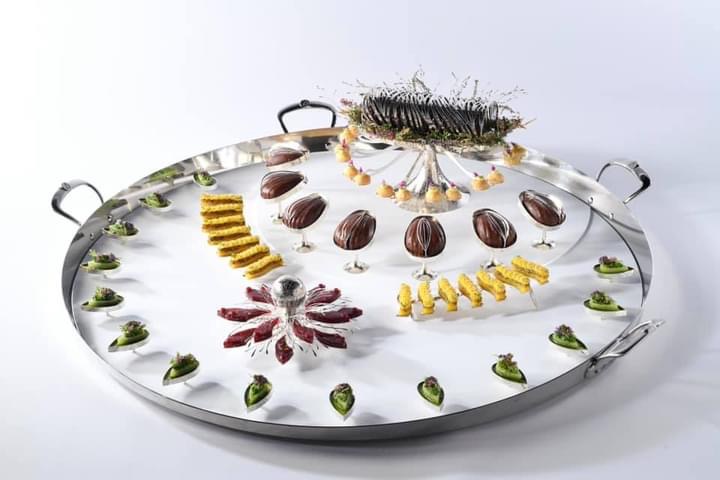
This year's Bocuse d'Or took place on 26-27 September, with the Hungarian team competing on the second day. István Veres is the chef, Bence Molnár is the commis (right hand), Tamás Széll couch and Zoltán Hamvas was the president of the team. The competition was held six months later this year due to the epidemic situation, and for the first time in the history of the competition, the teams had to prepare take-away meals instead of the usual take-away plates. All three dishes had to include tomatoes, which luckily are one of our chef's favourite ingredients. The past year was spent in preparation, where they cooked the menu 32 times.
How has the team been this year, and how has it been working together after all this preparation time?
It is exceptionally good that we have an all-Hungarian team for the competition. This is partly due to the epidemic period, with no foreign coaches or leaders, for safety reasons. I asked Tomi Széll to coach the team, and he took on the task without a second thought, even though he had a lot of work to do. Among other things, his filming had interfered, so Frigyes Vomberg replaced him during this time and he helped us. And the chairman, and the one who provided all the conditions, was Zoltán Hamvas, the president of the Hungarian Bocus d'Or. I owe a lot to them, and of course to my number one assistant, Bence, who has been with me through the whole period.
How do we imagine the preparation itself at home?
Just like a war. You know, first we sit down and figure out the strategy. I'm in charge, but anybody can have a say, anybody can have ideas, if it's good, I'll take it, and we'll go from there. Once we have our strategy, we secure the means, that is, we “manufacture the weapons”. Once we have tested them, practiced our task, then we can start the competition, the big bang. It's a team game, where everyone is equal, and humbly looks out for each other, who is also doing their part. Me and the commis didn't even pay attention to each other during the competition, it was only at the end that we got our work together. Tamás Szél, the voice of the coach, was the one we heard, watching from the outside and guiding the whole process. It was just like a chess board where we were the pieces and Tamás was moving us. That's what you need to compete, self-discipline and stamina.

How long did the race itself take, what were you thinking about?
We stood in the pit, or kitchen, for exactly five and a half hours, which is to say that we didn't go to the toilet or drink a sip of water. Every second had its place, there was no time for that. I'm quite different in the kitchen, I'm mostly in control, but here in the competition I just do my job quietly. Not everyone likes to compete, not everyone likes to watch you work, but I'm motivated - but it's different from the kitchen on a weekday. I thought it would be a lot of pressure, but this year I wasn't stressed at all, even though the foreign circuit is always different, there's something strange in the air.
Through your competitions and your placements, Hungarian gastronomy is in the world's consciousness. How do you rate your achievements?
That's what we were talking about, that the jury's decision is actually subjective, because everyone has their own individual taste and they have to live up to it. The jury includes 3 Michelin-starred chefs and chefs from Africa who have never seen fine dining, so it's difficult. Regardless of all this, the public taste is basically French-European, so it is not impossible to be on a mission to bring home even better rankings in the years to come. I consider our performance this year to be good, we did what we could, but as I am a perfectionist and constantly strive for better, I am already thinking about further improvements.
How do you have so much energy and where do you see yourself in 20 years?
After my culinary schools, I was able to work in places where I learned a lot, but most of the chefs only lasted a few months, whereas I lasted years. We were treated pretty badly and worked 18 hours a day, and as a foreigner I had to prove myself even more. I didn't regret it because I loved my job, I grew up doing it and I saw it from my family. I even go out for sports after my shift, CrossFit or running is something that relaxes me and tires me out. The truth is, I like to burn off all my energy at the end of the day. I can't imagine doing anything else, it's what I love and I have a lot of work to do in my profession, no time to relax.
The immediate goal is to move on immediately, and tomorrow I'll be preparing for the final of the Hungarian Bocus d'Or on 21 October. I want to satisfy no one but myself. I know I've worked in many places, I've received many accolades, but I have a lot of work to do so that when I look in the mirror I can say: 'That's a kid with balls, smiling!
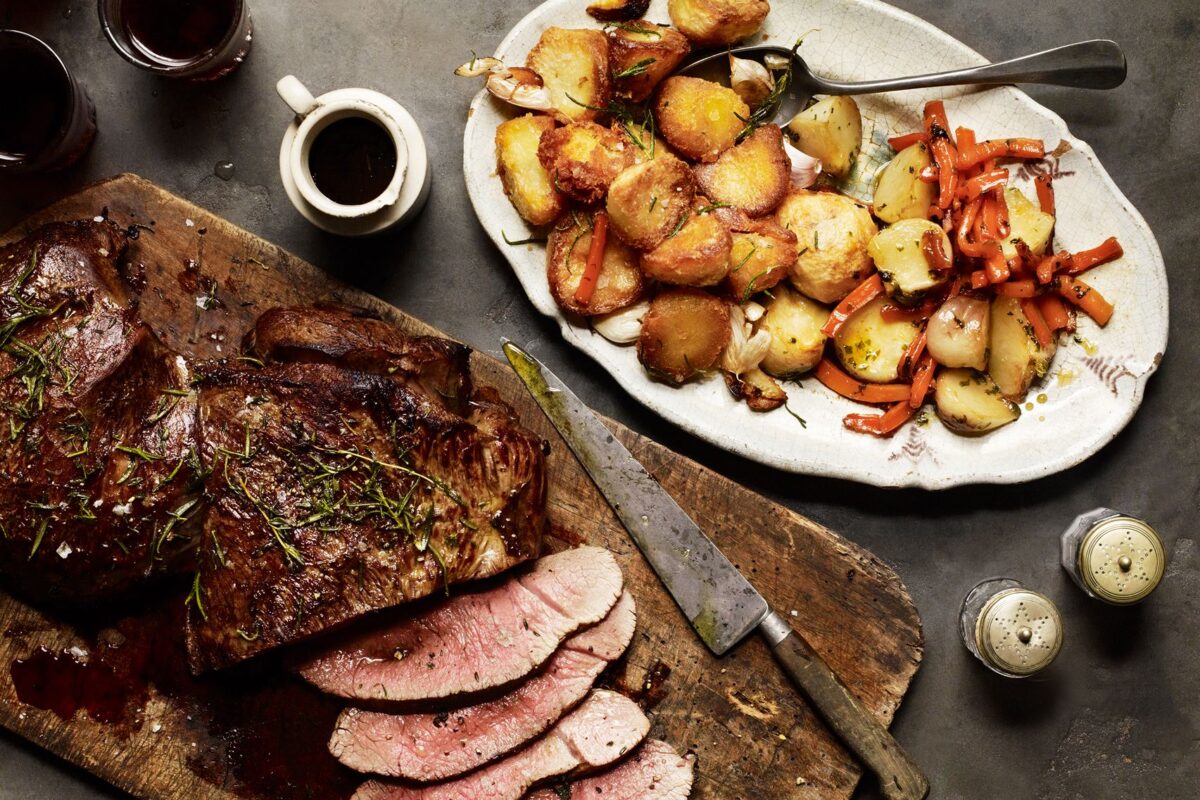
This year's menu of the Hungarian team: